
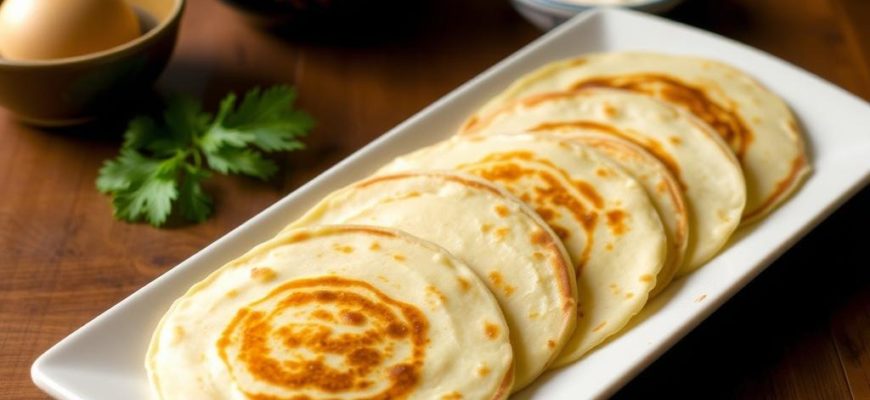
You’ve probably seen something that looks like a pancake but behaves like a flatbread, golden and layered, folded into triangles on hawker trays and served beside a steaming bowl of curry. That’s roti kanai pancakes — deceptively simple, wildly satisfying, and everywhere in Southeast Asia where people love filling, hand-held food. Stick around and I’ll show you where it came from, why it’s not just “another flatbread,” how to make it at home (three fail-safe recipes), what pairs best with it, and a few surprising facts that will make you want to order a plate right now.
- What roti kanai pancakes are and why they matter
- History of roti kanai pancakes
- Where roti kanai pancakes first appeared
- Interesting facts about roti kanai pancakes
- Nutritional value of roti kanai pancakes
- Popularity in different countries
- 3 best recipes for cooking roti kanai pancakes
- 1. Classic flaky roti kanai
- 2. Roti telur (egg-stuffed)
- 3. Sweet banana-sugar roti
- What to eat with roti kanai pancakes
What roti kanai pancakes are and why they matter
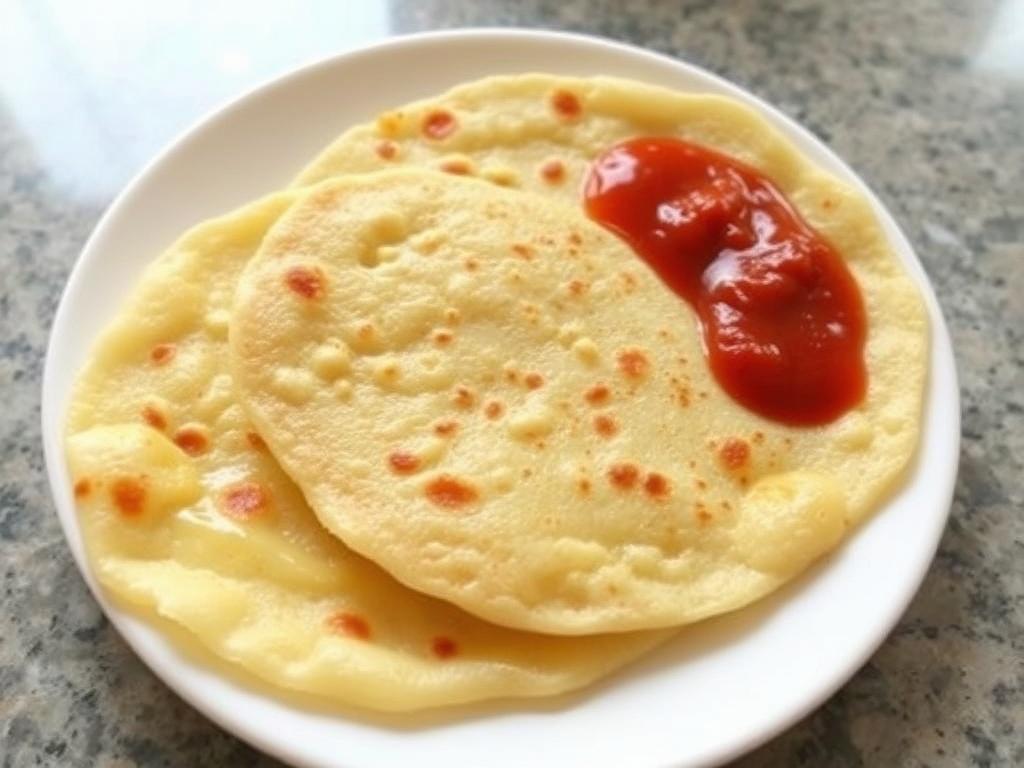
Roti kanai pancakes are a Southeast Asian take on an Indian-style flatbread, stretched thin, layered with fat, and pan-fried until the edges crisp and the inside stays soft and flaky. Think of a cross between a flaky paratha and a savory pancake: it’s pliable enough to fold, sturdy enough to scoop curry, and neutral enough to take sweet treatments. Street vendors and small family stalls make them by hand; restaurants sometimes trade speed for consistency with a skillet or griddle. The result is a food that’s tactile and communal — you tear, dunk, share, and savor.
History of roti kanai pancakes
The story begins with migration and adaptation. Roti as a concept comes from the Indian subcontinent. In the late 19th and early 20th centuries Indian Muslim immigrants came to British Malaya bringing their breads and cooking techniques. Over time, local tastes and ingredients shaped the dough, the technique, and even the name. The term “roti” stayed, while “kanai” or “canai” has a few folk explanations — some link it to Chennai or the Malay verb for “to roll or thin out.” What’s clear is that the roti kanai we know is a product of cultural exchange: Indian technique, Malay flavors, and decades of street-food evolution.
Where roti kanai pancakes first appeared
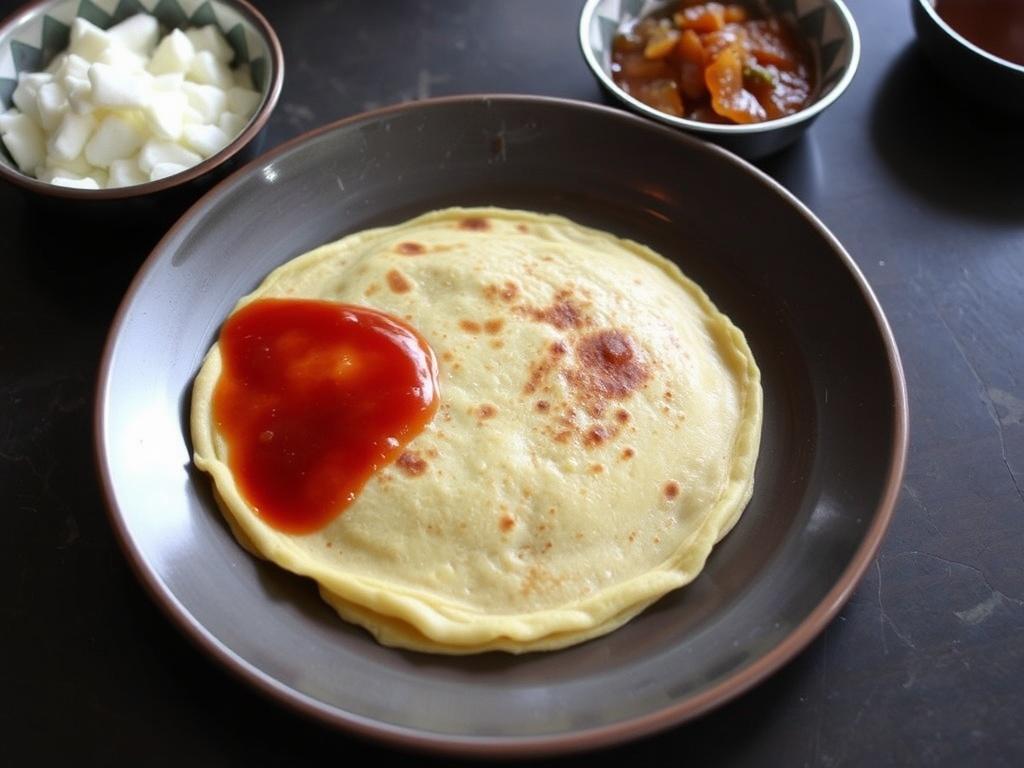
Roti kanai emerged in British Malaya, the region that later became Malaysia and parts of Singapore. Cities with active port trade and large migrant populations — Penang and Kuala Lumpur especially — were early hubs. From these urban kitchens, the dish spread quickly via mamak stalls (Indian Muslim eateries), hawker centers, and small roadside shops. Each locale added its own spin: Singapore’s version often goes by “roti prata,” while in Malaysia you’ll find roti canai or roti cane and countless local fillings and serving styles.
Interesting facts about roti kanai pancakes
- Roti isn’t just savory: many vendors sell sweet versions with sugar, condensed milk, or bananas. Dessert and dinner share the same canvas.
- Mamak culture elevated roti into a late-night ritual. It’s common to see groups lingering over roti and teh tarik (pulled tea) well past midnight.
- There are regional show-offs: skilled makers stretch and flip dough like acrobats. In some places, dough-tossing is competitive entertainment.
- The same basic dough yields many names and shapes: folded triangles, wrapped parcels, thin crepes with fillings — all called roti in everyday speech.
Nutritional value of roti kanai pancakes
Roti kanai is comforting, but it’s also rich in fat from oil or ghee and carbohydrates from white flour. Below is an approximate breakdown for one medium plain roti (about 100 g). Values vary with size, oil, and fillings.
| Nutrient | Approx. per 100 g |
|---|---|
| Calories | 320 kcal |
| Carbohydrates | 40–45 g |
| Protein | 6–7 g |
| Fat | 14–18 g (depending on oil/ghee) |
| Fiber | 1–2 g |
Tips to lighten it: use less oil when folding, swap part of the white flour for whole-wheat, or pan-fry with a non-stick spray rather than deep oil. Even so, roti kanai is best enjoyed as an occasional treat.
Popularity in different countries
Roti kanai pancakes are most famous in:
- Malaysia — ubiquitous at mamak stalls and roadside vendors, with the widest variety of savory and sweet variations.
- Singapore — known as roti prata, often served with curry, egg, or condensed milk; a late-night staple.
- Brunei and southern Thailand — similar street-food presence, often tied to local Muslim communities.
- Indonesia — found in regions with Malaysian and Indian influences, sometimes under different local names.
- Global diaspora — Australian, British, and Gulf cities with Malay or South Asian communities feature roti kanai on menus.
3 best recipes for cooking roti kanai pancakes
1. Classic flaky roti kanai
Ingredients:
- 2 cups all-purpose flour
- 1 tsp salt
- 1 tbsp sugar
- 2 tbsp condensed milk or 1 tbsp oil
- ½ cup warm water (adjust)
- 3 tbsp ghee or vegetable oil for layering and frying
Method:
- Mix flour, salt, and sugar. Add condensed milk/oil and water to form soft dough. Knead 8–10 minutes until smooth.
- Divide into 8 balls, coat lightly with oil, cover, and rest 2–4 hours (or overnight in fridge).
- Flatten a ball, oil hands, then stretch into a very thin sheet. Brush with ghee/oil, fold into a square or coil to create layers. Press gently.
- Heat a skillet over medium heat, add a little ghee, and fry each roti 2–3 minutes per side until golden and blistered.
- Serve hot with dhal or curry.
Tips: Rest time is crucial for stretchability. Thinness and layering create the signature flakes.
2. Roti telur (egg-stuffed)
Ingredients:
- Basic roti dough (from recipe 1)
- 1 large egg per roti
- Pinch of salt and pepper
- Optional: chopped onion, green chili
Method:
- Stretch dough into a thin round.
- Beat egg with salt and pepper; add onion/chili if using.
- Pour egg onto the center, fold edges over to encase, flatten slightly, and pan-fry until the egg is set and crust is golden.
Serve with curry or sambal.
3. Sweet banana-sugar roti
Ingredients:
- Basic roti dough
- 1 ripe banana, sliced thin
- 2 tbsp sugar or 1 tbsp condensed milk
Method:
- Stretch dough thin, sprinkle sugar down the center, arrange banana slices, fold into a pocket, and pan-fry in butter or ghee until caramelized.
- Finish with a drizzle of condensed milk if desired.
This one’s a favorite for breakfast or dessert.
What to eat with roti kanai pancakes
Roti’s true joy is in the pairing. Classic companions:
- Chicken or mutton curry — rich, spicy gravies that cling to the layers.
- Dhal (lentil stew) — simple, comforting, and often the everyday pairing.
- Sambal or chutney — for a brighter, piquant kick.
- Sugar, banana, or condensed milk — when roti becomes dessert.
- Teh tarik or strong coffee — the drinks that complete the stall experience.
Final note: Roti kanai pancakes are more than a dish; they’re a practice. Making them teaches patience, respect for technique, and a love for simple ingredients done very well. Try the classic recipe once, and you’ll understand why this little layered bread keeps turning up at tables across Southeast Asia.


