

There’s something irresistible about small, pillowy pancakes sizzling in a pan — they puff up, brown at the edges, and smell like home. Oladki pancakes are exactly that kind of comfort: quick to make, endlessly adaptable, and perfect for breakfast, tea time, or a late-night snack. If you haven’t met them yet, you’re in for a treat. Read on and you’ll learn what oladki are, where they came from, why people still love them, how to make three fail-safe versions, and what to serve alongside to make a simple plate feel like a celebration.
- What Oladki Pancakes Are
- History of Oladki Pancakes
- Where Oladki First Appeared
- Interesting Facts about Oladki Pancakes
- Nutritional Value of Oladki Pancakes
- Popularity in Different Countries
- 3 Best Recipes for Cooking Oladki Pancakes
- Classic Yeast Oladki
- Quick Kefir Oladki with Baking Soda
- Sweet Banana and Buckwheat Oladki (Gluten-Light)
- What to Eat with Oladki Pancakes
What Oladki Pancakes Are
Oladki pancakes are small, thick pancakes from Eastern Europe, most often associated with Russian and Ukrainian kitchens. They’re made by dropping spoonfuls of batter into a hot pan, resulting in rounds that are fluffy inside and slightly crisp outside. The batter can be based on yeast, kefir, buttermilk, or plain milk and frequently includes egg and a bit of flour. Texture varies: yeast oladki are airier, while soda or baking powder versions are denser and quick to make. Sizes range from bite-sized to palm-sized, but the method — spoon-drop and pan-fry — is the defining feature.
History of Oladki Pancakes
Oladki belong to an old family of griddle cakes found across Europe and Asia. The word “oladya” appears in historical Slavic sources and likely evolved from ancient flatbread traditions that used available staples: milk, grain, and sometimes fermented batter. Over centuries, cooks added eggs, dairy fermentation like kefir or sour cream, and leavening agents as they became available. Oladki remained a household recipe rather than a high-cuisine dish, which is why there are hundreds of local variations — each family often has its own beloved formula.
Where Oladki First Appeared
Oladki trace their roots to Eastern Slavic lands — modern Russia, Ukraine, and Belarus. The practice of frying small pancakes on a skillet was practical: minimal equipment, little fuel, and ingredients that fit peasant kitchens. Towns and countryside adopted oladki equally, and the recipe migrated with people, adapting to local flours and dairy products. The exact origin town or date is unknown, but the style is unmistakably Slavic in its early culinary context.
Interesting Facts about Oladki Pancakes

- Names vary: oladki, oladyi, oladushki — all refer to the same cozy concept.
- They can be savory or sweet: cheese, herbs, or smoked fish work as well as honey and jam.
- Traditionally, they were served during family gatherings and holidays because they’re easy to make in large batches.
- Leftover oladki reheat beautifully in a skillet, keeping their crisp exterior — not so with microwaves.
Nutritional Value of Oladki Pancakes
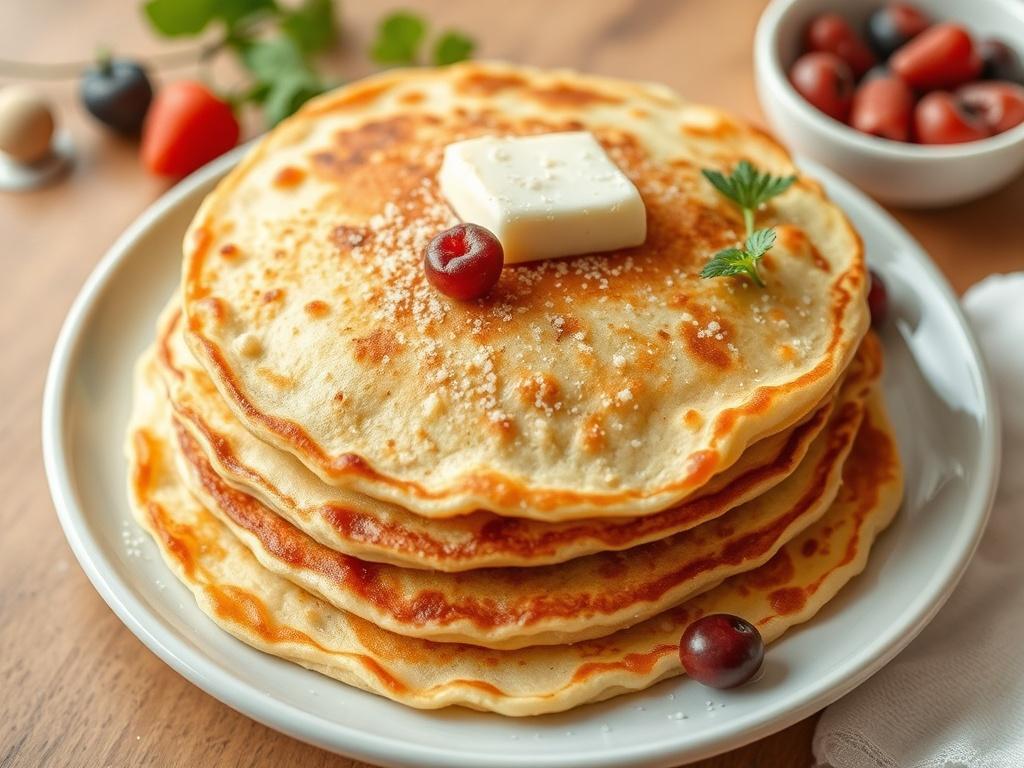
Below is an approximate nutritional table for a basic oladki made with flour, egg, milk, and a small amount of oil, per 100 grams. Values vary by recipe and toppings.
| Nutrient | Approximate Amount |
|---|---|
| Calories | 220 kcal |
| Protein | 6–8 g |
| Carbohydrates | 28–32 g |
| Fat | 8–10 g |
| Fiber | 1–2 g |
Notes: Use whole-grain flour, less oil, or cottage cheese-based batters to increase protein and fiber. Toppings like jam or sweetened condensed milk raise sugar and calories quickly.
Popularity in Different Countries
Oladki are most beloved in Russia and Ukraine but have cousins across the world. In Poland you’ll find racuchy; in Finland, pannukakku variations exist; and globally, any culture with a tradition of small fried cakes will see similarity. In recent years, oladki have traveled with chefs and home cooks, appearing in cafés that highlight Slavic comfort food. They’re appreciated for being approachable, budget-friendly, and easily adapted to dietary needs.
3 Best Recipes for Cooking Oladki Pancakes
Classic Yeast Oladki
Ingredients:
- 250 ml warm milk
- 7 g active dry yeast (1 packet)
- 1 egg
- 1 tbsp sugar
- 200 g all-purpose flour
- Pinch of salt
- Oil for frying
Method:
- Bloom yeast in warm milk with sugar for 10 minutes until foamy.
- Whisk in egg, salt, and flour to a thick batter. Cover and let rise 45–60 minutes.
- Spoon batter into a hot oiled skillet, fry until golden on both sides. Drain briefly on paper towel.
Quick Kefir Oladki with Baking Soda
Ingredients:
- 250 ml kefir
- 1 egg
- 1 tbsp sugar
- 200 g flour
- 1/2 tsp baking soda
- Pinch of salt
- Butter or oil for frying
Method:
- Mix kefir and baking soda so it fizzes. Add egg, sugar, salt, and flour to make a spoonable batter.
- Fry small rounds in medium-hot pan until bubbly and brown on both sides.
Sweet Banana and Buckwheat Oladki (Gluten-Light)
Ingredients:
- 2 ripe bananas, mashed
- 2 eggs
- 100 g buckwheat flour
- 1 tsp baking powder
- Pinch of salt and cinnamon
- Oil for frying
Method:
- Whisk banana with eggs, fold in flour, baking powder, salt, and cinnamon.
- Drop spoonfuls into a nonstick skillet. Cook gently so centers set without burning edges.
What to Eat with Oladki Pancakes
Oladki are a blank canvas. For traditional sweet pairings try sour cream and jam, honey, sweetened condensed milk, or fresh berries. For a savory turn, top warm oladki with crème fraîche and smoked salmon, cottage cheese and herbs, or sautéed mushrooms. If you’re serving a crowd, set up a mix-and-match station: small bowls of preserves, sour cream, nut butter, chopped herbs, smoked fish, and sliced meats. Drinks: tea is classic, but a strong coffee or a glass of kefir works nicely too.
Final tips: keep the pan at medium heat so oladki cook through without burning. Use a spoon to shape consistent rounds. If batter needs thinning, add a little milk; if it’s too runny, a tablespoon of flour helps. Once you know the basic technique, experiment freely — oladki welcome surprises.


