

Have you ever heard a story about a pot filled with neither meat nor vegetables but somehow turning into a delicious feast that feeds an entire village? That’s the magic behind Stone Soup — a simple idea wrapped in a charming tale that teaches us about sharing, creativity, and community. It’s more than just food; Stone Soup is a symbol of how collaboration can turn scarcity into abundance. Stick around to find out how this humble dish has traveled through time and cultures, becoming a legend that’s both heartwarming and practical.
- Unveiling Stone Soup: What Exactly Is It
- A Journey Through Time: History of Stone Soup
- Tracing Its Footsteps: Where Stone Soup First Appeared
- Behind the Legend: Interesting Facts About Stone Soup
- Nourishment in a Bowl: Nutritional Value of Stone Soup
- From Local Kitchens to Global Tables: Popularity of Stone Soup in Different Countries
- Stone Soup on Your Stove: 3 Best Recipes to Try at Home
- Beyond the Soup Bowl: What to Eat with Stone Soup
Unveiling Stone Soup: What Exactly Is It
At first glance, Stone Soup sounds almost too good to be true. Imagine putting a clean stone in an empty pot of water, placing it over the fire, and waiting. Somehow, as neighbors drop in contributions — some carrots, a few potatoes, a bit of meat — the pot transforms into a nourishing, flavorful soup. The stone itself isn’t edible; it’s a storytelling device, a catalyst for generosity. Fundamentally, Stone Soup is a folk tale that teaches cooperation, but it’s also a flexible concept for making soup out of what little you have. It’s a recipe turned into a lesson, with innumerable variations across cultures that still emphasize the same principle: when everyone shares a little, everyone eats well.
A Journey Through Time: History of Stone Soup
Stone Soup is more than a recipe – it’s a story with deep roots. Though the exact origin isn’t pinned down, tales resembling Stone Soup date back centuries, stretching across Europe and Asia. The core message has stayed intact despite cultural twists: a traveler, or group, arrives somewhere hungry but with little to offer. They start making “stone soup,” arousing curiosity among locals, who then contribute ingredients, turning the tale into a communal feast.
This story was used to promote values like sharing during hard times when food was scarce. Some historians connect its first print versions to the 18th or 19th century European folk literature, yet oral traditions might be centuries older.
Tracing Its Footsteps: Where Stone Soup First Appeared
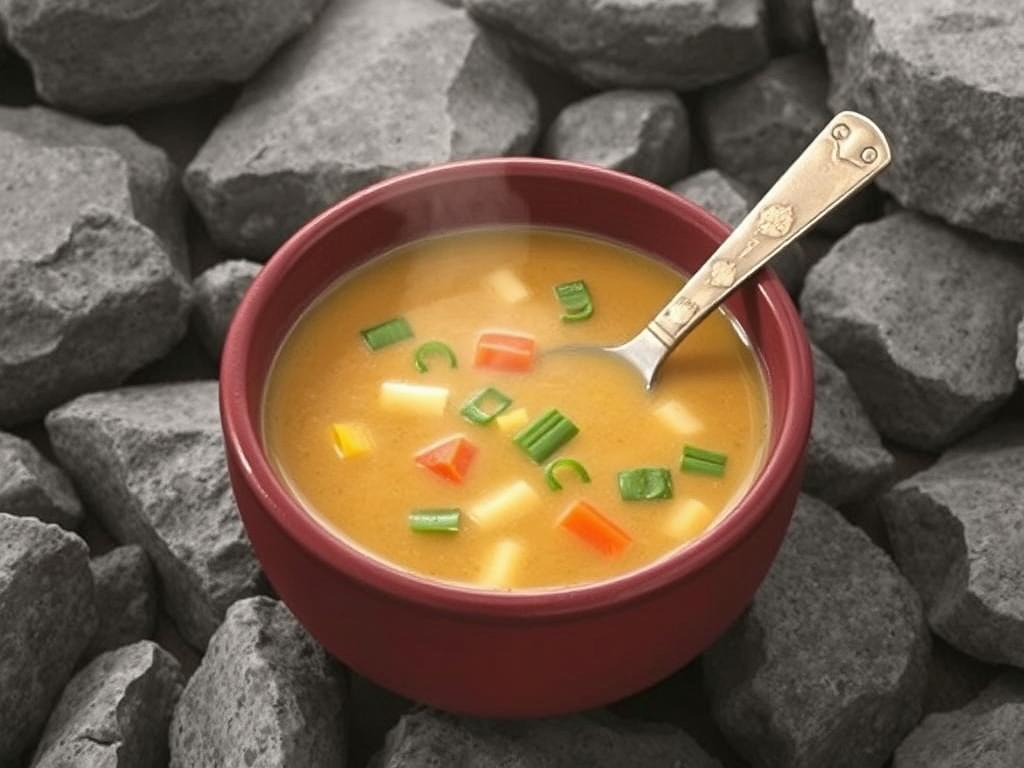
Pinpointing the exact birthplace of Stone Soup is tricky because versions exist across the globe. However, early printed stories emerged in European folklore, frequently in countries like Germany, France, and England. Asian counterparts also embody similar tales involving a clever traveler using a stone to bring food together.
Despite variations, the themes overlap completely: the stone acts as a symbol, and the story’s core encourages kindness and community spirit. From Europe to Asia and beyond, Stone Soup continues to be retold in classrooms, books, and family kitchens.
Behind the Legend: Interesting Facts About Stone Soup
Stone Soup isn’t just old folklore—it’s packed with intriguing details:
- Different cultures swap the stone for other objects—a nail, an axe blade, or even a pumpkin—each adding a twist to the tale.
- Stone Soup has inspired modern social projects encouraging community support and resource sharing.
- The tale reappears in popular media, such as children’s books, cartoons, and even theater performances.
- Actual recipes inspired by Stone Soup focus on thrift and creativity, often relying heavily on seasonal, local produce.
These facts show how Stone Soup isn’t static. It evolves, adapting to modern values while honoring its timeless theme.
Nourishment in a Bowl: Nutritional Value of Stone Soup
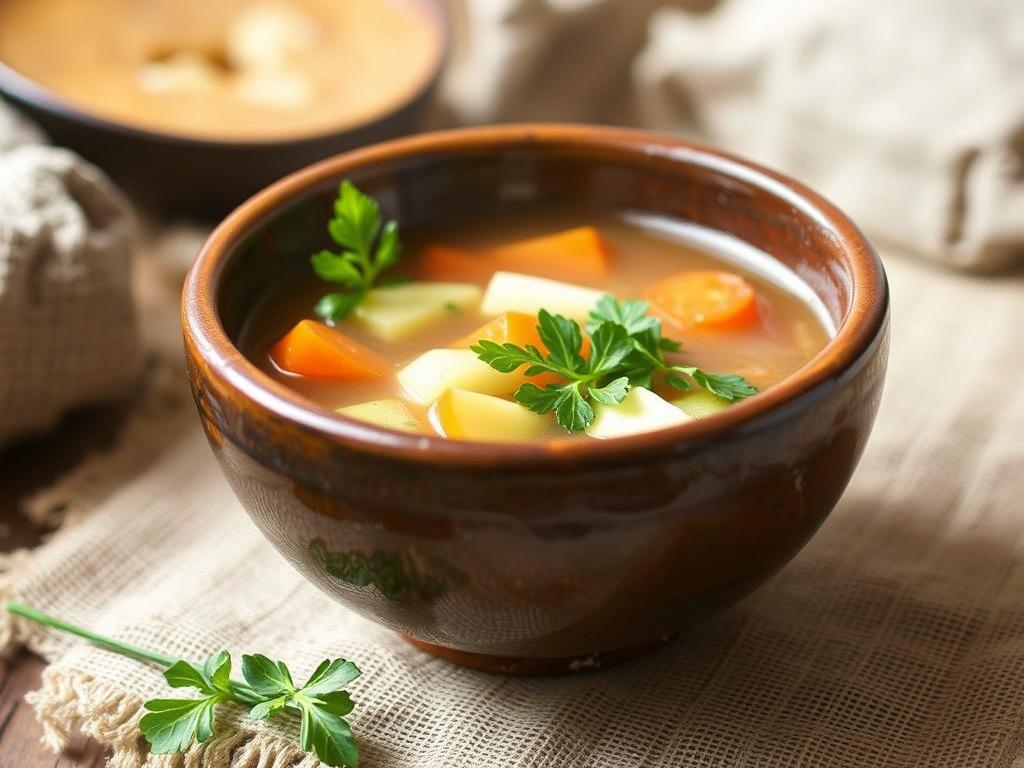
Though the “stone” itself adds no nutritional value, the ingredients brought in by contributors turn the pot into a wholesome meal. Depending on what goes into the soup, it can be a rich source of vitamins, minerals, protein, and fiber. Basic recipes often include root vegetables like carrots and potatoes, onions, garlic, and sometimes meat or beans. Together, these ingredients offer a balanced dose of carbohydrates, vitamins A and C, potassium, and antioxidants.
What makes Stone Soup nutritionally unique is its flexibility—using whatever is available often means very fresh, seasonal produce, which tends to be more nutrient-dense. Plus, communal cooking often means the soup caters to a wide range of tastes and dietary needs.
From Local Kitchens to Global Tables: Popularity of Stone Soup in Different Countries
Stone Soup has managed to cross borders and cultures, embraced in many countries for its simplicity and underlying message. In Europe, it’s a staple folk story in countries like France, Poland, and Germany. Asia has its versions; in Japan, a similar concept exists where travelers start cooking with minimal ingredients to entice local residents to share. Even in North America, the story has found renewed popularity as communities use it to promote sharing during food drives and festivals.
What’s striking is how each place puts its local spin on the ingredients and storytelling but keeps the essence intact. It’s a unifying recipe not just for the kitchen but for the heart.
Stone Soup on Your Stove: 3 Best Recipes to Try at Home
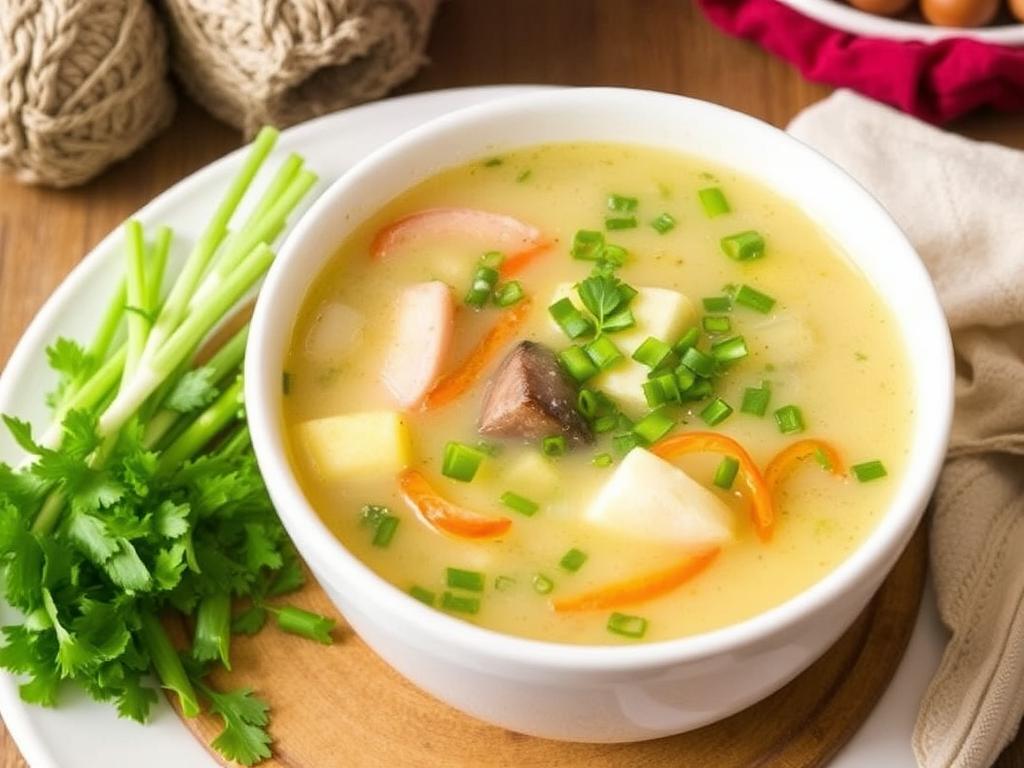
If the story has inspired you to try this communal magic yourself, here are three simple yet tasty recipes that honor the essence of Stone Soup:
| Recipe Name | Main Ingredients | Cooking Tips |
|---|---|---|
| Classic Vegetable Stone Soup | Carrots, potatoes, onions, celery, bay leaves, salt, pepper | Start with water and a clean stone, add base vegetables, cook low and slow |
| Hearty Meat and Bean Soup | Beef chunks, kidney beans, tomatoes, onions, garlic, herbs | Brown meat for flavor, soak beans ahead, simmer until tender |
| Asian-Inspired Stone Soup | Ginger, mushrooms, bok choy, tofu, soy sauce, garlic | Use vegetable broth base, add tofu last to keep texture intact |
Starting with water and a stone is more of a fun ritual, but you can jump straight to adding those vegetables and seasonings. The point is to mix and match what you have on hand, just like the story suggests.
Beyond the Soup Bowl: What to Eat with Stone Soup
Stone Soup naturally pairs well with simple sides, since the soup itself is rich in flavor but humble in presentation. Crusty bread or cornbread are classic companions, perfect for dipping and soaking up the broth. For a heartier meal, add a green salad dressed with lemon and olive oil or some roasted root vegetables on the side.
If you want to get a bit fancy, a sprinkle of fresh herbs or a dash of grated cheese on top adds a new dimension without overpowering the soup’s character. The beauty is Stone Soup invites improvisation; nothing is set in stone (pun intended!). It’s a dish that brings people together not only to share food but also to share moments, stories, and laughter.
In the end, Stone Soup teaches more than cooking skills; it reminds us of the power of generosity and imagination. It’s a reminder that sometimes the best meals appear not from abundance but from shared kindness and community spirit. Next time you gather with friends or family, maybe toss a stone into the pot and see what magic unfolds.


