

Anyone who has ever stumbled upon the deep, aromatic world of Georgian cuisine knows that it’s a treasure trove of bold flavors, hearty dishes, and genuine warmth. Among the gems of this culinary tradition, Kharcho Soup stands out—not just as a meal, but as a story told bowl after bowl. This soup wraps you in the perfect blend of tender meat, fragrant spices, and a distinct tang that keeps you coming back for more, no matter the season. Curious about what makes it so special? Let’s dive in and savor everything there is to know about Kharcho Soup, from its origins to recipes that you can try right at home.
- Unveiling Kharcho Soup: What It Really Is
- Tracing its Roots: The Fascinating History of Kharcho Soup
- Where Did Kharcho Soup First Appear
- Intriguing Tidbits: Interesting Facts About Kharcho Soup
- The Goodness Inside: Nutritional Value of Kharcho Soup
- Across Borders: Popularity of Kharcho Soup in Different Countries
- Bringing it Home: 3 Best Recipes for Cooking Kharcho Soup
- Classic Georgian Kharcho
- Kharcho with Walnuts
- Vegetarian Kharcho
- Pairing Perfection: What to Eat with Kharcho Soup
Unveiling Kharcho Soup: What It Really Is
Kharcho Soup isn’t just any soup; it’s a rich, hearty dish that combines tender meat, typically beef, with rice and an orchestra of spices—all harmonized with a unique ingredient: tkemali, sour plum sauce. What does this mean in simple terms? Imagine a stew with the comforting thickness of a bowl that hugs your insides, but with a subtle tartness and warmth from garlic, coriander, and chili that wakes up your taste buds. It’s a dish that sits somewhere between a soup and a stew, robust enough to be filling but perfectly balanced in flavor. This isn’t just comfort food; it’s a meal that carries history, culture, and a distinct sense of place.
Tracing its Roots: The Fascinating History of Kharcho Soup
Talking about the history of Kharcho Soup means taking a stroll through centuries of Georgian tradition. This soup has been around since at least the 19th century, though some trace its origins even earlier. It flourished in the Caucasus region, evolving with local ingredients and customs. Originally, families would prepare kharcho as a way to use leftover meat, cooking it slowly with sour plum to add acidity and depth. Over time, it grew into a staple that reflects the essence of Georgian hospitality—generous, warming, and full of character. You could say that every spoonful of Kharcho Soup carries a whisper from ancestors who gathered around the hearth.
Where Did Kharcho Soup First Appear
While Kharcho Soup is deeply associated with Georgia, it’s worth noting its roots trace back specifically to eastern Georgia—regions like Tbilisi and Kakheti. The use of tkemali, a plum sauce from local sour plums, sets it apart, grounding it firmly in this particular geography. The soup spread through the Caucasus and beyond due to the influence of Georgian emigrants and the popularity of its distinctive flavor profile. Though the core idea of meat-and-rice soup is universal, Kharcho’s marriage with sour plum sauce and specific spice blend makes it unmistakably Georgian.
Intriguing Tidbits: Interesting Facts About Kharcho Soup
Kharcho Soup carries a few surprises beyond its deliciousness. For example, the word “kharcho” loosely translates to “food” in old Georgian, showing how essential this dish was to daily life. Another tidbit: despite its reputation as a heavy soup, kharcho is surprisingly light on the palate because of the tartness from the plums and subtle heat from chili. Traditionally, every family has its own twist—some add walnuts for crunch, others switch rice for barley. This flexible nature has helped kharcho adapt across regions and generations.
The Goodness Inside: Nutritional Value of Kharcho Soup
Here’s a surprise—kharcho isn’t just tasty, it’s pretty good for you. Packed with protein from beef, slow-cooked to tender perfection, it nourishes the body deeply. Rice adds complex carbohydrates that give you sustained energy, while plum sauce brings vitamin C and antioxidants. Spices like garlic and coriander not only boost flavor but carry anti-inflammatory and immune-supportive properties. This mix of nutrients makes kharcho a balanced meal in itself, perfect for cold days but equally satisfying any time you need a wholesome pick-me-up.
| Ingredient | Key Nutrients | Benefits |
|---|---|---|
| Beef | Protein, Iron, B Vitamins | Muscle repair, energy |
| Rice | Carbohydrates, Fiber | Energy, digestion support |
| Tkemali (Sour Plum Sauce) | Vitamin C, Antioxidants | Immune support, flavor enhancer |
| Spices (Garlic, Coriander) | Antimicrobial compounds | Anti-inflammatory effects |
Across Borders: Popularity of Kharcho Soup in Different Countries
Though Kharcho Soup shines brightest in Georgia, it’s no stranger beyond those borders. In Russia and Ukraine, for instance, it’s a beloved part of the Caucasian cuisine scene, often found in specialized restaurants. Historical ties and cultural exchanges have made kharcho a comfort dish for people across the former Soviet Union. More recently, food lovers worldwide have picked up on its charm, especially those interested in authentic regional foods. Its unique mix of sour, spicy, and hearty elements has helped it carve out a niche in global cooking blogs and menus from New York to Berlin.
Bringing it Home: 3 Best Recipes for Cooking Kharcho Soup
When it comes to cooking Kharcho Soup, the beauty lies in experimenting with traditional elements and making them your own. Here are three variations that capture the spirit and depth of this dish:
Classic Georgian Kharcho
- Beef chuck or brisket, cut into chunks
- Long-grain rice
- Tkemali plum sauce
- Garlic, coriander, chili, and fresh herbs (parsley, cilantro)
- Slow simmer for several hours to blend flavors
Kharcho with Walnuts
- All Classic ingredients, plus finely chopped walnuts added midway
- Extra sourness from more tkemali or lemon juice
- Walnuts add a pleasantly nutty texture and richness
Vegetarian Kharcho
- Replace beef with mushrooms or eggplant for umami
- Use vegetable broth
- Keep spices and plum sauce for authentic taste
These recipes invite you to make kharcho your own. Once you get the hang of balancing sour, spicy, and savory, you’ll find little variations to please your own palate.
Pairing Perfection: What to Eat with Kharcho Soup
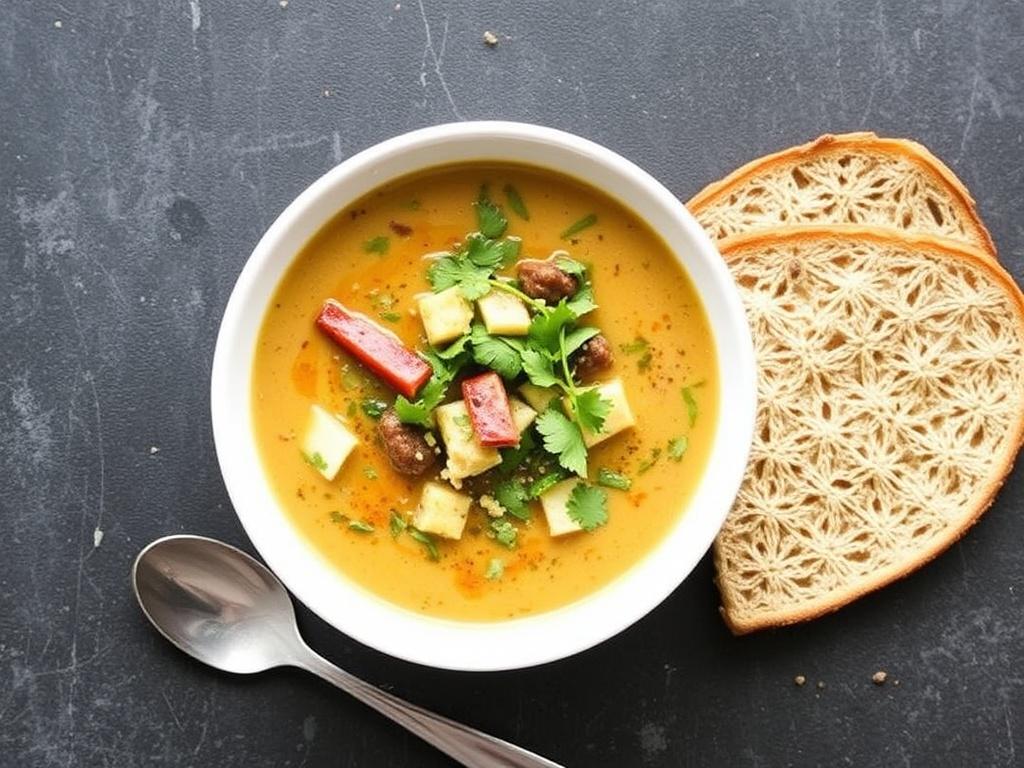
Kharcho Soup shines as a standalone meal, but what you eat alongside it can elevate the experience. Traditional Georgian cuisine suggests freshly baked bread—think a warm piece of shoti or a crusty pkhali flatbread—to soak up every drop. On colder days, it pairs beautifully with a side of pickled vegetables, providing a crisp contrast to the rich flavors. For a fuller meal, light salads with herbs and tomatoes are common, balancing the umami depth with freshness. And don’t forget a glass of robust red wine or a homemade Georgian chacha to round things out if you’re inclined.
—
If you’ve been chasing dishes that feel like a warm embrace after a long day, Kharcho Soup might just become your new favorite. Its mix of history, flavor, and tradition invites us all to slow down, savor deeply, and connect with a culture that knows how to treat food as an art—and a comfort.


