

If you’ve never tried chestnut soup, you’re missing out on something truly special. Imagine a bowl of velvety, slightly sweet, and earthy comfort that wraps you up like a cozy blanket on a chilly day. Chestnut soup surprises many with its rich flavor and smooth texture that feels both hearty and elegant, making it the perfect dish for when you want a little warmth and sophistication in one spoonful. Once you dive into its history, cultural journey, and discover how to make it yourself, you’ll understand why this lesser-known delicacy deserves a place at your dinner table. Let’s embark on a savory adventure through the world of chestnut soup and reveal all its secrets.
- What Chestnut Soup Really Is
- The Story Behind Chestnut Soup
- Where Chestnut Soup Made Its First Appearance
- Fascinating Facts about Chestnut Soup
- Understanding Chestnut Soup’s Nutritional Value
- Where Chestnut Soup Has Gained Popularity Around the World
- Three Standout Recipes to Master Chestnut Soup at Home
- 1. Classic French Chestnut Soup
- 2. Italian Chestnut and Mushroom Soup
- 3. Vegan Chestnut and Coconut Soup
- Perfect Pairings: What to Serve with Chestnut Soup
What Chestnut Soup Really Is

Chestnut soup is a creamy, comforting soup made primarily from chestnuts — the edible nuts from the chestnut tree. Unlike most nuts, chestnuts have a starchy quality, giving the soup a unique texture somewhere between mashed potatoes and a velvety bisque. The soup often includes ingredients like onions, garlic, herbs, stock, and cream or milk, balancing the sweetness of chestnuts with savory notes. The result is a smooth, luscious soup that feels rich but not heavy, with a natural depth of flavor. Whether served as a starter or a light meal, chestnut soup has an inviting quality that quickly wins hearts.
The Story Behind Chestnut Soup
You might be surprised to learn that chestnut soup has a long and earthy history rooted in necessity and tradition. Before the advent of modern agriculture, chestnuts were a staple food source in many parts of Europe and Asia because they were abundant, easy to store, and nutritious. People historically used chestnuts to create filling meals during harsh winters when fresh vegetables were scarce. Over time, those humble beginnings turned into sophisticated recipes celebrated in homes and fine dining. Chestnut soup evolved from a simple broth into a dish cherished for its warming qualities and subtle, nutty flavor.
Where Chestnut Soup Made Its First Appearance
Chestnut soup’s origins trace back mainly to the Mediterranean and Alpine regions, where chestnut trees thrived. Italian and French cuisines, especially in areas like Piedmont and Provence, have long histories of incorporating chestnuts into their cooking traditions. In Italy, chestnuts were often ground into flour or cooked, and chestnut soup emerged as a natural way to enjoy these nuts during cooler seasons. Similarly, in France, chestnut dishes became symbols of rustic elegance, blending local ingredients with time-honored recipes. But chestnut soup is not limited to Europe; parts of East Asia have their own variations, highlighting the nut’s global appeal.
Fascinating Facts about Chestnut Soup
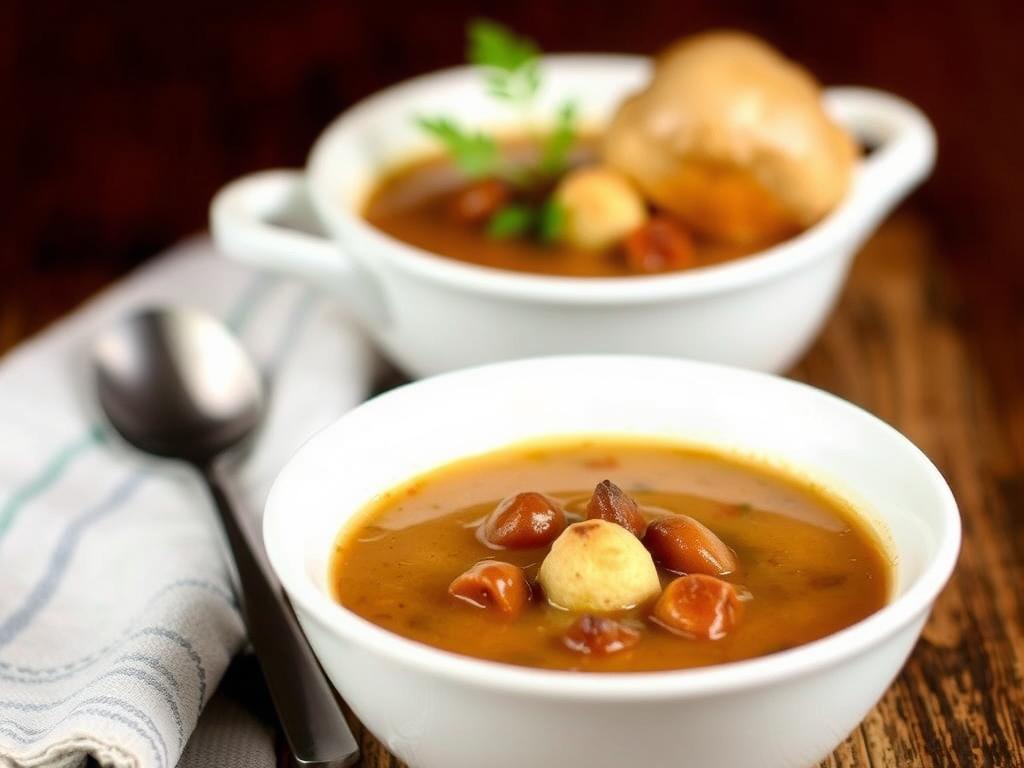
Chestnut soup comes with intriguing tidbits that make it even more delightful to explore:
- Chestnuts differ from other nuts because they are high in starch and low in fat.
- Early Romans depended heavily on chestnuts as a food source, praising their versatility.
- Chestnut soup can be both gluten-free and vegetarian, making it accessible for various diets.
- The season for fresh chestnuts is short, usually from late September to November, which makes fresh chestnut soup an autumn favorite.
- Freeze-dried or canned chestnuts allow the soup to be enjoyed year-round without losing flavor.
Understanding Chestnut Soup’s Nutritional Value
You might be curious about what’s actually inside your bowl of chestnut soup besides flavor. Good news — chestnuts pack a nutritional punch. Unlike many nuts rich in fats, chestnuts are lower in calories and fat but high in carbohydrates, mostly in the form of natural starches. They provide a good source of dietary fiber, vitamins C and B6, potassium, and antioxidants. Chestnut soup can be surprisingly filling and nourishing without being heavy, which explains why it has remained a comforting staple through centuries. For those watching their diet, chestnut soup offers a wholesome option that combines taste and health benefits.
Where Chestnut Soup Has Gained Popularity Around the World
Though chestnut soup had its roots in Europe, it has traveled far beyond its birthplace. Today, you’ll find it embraced in gourmet restaurants in the United States, where comfort food with a twist is always trendy. In Asia, particularly in Japan and Korea, chestnut soups and related dishes are enjoyed during autumn and winter seasons, often infused with local flavors like miso or rice wine. In Italy and France, chestnut soup remains a beloved comfort food, often linked to family traditions and festive meals. This international embrace reflects a shared love for its gentle flavors and heartwarming qualities.
Three Standout Recipes to Master Chestnut Soup at Home
Let’s talk about how to make this delicious soup yourself. Here are three of the best recipes that showcase different takes on chestnut soup:
1. Classic French Chestnut Soup
Ingredients include roasted chestnuts, onions, garlic, chicken or vegetable broth, cream, and a touch of thyme. It’s all cooked slowly until smooth, then finished with cream to add silkiness.
2. Italian Chestnut and Mushroom Soup
This recipe combines sautéed wild mushrooms and chestnuts, blending earthy flavors into a rustic soup, perfect for chilly evenings.
3. Vegan Chestnut and Coconut Soup
Using coconut milk instead of cream, this recipe adds ginger and lime for a fresh, exotic twist while remaining dairy-free and vegan-friendly.
Each recipe highlights the chestnut’s versatility—from creamy and rich to lightly seasoned and fresh—making it easy to tailor the soup to your taste and mood.
Perfect Pairings: What to Serve with Chestnut Soup
Chestnut soup shines on its own but can also be part of a more elaborate spread. It pairs beautifully with crusty artisan bread, especially those with nuts or dried fruit baked in. A crisp green salad dressed with simple vinaigrette cuts through the richness, while roasted root vegetables complement the nutty tones. For a heartier experience, topping the soup with a sprinkle of toasted chestnut pieces or a swirl of truffle oil adds an elegant touch. Don’t forget a glass of light, fruity white wine or a soft, slightly fizzy cider to finish the meal on a high note.
Chestnut soup carries a comforting story in every spoonful, inviting us to savor both tradition and creativity. Whether you try your hand at cooking it or simply relish a bowl from a favorite restaurant, it’s a dish that stays with you long after the last drop.


