

If you think pancakes have to be sweet to be worth waking up for, wait until you taste a hot, golden pancake studded with melting cheese and bright herbs. The first bite wakes up everything — the savory warmth of the cheese, the green snap from chives or dill, the crisp edges giving way to a soft, tender center. These pancakes are comfort and cleverness at once: simple pantry ingredients turned into something that can be breakfast, lunch, or a light dinner. Stick around and I’ll show you where this idea comes from, why it works so well, how to make three standout versions, what to serve with them, and a few facts that will give you a little kitchen swagger.
- What it is Pancakes with cheese and herbs
- History Pancakes with cheese and herbs
- Where it first appeared Pancakes with cheese and herbs
- Interesting facts about Pancakes with cheese and herbs
- Nutritional value Pancakes with cheese and herbs
- Popularity in different countries Pancakes with cheese and herbs
- 3 best recipes for cooking Pancakes with cheese and herbs
- 1. Ricotta and Lemon Herb Pancakes
- 2. Cheddar and Chive Buttermilk Pancakes
- 3. Cottage Cheese and Dill Eastern-Style Pancakes
- What to eat with Pancakes with cheese and herbs
What it is Pancakes with cheese and herbs
Pancakes with cheese and herbs are savory griddled cakes made from a batter or curd mixture that includes cheese and fresh or dried herbs. They can be thin like crepes, thick and fluffy like American pancakes, or somewhere in between — think fritter meeting pancake. The cheese can be soft and fresh, like ricotta or cottage cheese, or harder and melty, like cheddar or Gruyere. Herbs add brightness and aroma; common choices are chives, parsley, dill, basil, and thyme. Texture ranges from pillowy to crispy, depending on the fat used and how thin the batter is spread on the pan.
History Pancakes with cheese and herbs
Pancakes themselves are ancient — flat, cooked batter shows up in Greek and Roman recipes, and nearly every culture has its version. The idea of adding cheese and herbs is likely as old as dairying and herb-gathering. In rural kitchens, leftover cheese and handfuls of garden herbs were folded into batter to avoid waste and add flavor. Over time those practical origins developed into regional specialties: cheese curd pancakes in Eastern Europe, savory buckwheat galettes in France with cheese fillings, and cheesy griddlecakes in Northern Europe. Rather than a single invention, cheesy herb pancakes are an organic convergence where similar needs met similar ingredients.
Where it first appeared Pancakes with cheese and herbs
Pinpointing a single birthplace is impossible because many cuisines independently combined batter, dairy, and herbs. If you trace early records, you find parallel lines: Roman recipes that combine batter with cheese-like ingredients, and medieval European household cookbooks with griddle-cooked dough enriched by curds. In modern culinary maps, you will find notable variants in Eastern Europe, France, and the British Isles, each adapting the idea to local cheeses and herbs. So the real answer is that they first appeared wherever people had flour, milk, and a garden.
Interesting facts about Pancakes with cheese and herbs
- Using different cheeses changes not just flavor but cooking behavior: high-moisture cheeses like ricotta keep pancakes tender; aged cheeses add sharpness and brown more quickly.
- Herbs can be mixed fresh into batter or sprinkled on top after cooking; fresh herbs release volatile oils during cooking, giving a more aromatic result.
- Turning the pan heat up briefly at the end crisps edges without overcooking the interior; contrast in texture is part of the appeal.
- These pancakes travel well: they’re easily adapted for gluten-free flours, whole grains, or added vegetables.
Nutritional value Pancakes with cheese and herbs
Below is an approximate nutritional snapshot for a medium cheese-and-herb pancake (about 100 grams). Values depend heavily on cheese type, flour, and added fats, so treat this as a guideline rather than a fact sheet.
| Nutrient | Approx. per 100 g |
|---|---|
| Calories | 220–300 kcal |
| Protein | 8–12 g |
| Fat | 10–18 g |
| Carbohydrates | 20–30 g |
| Sodium | depends on cheese — can be moderate to high |
Tips: choose low-fat cheese or reduce added butter to lower calories; add herbs and vegetables to boost fiber and micronutrients.
Popularity in different countries Pancakes with cheese and herbs
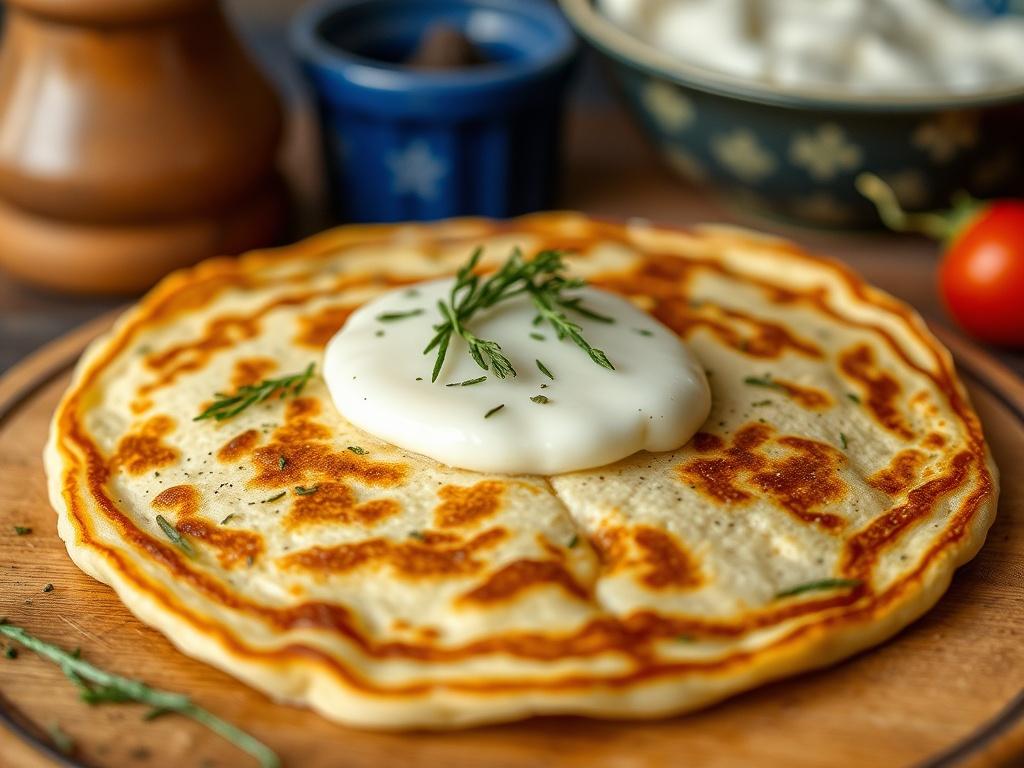
In France, savory buckwheat galettes often feature cheese and herbs. In Eastern Europe, variations using farmer’s cheese or cottage cheese are common for breakfast or dessert depending on sweet additions. The UK and Netherlands have long traditions of savory pancakes or pannenkoeken served with cheese and other toppings. In the U.S., brunch culture has embraced savory pancakes — cheddar and scallion stacks turn up on menus. Many cultures adapt the concept locally, so the dish enjoys wide appeal because it balances comfort with flexibility.
3 best recipes for cooking Pancakes with cheese and herbs
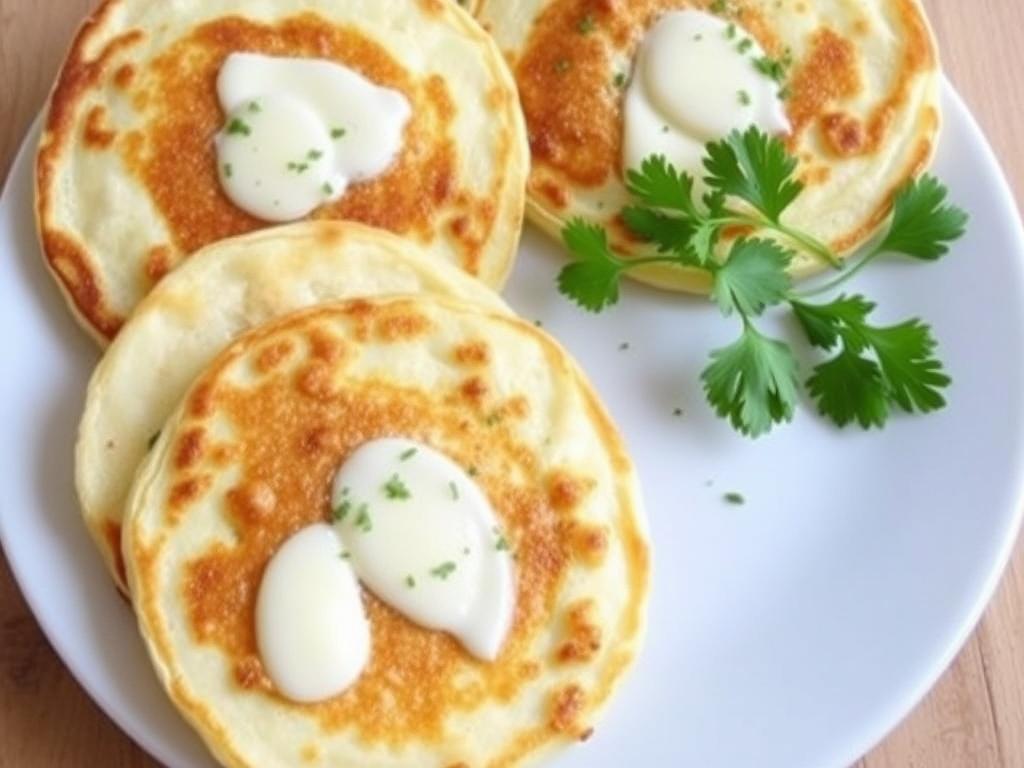
1. Ricotta and Lemon Herb Pancakes
Ingredients:
- 1 cup ricotta
- 2 eggs
- 1/2 cup flour (or gluten-free mix)
- 1/4 cup milk
- Zest of 1 lemon
- 2 tbsp chopped chives and parsley
- Salt and pepper
- Olive oil for frying
Method: Mix ricotta, eggs, milk, and lemon zest. Fold in flour and herbs to a thick batter. Spoon onto a medium-hot skillet with oil, cook until golden on both sides, about 3 minutes per side. Serve warm.
2. Cheddar and Chive Buttermilk Pancakes
Ingredients:
- 1 cup flour
- 1 tsp baking powder
- 1 cup buttermilk
- 1 egg
- 3/4 cup grated sharp cheddar
- 2 tbsp chopped chives
- Butter for frying
Method: Whisk wet ingredients, fold into dry, then stir in cheese and chives. Drop batter onto a hot griddle and cook until bubbles form and edges set; flip and finish. Best served hot so the cheese strings.
3. Cottage Cheese and Dill Eastern-Style Pancakes
Ingredients:
- 1 cup cottage cheese, drained
- 2 eggs
- 1/2 cup semolina or fine cornmeal
- 2 tbsp chopped dill
- Salt and pepper
- Neutral oil for frying
Method: Combine all ingredients; let rest 10 minutes for semolina to hydrate. Fry spoonfuls until golden. These keep their shape well and have a slightly grainy, pleasant texture.
What to eat with Pancakes with cheese and herbs
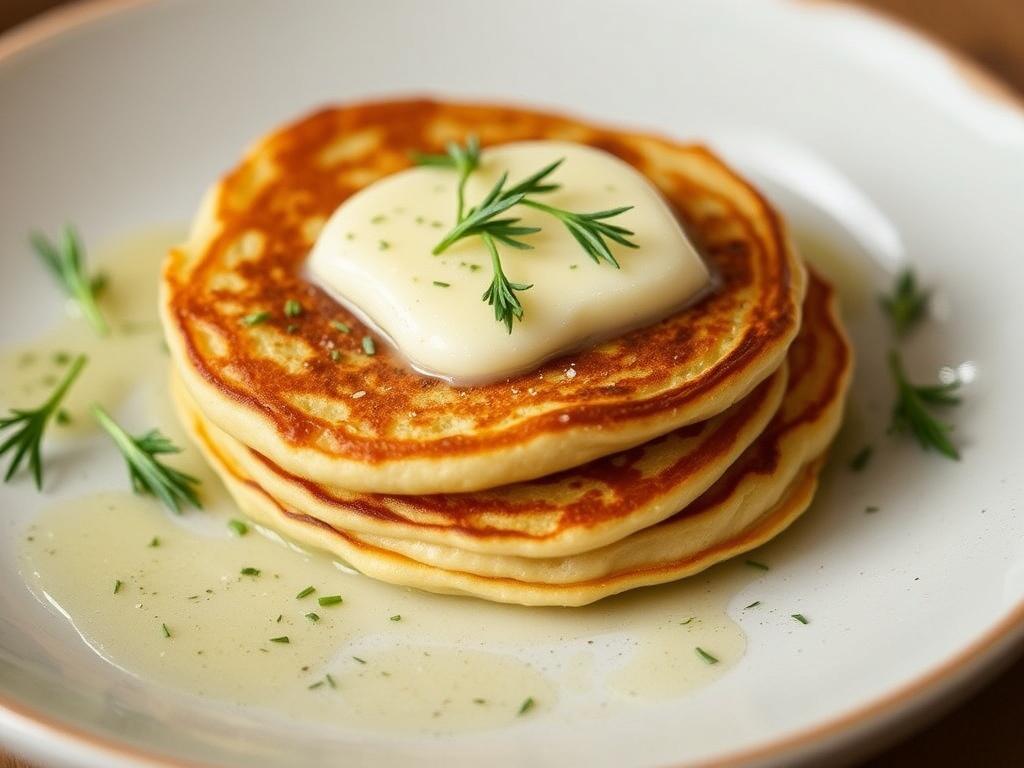
Pairings make these pancakes sing. Try a simple arugula salad with lemon vinaigrette for freshness, a dollop of plain yogurt or labneh for tang, smoked salmon for luxury, or a soft-poached egg on top for extra richness. For drinks, a crisp white wine, light beer, or strong tea are all excellent. If you want a truly local touch, serve with pickled vegetables or chutney depending on your flavor direction.
Enjoy experimenting with cheese and herbs; they’re forgiving ingredients that reward curiosity. Make one batch, tweak the cheese and herb combo, and you’ll soon have a personal favorite that outshines plain pancakes every time.


