

You might not have heard of Rumford Soup before, yet this humble concoction did something pretty amazing—it helped feed the hungry when resources were tight, and it holds a little secret about how food can be both simple and powerful. If you’re curious about a dish that’s more than just a meal, something woven into history and still relevant today, keep reading because Rumford Soup has a story worth sharing and flavors worth tasting.
- Unpacking Rumford Soup: What It Really Is
- The History That Brings Rumford Soup to Life
- Pinpointing Its Origins: Where Rumford Soup First Appeared
- Interesting Tidbits About Rumford Soup You Didn’t Know
- The Nutritional Power of Rumford Soup
- How Rumford Soup Found Its Place Around the World
- Top 3 Recipes to Try Making Rumford Soup Yourself
- Perfect Pairings: What to Eat with Rumford Soup
Unpacking Rumford Soup: What It Really Is
Let’s start by clearing up what Rumford Soup actually is. It’s not your everyday soup rich with cream or dotted with fancy veggies. Instead, it’s a very basic, economical soup made primarily from ingredients like pearl barley, peas, potatoes, and sometimes a bit of meat broth or bones if available. The genius lies in the simplicity—it was designed to stretch ingredients as far as possible while still providing strength and nourishment.
The soup itself looks modest, often a pale, thick broth with tiny bits of vegetables and grains floating around. But don’t underestimate it; this was a meal meant to sustain, often served in workhouses or poorhouses where feeding many on a tight budget was a constant challenge. It’s a soup with roots in practicality, designed for energy and filling hunger, not for fancy flavors.
The History That Brings Rumford Soup to Life
Tracing back to the 18th century, Rumford Soup got its start thanks to Benjamin Thompson, better known as Count Rumford. He was a physicist, inventor, and social reformer who cared deeply about solving social problems, especially poverty and hunger. Rather than just giving charity, he wanted to create a solution that was practical and sustainable.
In the 1790s, the workhouses in England were struggling to feed the poor, and Rumford proposed a recipe that could quietly feed hundreds or thousands with minimal expense. The soup was crafted based on scientific ideas about nutrition, focusing on ingredients that provided calories and protein but cost very little. So, Rumford Soup emerged as a kind of early social innovation and nutrition science combined.
Pinpointing Its Origins: Where Rumford Soup First Appeared

Though Count Rumford worked in various European countries, his soup recipe took root in England first. The city of Munich, Germany, where he initially worked, also witnessed some of his social reforms, but it was in England that the soup gained wider fame. The recipe appeared in manuals for workhouse meals and public welfare kitchens, becoming a staple choice for feeding large groups of poor and working-class individuals during tough economic times.
It was one of the earliest examples of how science and compassion merged to fight hunger, long before modern welfare systems existed.
Interesting Tidbits About Rumford Soup You Didn’t Know
– Rumford Soup was designed so that each serving contained enough calories to keep up physical labor, yet it was incredibly affordable.
– The recipe was deliberately stripped down so no ingredient would feel wasted or extravagant.
– Despite its rough-and-ready ingredients, Rumford Soup was seen as a progressive approach, combining food and public health in a way few had attempted before.
– Count Rumford was actually an American who worked in Europe—his influence spanned continents, and his soup is often cited in discussions of early social entrepreneurship.
– The soup’s approach inspired other cheap, nourishing recipes in subsequent centuries, cementing its legacy beyond the initial workhouse walls.
The Nutritional Power of Rumford Soup
Rumford Soup may look plain, but it packs a punch nutritionally. Here’s what made it a smart choice back then—and still interesting now:
| Ingredient | Role in Nutrition |
|---|---|
| Pearl barley | High in fiber and slow-release carbs, providing lasting energy |
| Dried peas | Good source of plant protein and some vitamins |
| Potatoes | Affordable carbs, rich in potassium and vitamin C |
| Broth (if used) | Adds flavor and minerals extracted from bones |
This combination helped workhouse residents maintain strength despite limited food variety. Rumford Soup balanced calories and basic nutrients without waste or excess.
How Rumford Soup Found Its Place Around the World
While Rumford Soup isn’t as famous today, its influence echoes globally. Former European colonies and industrial towns sometimes adapted similar soups during hard times. The idea of an affordable, filling, and nutritious soup caught on especially in places where poverty was widespread.
In recent years, some food historians and chefs have rediscovered Rumford Soup, bringing it back as part of heritage cooking or social food programs. It’s a reminder of how food can be a tool for social good, transcending borders and centuries.
Top 3 Recipes to Try Making Rumford Soup Yourself
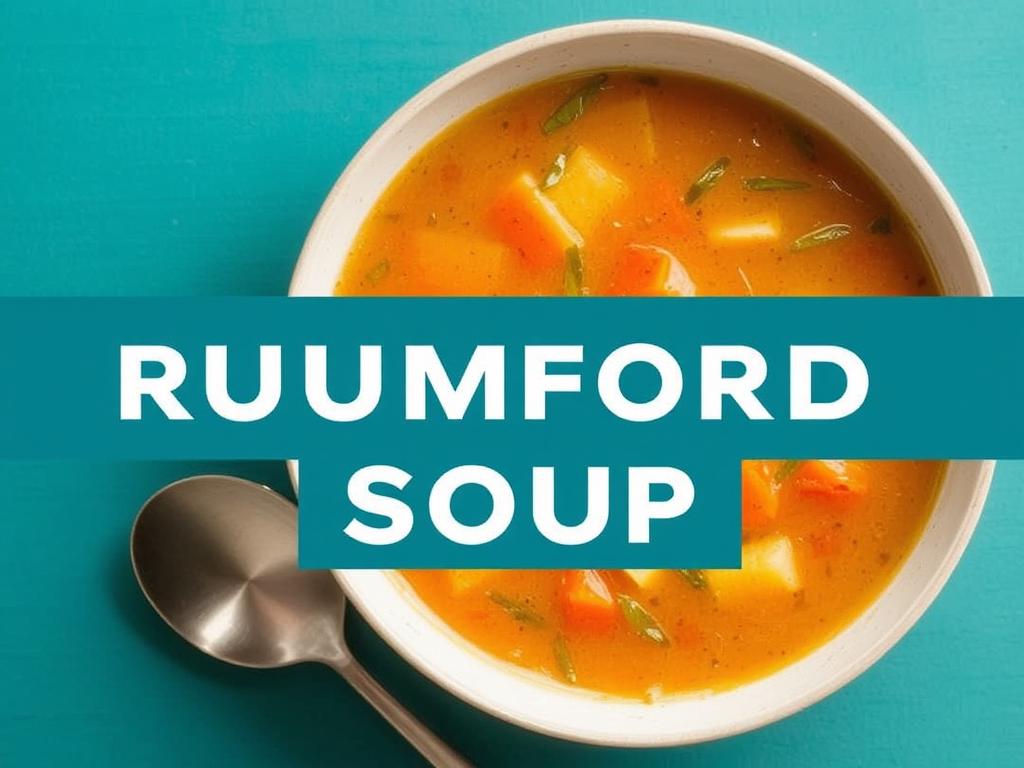
1. **Classic Rumford Soup**
– Pearl barley: 1 cup
– Split yellow peas: 1 cup
– Potatoes: 2 medium, diced
– Onion: 1 small, chopped
– Water or vegetable broth: 6 cups
– Salt and pepper to taste
– Simmer everything for 1.5 hours until creamy and thick.
2. **Hearty Vegetable Rumford**
– Replace peas with lentils
– Add carrots and celery for extra flavor and nutrition
– Use chicken broth if you want more depth
– Cook for 1 hour until soft.
3. **Vegetarian Rumford Style**
– Use mushroom broth for richness
– Throw in some kale or spinach near the end for vitamins
– Season with bay leaves and thyme for aromatic notes.
Perfect Pairings: What to Eat with Rumford Soup
Rumford Soup on its own is filling but mild, so pairing it with simple sides can complete the meal. Think rustic bread, perhaps toasted and buttered, or a slice of cheese if available. A tangy pickle or sauerkraut could also cut through the mildness with a bit of acidity. In essence, the soup forms a base for humble, affordable accompaniments you might find in a traditional kitchen of the past.
Rumford Soup isn’t just a forgotten recipe—it’s a small masterpiece of social ingenuity and nutritional wisdom. Next time hunger or scarcity crosses your path in history or kitchen, remember this unpretentious dish that once made a lasting difference.


