

Panyalam is one of those treats that sneaks up on you — simple at first glance, but rich with texture, aroma, and stories. Imagine a small, deep-fried pancake whose interior is tender and slightly chewy, flavored with coconut and brown sugar, and whose edges crisp to golden perfection. It’s a snack that travels with people, a comfort at celebrations, and a little piece of southern Philippine culinary tradition that invites you to dip, bite, and ask for another. If you’ve never tried Filipino panyalam pancakes, stick around; I’ll take you through what they are, where they come from, how to make them three different ways, and the best pairings to enjoy.
- What Filipino panyalam pancakes are and why they matter
- History of Filipino panyalam pancakes
- Where it first appeared and how it spread
- Interesting facts about Filipino panyalam pancakes
- Nutritional value of Filipino panyalam pancakes
- Popularity in different countries and among communities
- 3 best recipes for cooking Filipino panyalam pancakes
- What to eat with Filipino panyalam pancakes
What Filipino panyalam pancakes are and why they matter

Panyalam are sweet, deep-fried pancakes popular among Muslim communities in the southern Philippines. Made primarily from rice flour (sometimes glutinous rice), coconut milk, and sugar, they form small discs or rounds that puff slightly during frying. Unlike Western pancakes, they’re not served stacked with syrup. Instead they’re enjoyed as snacks, dessert, or festive fare. The texture is a lovely contrast: soft and slightly chewy inside, with a thin crisp exterior. They matter because they’re not just food — they carry cultural meaning, associated with gatherings, holidays, and everyday moments when something warm and sweet is needed.
History of Filipino panyalam pancakes
Panyalam’s roots lie in rice-based sweets that were common long before colonial times. The dish evolved in the southern islands where coconut and rice are staple crops, and where Muslim communities developed distinctive culinary traditions. Over generations, panyalam became tied to celebrations like Eid, weddings, and community gatherings. Rather than a single inventor or date, think of panyalam as an organic product of place and habit: people adapting basic ingredients into a treat that suited their palate, resources, and rituals.
Where it first appeared and how it spread
Panyalam first appeared in the Sulu Archipelago and the larger Mindanao region, among the Tausug, Maguindanao, and Maranao peoples. From there it spread by trade, migration, and intermarriage to neighboring islands and across borders into parts of Malaysia and Indonesia where similar ingredients are used. Today it appears at local markets, in home kitchens, and at community feasts. Its travel reflects human movement more than commercial popularity: people carried the recipe with them, and it adapted along the way.
Interesting facts about Filipino panyalam pancakes
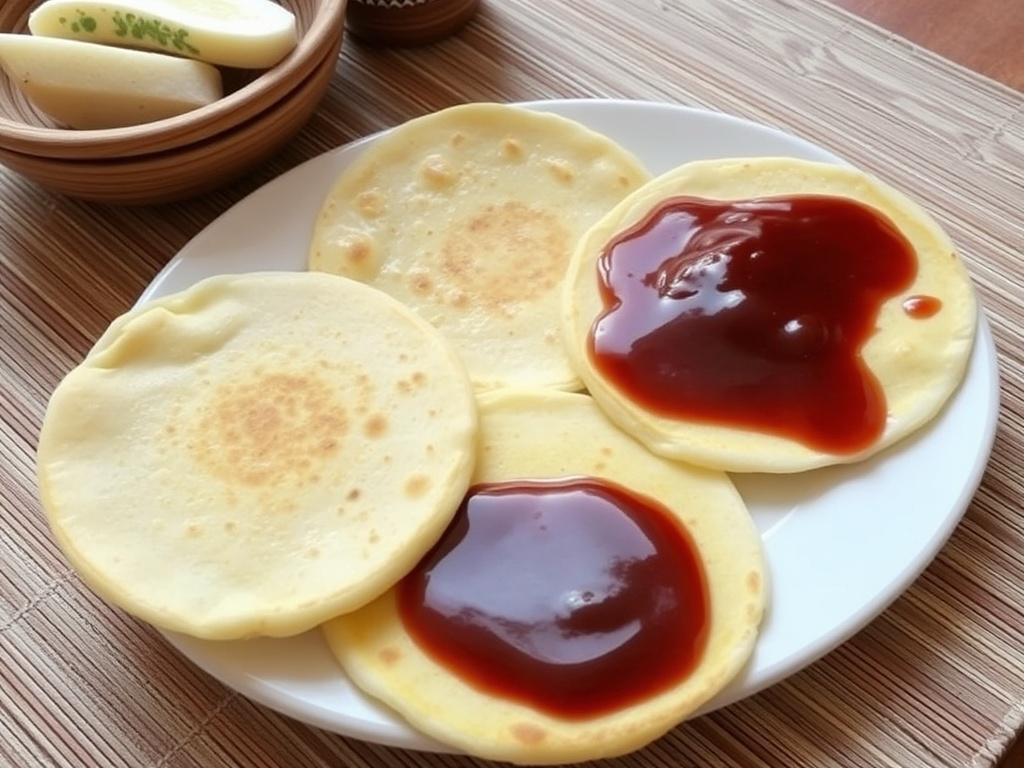
- Panyalam is traditionally made from rice-based flours, which gives it a different chew than wheat-based pancakes.
- It’s often associated with religious and social celebrations, so seeing it at a gathering signals hospitality.
- There are many local variations — some sweeter, some denser, some flavored with a hint of banana or pandan.
- Unlike many Western pancakes, panyalam is fried in oil, which produces that distinctive thin crust.
Nutritional value of Filipino panyalam pancakes
Panyalam are carbohydrate-rich, because rice or glutinous rice flour is the main ingredient. They also contain sugars and fat, especially when coconut milk and deep-frying are part of the process. That makes them energy-dense — good for quick fuel, not ideal as a low-calorie snack. Protein content is modest unless you add ingredients like ground nuts. If you’re watching intake, you can make lighter versions by reducing sugar, pan-frying instead of deep-frying, or using healthier oils.
Popularity in different countries and among communities
While most popular in the southern Philippines, panyalam appears in the cuisines of neighboring Malaysia and parts of Indonesia where maritime trade and cultural overlap exist. Filipino diasporas, especially from Mindanao and the Sulu region, bring panyalam to community events abroad — you’ll often find it at cultural festivals, mosque gatherings, and family celebrations in places like the Middle East or North America. In mainstream food culture it’s less famous than adobo or lumpia, but within its communities it remains a beloved staple.
3 best recipes for cooking Filipino panyalam pancakes
Below are three practical approaches: a traditional rice-flour version, a quick wheat-based adaptation, and a gluten-free glutinous rice recipe.
| Recipe | Main ingredients | Notes |
|---|---|---|
| Traditional rice flour panyalam | Rice flour, coconut milk, brown sugar, a pinch of salt, yeast or baking powder | Soft, slightly chewy. Resting time improves texture. |
| Quick wheat flour adaptation | All-purpose flour, coconut milk, brown sugar, egg, baking powder | Faster, easier when rice flour isn’t available. Different bite. |
| Glutinous rice (sticky rice) panyalam | Ground glutinous rice (or mochiko), coconut milk, palm sugar, optional banana | Chewy and dense, very traditional in texture. |
Simple method (traditional):
1. Mix rice flour, coconut milk, and brown sugar to a batter that’s pourable but not thin. Add a pinch of salt. Optionally add a small amount of fermented batter or yeast and let rest a few hours for depth.
2. Heat oil in a shallow pan. Drop spoonfuls or pour small rounds of batter into hot oil.
3. Fry until the underside is golden, then flip and cook through. Drain briefly on paper towel.
Quick tips: keep batter chilled slightly before frying to help edges crisp; test oil temperature with a drop of batter; avoid overcrowding the pan.
What to eat with Filipino panyalam pancakes
Serve panyalam with strong coffee or black tea — the bitterness balances the sweet and fatty notes. For a local twist, offer grated coconut, latik (coconut caramel), or a drizzle of palm sugar syrup. If you want contrast, pair them with tangy fruit preserves or a squeeze of calamansi. They also work next to savory dishes as a sweet counterpoint during a communal meal.
If you want to try panyalam at home, pick one recipe and keep it simple the first time. The charm is in the modest ingredients and the little ritual of frying and sharing. Once you master the basic texture, experiment with flavors — vanilla, banana, or pandan — and share the results. These small pancakes hold more than calories; they carry warmth, memory, and a taste of southern Philippines.


