
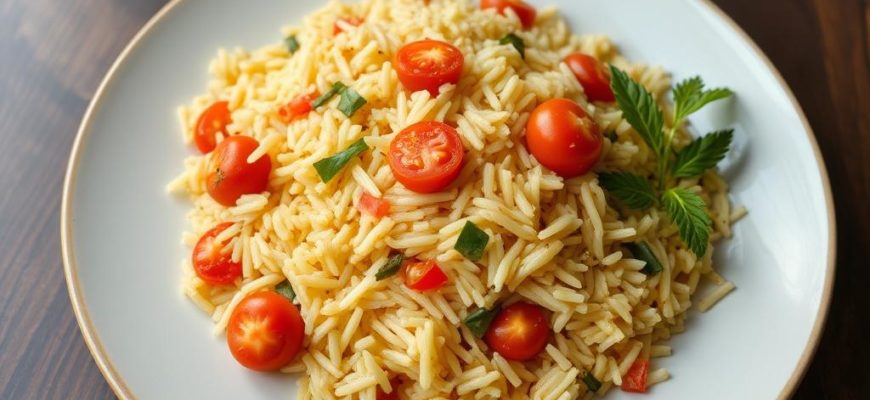
The first spoonful of pilaf with tomatoes often feels like a small revelation: warm rice, a bright tomato tang, and a comforting steam that somehow smells like home no matter where that home is. This dish sits at the crossroad of simplicity and clever technique — modest ingredients turned into something rich and memorable. If you like food that works well on its own or as the backbone for bigger meals, you’ll want to read on: we’ll travel through its origin, history, surprising facts, nutrition, global popularity and finish with a thorough, fail-safe recipe you can use tonight.
- Where Pilaf with tomatoes Comes From
- History Pilaf with tomatoes
- Interesting facts about Pilaf with tomatoes
- Nutritional value Pilaf with tomatoes
- Popularity in different countries Pilaf with tomatoes
- The best step-by-step cooking recipe for Pilaf with tomatoes
- Ingredients for 4 servings
- Method step by step
- Tips and variations
- Final thought
Where Pilaf with tomatoes Comes From
Pilaf itself traces back to Central Asia and the broader Middle Eastern world, where rice simmered with meat, fats and spices became a daily staple. The specific idea of adding tomatoes arrived later, once tomatoes traveled from the Americas and were adopted across the Ottoman, Persian and Mediterranean kitchens. Regions with abundant summer tomatoes — Anatolia, the Levant, Iran and parts of the Caucasus — adapted pilaf to include them. The result is a family of dishes that share the same logic: rice cooked in a tomato-scented liquid until each grain is separate, tender and flavored all the way through.
History Pilaf with tomatoes
Traditional plov, pilaf or pulao began as a method to feed many with limited fuel: render a flavorful fat, brown meat and aromatics, then let rice finish gently in the resulting broth. Tomatoes were a later, natural addition. They took three roles at once — liquid to finish the rice, a balancing acid to brighten rich meats, and a source of color. Over centuries, cooks folded local spices, techniques and vegetables into the base formula. In some places tomato paste became the shortcut; elsewhere, crushed fresh tomatoes were preferred. The tomato version is thus a layered story of adaptation, not a single origin point.
Interesting facts about Pilaf with tomatoes
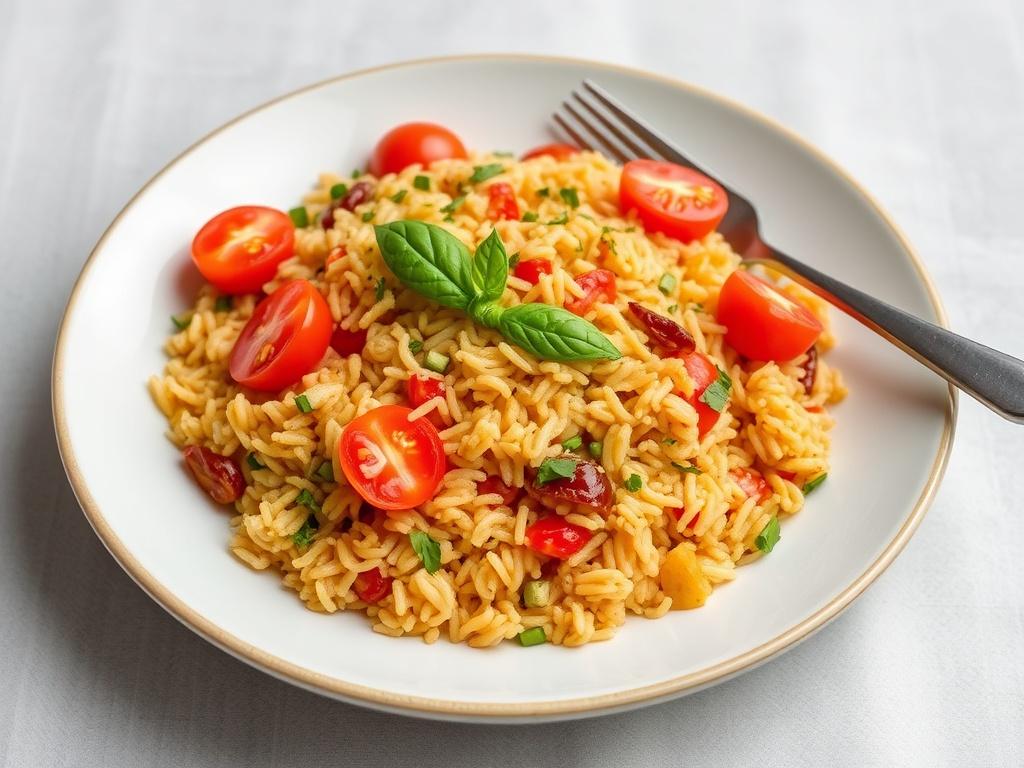
- Pilaf with tomatoes is effectively a canvas: you can stretch it into a vegetarian main, pair it with lamb or chicken, or turn it into a festive grain salad once cooled.
- Regional names vary but the core idea stays constant: rice infused with a seasoned liquid. In Turkey it’s domatesli pilav, in India a similar idea appears as tomato pulao, and in the Caucasus simple tomato rice accompanies many meals.
- Tomato introduces natural acidity, which helps balance fattier meats and intensifies perceived sweetness without added sugar.
- Technique matters: to keep grains separate, many cooks sauté rice briefly before adding liquid or use the “absorption” method with a tight lid.
Nutritional value Pilaf with tomatoes
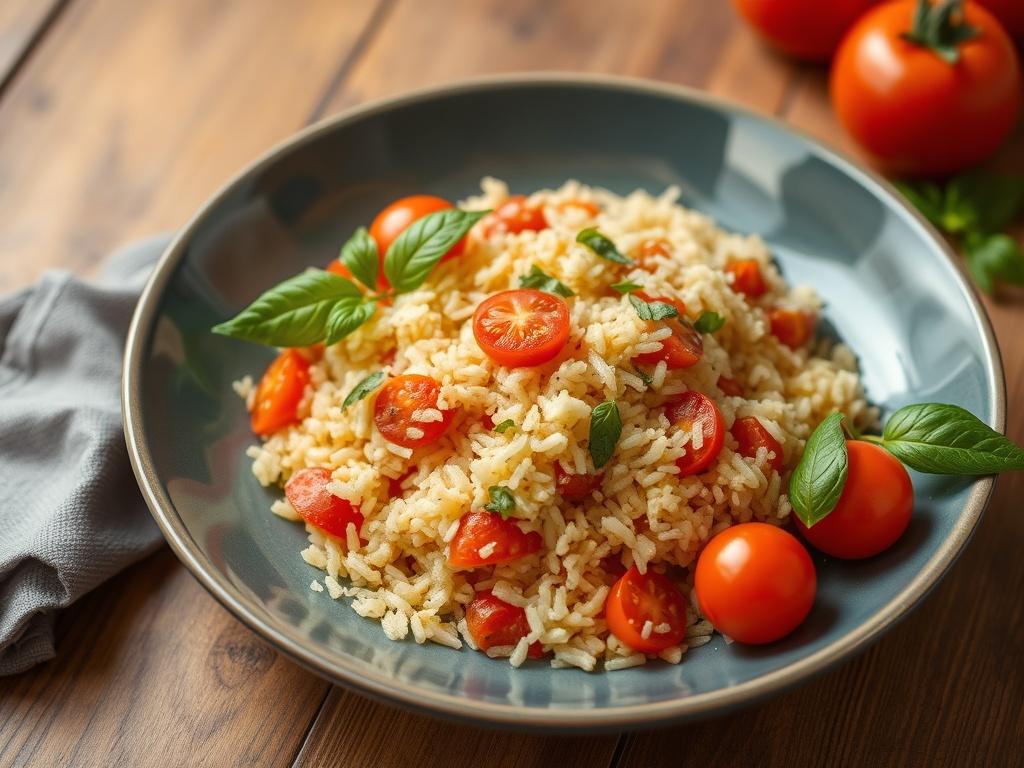
Pilaf with tomatoes is a moderate-calorie, carbohydrate-forward dish with room to improve protein and fiber depending on additions. Tomatoes contribute vitamin C, potassium and lycopene, an antioxidant enhanced by cooking. Use whole-grain rice or brown rice to increase fiber and micronutrients.
| Nutrient (approx. per serving) | Amount |
|---|---|
| Calories | 350–450 kcal |
| Carbohydrates | 60–70 g |
| Protein | 6–15 g (varies by meat/legume addition) |
| Fat | 8–18 g (depends on oil and meat) |
| Fiber | 2–6 g |
Popularity in different countries Pilaf with tomatoes
The template of rice cooked with tomatoes appears across continents. In Turkey, domatesli pilav is a pantry staple, often served with yogurt or grilled fish. In India and Pakistan, tomato pulao is a quick weekday meal flavored with cumin and garam masala. In Iran and the Caucasus, tomato-infused rice complements kebabs and stews, while in the Balkans similar dishes appear as comforting homestyle fare. Each country nudges spices and methods to local taste, but the comforting tomato-rice chemistry makes it universally approachable.
The best step-by-step cooking recipe for Pilaf with tomatoes
This is a balanced, reliable recipe aimed at everyday kitchens. It works vegetarian or with meat. Read through once, prep ingredients, then follow steadily for best results.
Ingredients for 4 servings
- 2 cups long-grain rice (basmati or similar), rinsed until water runs clear and soaked 20–30 minutes
- 3 tablespoons neutral oil or clarified butter
- 1 medium onion, finely chopped
- 2 garlic cloves, minced
- 2 tablespoons tomato paste OR 2 cups crushed tomatoes
- 1½ teaspoons salt (adjust to taste)
- 1 teaspoon ground cumin
- ¼ teaspoon black pepper
- 3½ cups warm vegetable or chicken broth (or water plus 1 stock cube)
- Optional: 1 cup diced carrots, 300 g boneless chicken or lamb cubes
- Fresh herbs to finish: parsley, cilantro, or dill
Method step by step
- Drain the soaked rice and let it sit in a sieve while you prepare the base. This removes excess starch and helps keep grains separate.
- Heat the oil in a heavy-bottomed pot over medium heat. If using meat, brown it first in two batches, remove and set aside. Browning adds depth.
- Sauté the onion until translucent and just beginning to color, 6–8 minutes. Add garlic and cook 30 seconds until fragrant.
- Stir in tomato paste and cook 1–2 minutes to remove raw flavor, or add crushed tomatoes and simmer 4–5 minutes to concentrate flavors. If you use diced carrots, add them here to soften.
- Return meat to the pot if using. Add spices and salt, then pour in warm broth. Bring to a simmer and taste for seasoning.
- Carefully add drained rice, spreading it evenly. Do NOT stir after this point. Raise heat to bring liquid to a gentle boil, then reduce to the lowest heat, cover tightly and simmer undisturbed for 15–18 minutes (for basmati) or until liquid is absorbed.
- Turn off heat and let the pot rest, covered, for 10 minutes. This steams the rice and firms grains without sticking.
- Gently fluff with a fork, fold in chopped herbs, and serve warm.
Tips and variations
- Water-to-rice ratio is key: basmati prefers roughly 1.75–1.85 cups liquid per cup rice in this method; adjust for other rice types.
- For deeper color and flavor, fry a tablespoon of tomato paste until it darkens slightly before adding liquid.
- Add legumes like chickpeas for more protein in a vegetarian version.
- Finish with a squeeze of lemon or a spoon of yogurt to brighten the plate.
Final thought
Pilaf with tomatoes is simple and forgiving, a dish that benefits from small technical choices rather than expensive ingredients. Once you master the basic rhythm — build flavor, measure liquid, resist stirring — you can adapt it a thousand ways and always come back to that warm, tomato-scented comfort in a bowl.


