
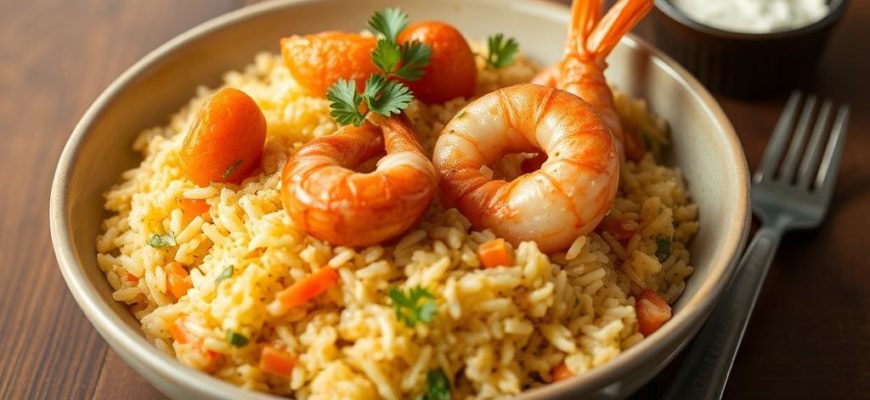
Imagine the smell of warm rice infused with saffron and garlic, steam lifting from a pan while plump prawns, tender squid and flakes of white fish settle into golden grains. Pilaf with seafood is one of those dishes that feels like a small celebration at home: humble rice transformed into something coastal and festive, with each bite carrying salt, herbs and a memory of the sea. If you like dishes that are comforting but a little adventurous, that show off fresh seafood without hiding it, read on—this guide will take you from the dish’s roots to a reliable, foolproof recipe you’ll come back to again and again.
- Where Pilaf with seafood came from and how the coast rewrote the recipe
- The story behind Pilaf with seafood
- Interesting facts about Pilaf with seafood
- Nutritional value of Pilaf with seafood
- How Pilaf with seafood appears around the world
- The best step-by-step cooking recipe for Pilaf with seafood
- Ingredients
- Method
- Tips for reliable results
- Final thought
Where Pilaf with seafood came from and how the coast rewrote the recipe
Pilaf, in its broadest sense, is rice cooked with stock and aromatics so each grain stays separate and flavorful. The technique traveled across continents—through Persia, the Ottoman world, South Asia and beyond—so the base method is ancient and widespread. The seafood twist is much simpler: wherever rice met a coastline, cooks adapted the method to local catches. Think of seaside towns using fish stock, adding shellfish and seafood herbs. That shift from lamb and chicken to shrimp, mussels and fish is logical and delicious, and it’s why versions of pilaf with seafood appear from the Mediterranean shores to South Asian coasts and Latin American kitchens.
The story behind Pilaf with seafood
Cooking rice with flavor is an old idea. In medieval Persia and neighboring regions, rice dishes seasoned with spices and fats were already common. As the recipe migrated—through trade routes, empire expansions and local creativity—it picked up new ingredients. Coastal communities that relied on fish naturally substituted meat for seafood and often used fish stock instead of water or meat broth. Over generations that simple swap became a set of regional dishes: some very close to classic pilaf, others evolving into separate specialties like paella or arroz con mariscos. The important point is this: pilaf with seafood is not a single recipe but a family of dishes united by technique and by the sea.
Interesting facts about Pilaf with seafood
- Pilaf technique focuses on separate, fluffy grains. That distinguishes it from risotto, which is creamy because of stirred starch released by short-grain rice.
- Many coastal versions use whole spices toasted in oil, which gives depth without heaviness: cumin seeds, cardamom pods or bay leaves are common additions depending on region.
- Using fish stock instead of water or chicken broth can radically improve flavor with very little effort—homemade or good-quality store-bought stock works.
- Timing is everything: most seafood should be added near the end so it remains tender, while rice cooks in the broth to absorb the savory liquid.
Nutritional value of Pilaf with seafood
Pilaf with seafood is a balanced dish: rice provides complex carbohydrates, seafood delivers lean protein and heart-healthy omega-3s, and vegetables supply fiber and micronutrients. The exact nutrition depends on portion size and ingredients, but here’s a typical estimate for one generous serving made with olive oil, a mix of shrimp and white fish, vegetables and long-grain rice.
| Nutrient | Approximate amount per serving |
|---|---|
| Calories | 450–650 kcal |
| Protein | 25–35 g |
| Carbohydrates | 50–70 g |
| Fat | 10–20 g (mostly from oil) |
| Key micronutrients | Omega-3 fatty acids, iodine, selenium, vitamin B12, iron (varies by seafood) |
Use less oil, choose brown or parboiled rice for extra fiber, or increase vegetables to adjust the dish’s nutritional profile to your goals.
How Pilaf with seafood appears around the world
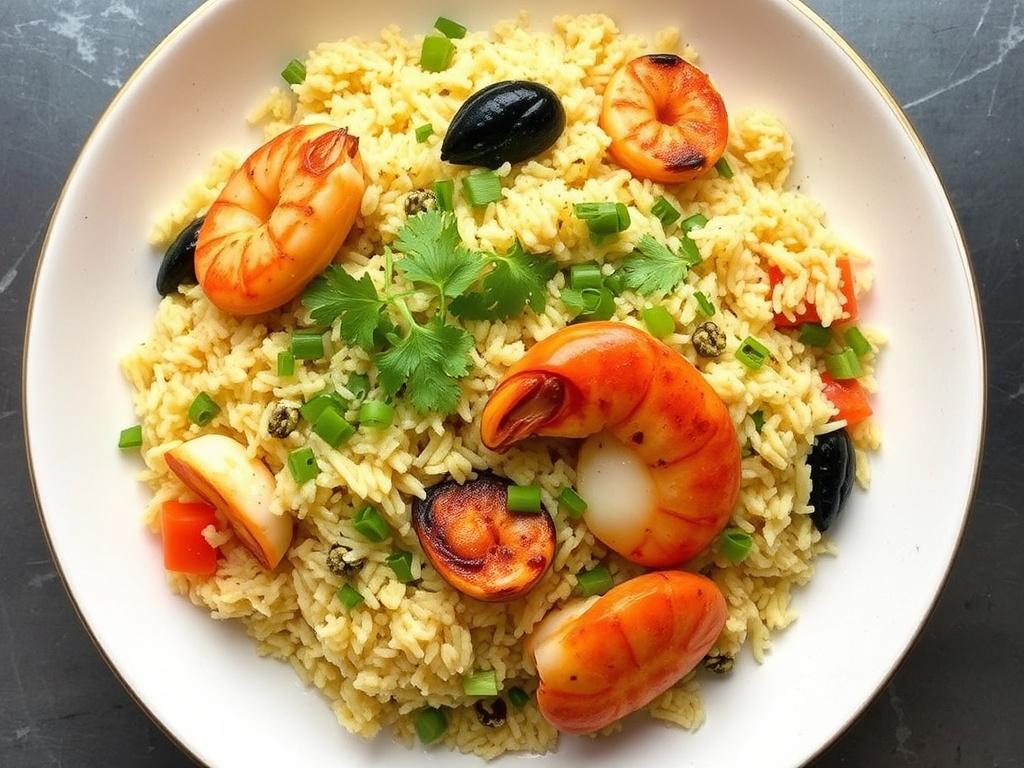
Similar ideas show up everywhere people pair rice with seafood. In Spain, paella is a regional cousin—broad pan, socarrat (crispy bottom) and saffron. Italy offers seafood risottos with creamier textures. Turkey and parts of the eastern Mediterranean feature pilafs that sometimes include fish. In South Asia, coastal communities make seafood pulao or biryani variants. Latin America has arroz con mariscos. Each region brings its own spices and vegetables, but all celebrate fresh seafood and properly cooked rice.
The best step-by-step cooking recipe for Pilaf with seafood
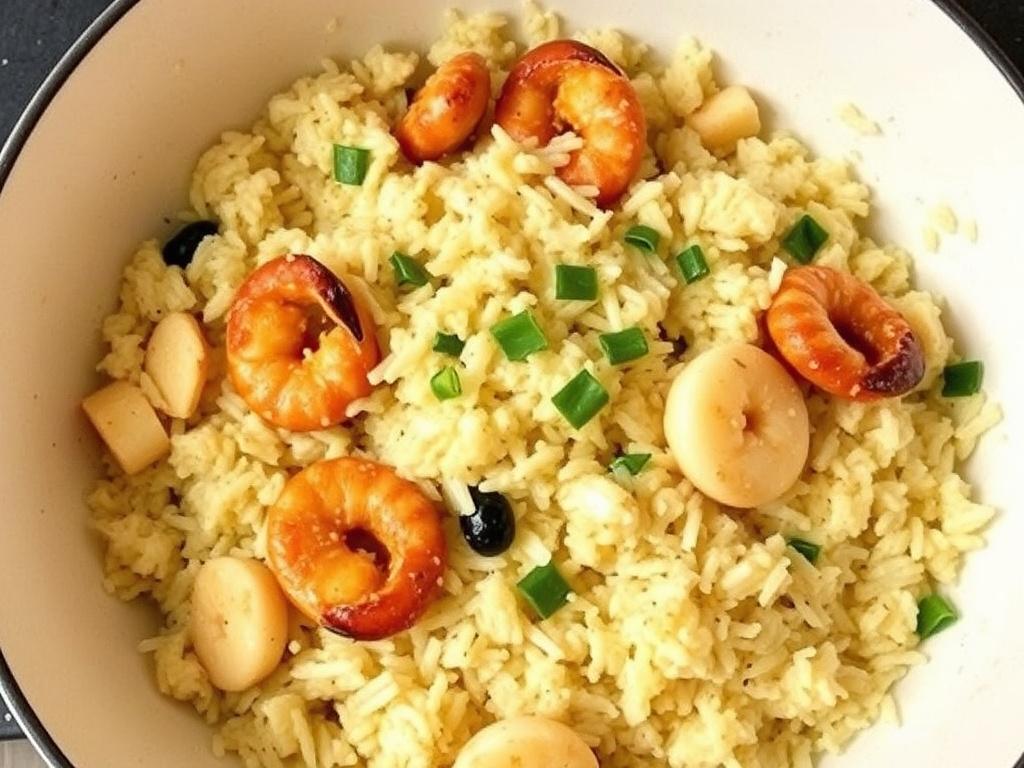
This recipe aims for simplicity and great flavor. It serves 4.
Ingredients
- 300 g long-grain rice (basmati works well), rinsed until water runs clear
- 400–500 g mixed seafood (shrimp peeled, mussels cleaned, firm white fish cut into chunks)
- 5 cups fish or light vegetable stock, hot
- 1 medium onion, finely chopped
- 2 cloves garlic, minced
- 1 red bell pepper, diced
- 2 tbsp olive oil
- 1 tsp smoked paprika or sweet paprika
- a pinch of saffron soaked in 2 tbsp warm water or 1/2 tsp turmeric
- salt and black pepper to taste
- fresh parsley or cilantro, chopped; lemon wedges to serve
Method
- Heat oil in a wide, heavy-bottomed pan over medium heat. Add onion and cook until soft and translucent, about 5 minutes. Add garlic and bell pepper and cook 1–2 minutes more.
- Stir in the rice and toast it gently for 2–3 minutes so grains get a little sheen. Add paprika and the saffron water or turmeric, stirring to coat the rice.
- Pour in hot stock, bring to a gentle boil, then reduce to a low simmer. Season lightly with salt. Cover and cook until rice is almost done—about 12–15 minutes for basmati, depending on brand.
- While rice simmers, pat seafood dry and toss with a pinch of salt and pepper. In a separate pan, sear shrimp and fish briefly—just to begin cooking, about 1 minute per side. Shellfish like mussels can be added raw if they will open quickly when covered.
- When rice is nearly cooked, gently nestle the seafood into the rice, re-cover and cook 4–6 minutes more until seafood is opaque and cooked through and liquid is absorbed.
- Remove from heat and let rest, covered, for 8–10 minutes. This finish firms the grains and completes cooking of the seafood by steam.
- Fluff with a fork, scatter chopped parsley or cilantro, and squeeze lemon over before serving.
Tips for reliable results
- Keep stock hot. Cold liquid slows the cooking and affects texture.
- Add seafood late. Overcooked shrimp and fish become rubbery.
- Try using a fish with firm flesh—cod, haddock or pollock—so it holds its shape.
- For more depth, cook a tomato-based sofrito first or finish with a splash of white wine before adding stock.
Final thought
Pilaf with seafood is adaptable, honest cooking. It rewards good ingredients and simple technique more than complexity. Once you’ve mastered timing—rice first, seafood later—you’ll find it’s an easy way to turn pantry staples and a market catch into something memorable. Try it with different herbs, stocks and local seafood and make the recipe your own.


