
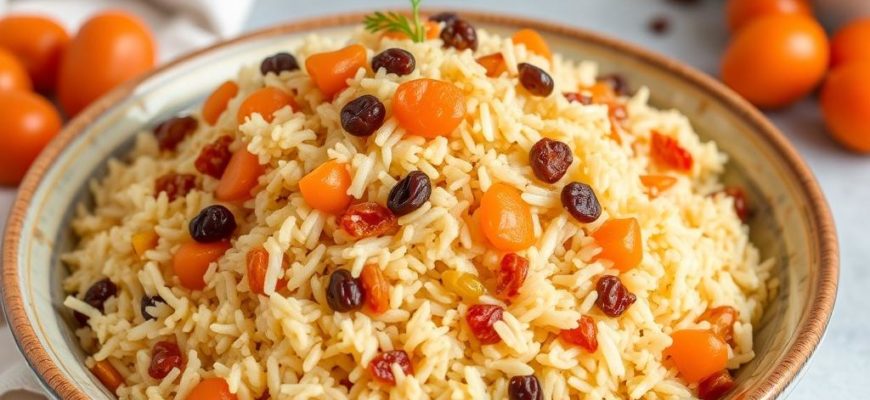
I still remember the first time I tasted pilaf with dried apricots and raisins: it was warm, fragrant, and somehow comforting in a way a bowl of rice rarely is. The sweetness of the fruit balanced the savory rice, and the spices smelled like stories from another place. If you like food that feels like a small travelogue in a spoon, stick around — I’ll walk you through where this dish comes from, why it works, what it’s made of, and the exact steps to make a crowd-pleasing version at home.
- Origins of Pilaf with Dried Apricots and Raisins
- A short history of Pilaf with dried apricots and raisins
- Interesting facts about Pilaf with dried apricots and raisins
- Nutritional value of Pilaf with dried apricots and raisins
- Where Pilaf with dried apricots and raisins is popular today
- The best step-by-step cooking recipe for Pilaf with dried apricots and raisins
- Ingredients
- Method
- Tips and variations
- Storing and reheating
Origins of Pilaf with Dried Apricots and Raisins
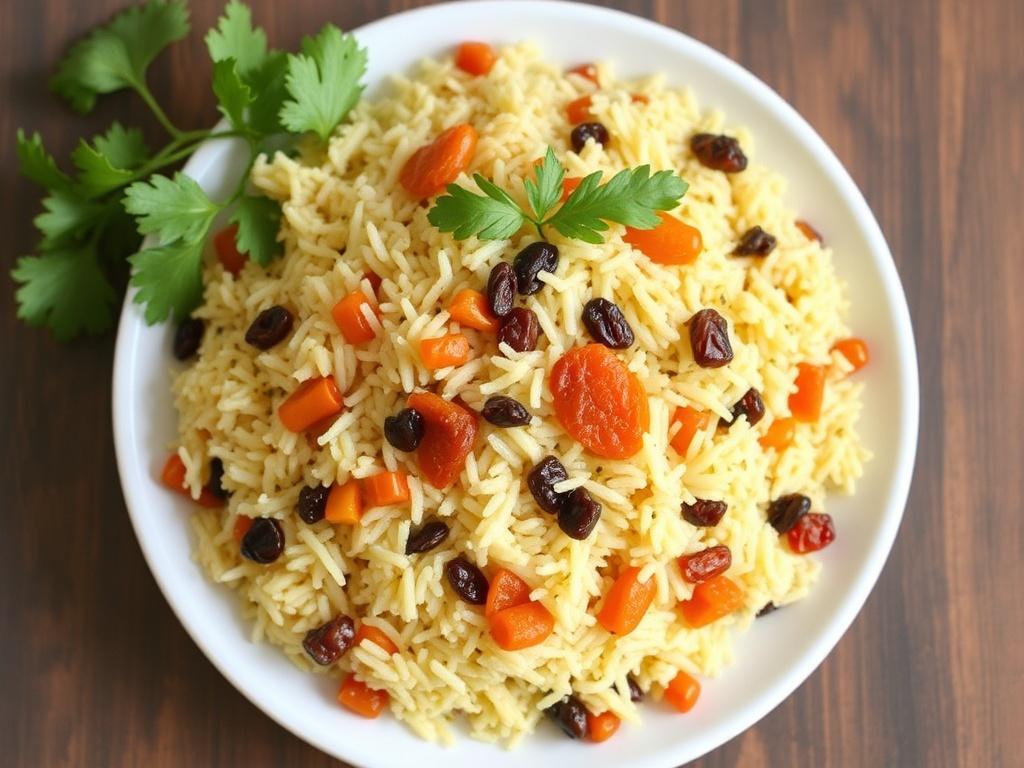
Pilaf with dried apricots and raisins traces its essence to the broad culinary traditions of Central Asia and the Middle East. Plain rice cooked with stock appears in many cultures, but adding dried fruits—apricots, raisins, sometimes prunes—has long been a feature of Persian and Turkic cuisines. In those kitchens, fruit was not reserved only for desserts. Instead it was a way to add texture, sweetness, and a contrasting note to richly spiced, fatty dishes. The simple combination of rice, meat or stock, and dried fruit spread along trade routes and became a local specialty in regions from Iran and Uzbekistan to the Caucasus and parts of Anatolia. When you eat Pilaf with dried apricots and raisins, you’re tasting centuries of exchange between farmers, merchants, and home cooks.
A short history of Pilaf with dried apricots and raisins
Pilaf itself has older roots—ancient cooks developed ways to separate grains and infuse them with flavors. Over time, cooks in Persia began pairing rice with barberries, pistachios, and dried apricots in celebrations and for travelers who needed long-lasting food. As empires shifted and people moved, versions of pilaf adapted to local tastes and available ingredients. In Ottoman and Central Asian courts, sweet-and-sour or sweet-and-savory pilafs became part of festive menus. The inclusion of raisins and apricots often signaled a special occasion or a desire to elevate a simple grain into something memorable.
Interesting facts about Pilaf with dried apricots and raisins
- Using dried fruit in savory dishes is an old idea: in many cultures before refrigeration, dried fruit added both calories and shelf-stability.
- Different starches change the dish: basmati gives a floral lift, while medium-grain rice yields a creamier texture.
- In some places, the sweet versions of pilaf are called pulao or pilav and might be served with yogurt or pickles to balance the sweetness.
- The choice of spice mix varies by region—cumin, coriander, and turmeric in some areas; cinnamon, cardamom, and saffron in others.
Nutritional value of Pilaf with dried apricots and raisins
When you add dried apricots and raisins to pilaf, you increase its sugar and fiber content compared with plain rice. The dish becomes a more calorie-dense, nutrient-rich option than plain steamed rice. Below is a rough nutritional snapshot for one serving (about 1.5 cups) of pilaf prepared with long-grain rice, a modest amount of oil, 60 g dried apricots, and 40 g raisins.
| Nutrient | Approximate amount per serving |
|---|---|
| Calories | 420–520 kcal |
| Carbohydrates | 85–95 g |
| Protein | 7–10 g |
| Fat | 6–12 g (depending on oil or meat) |
| Fiber | 4–7 g |
| Key micronutrients | Iron, potassium, vitamin A (from apricots), small amounts of B vitamins |
Adjust portions or add protein (chicken, lamb, chickpeas) to make the dish more balanced if desired.
Where Pilaf with dried apricots and raisins is popular today
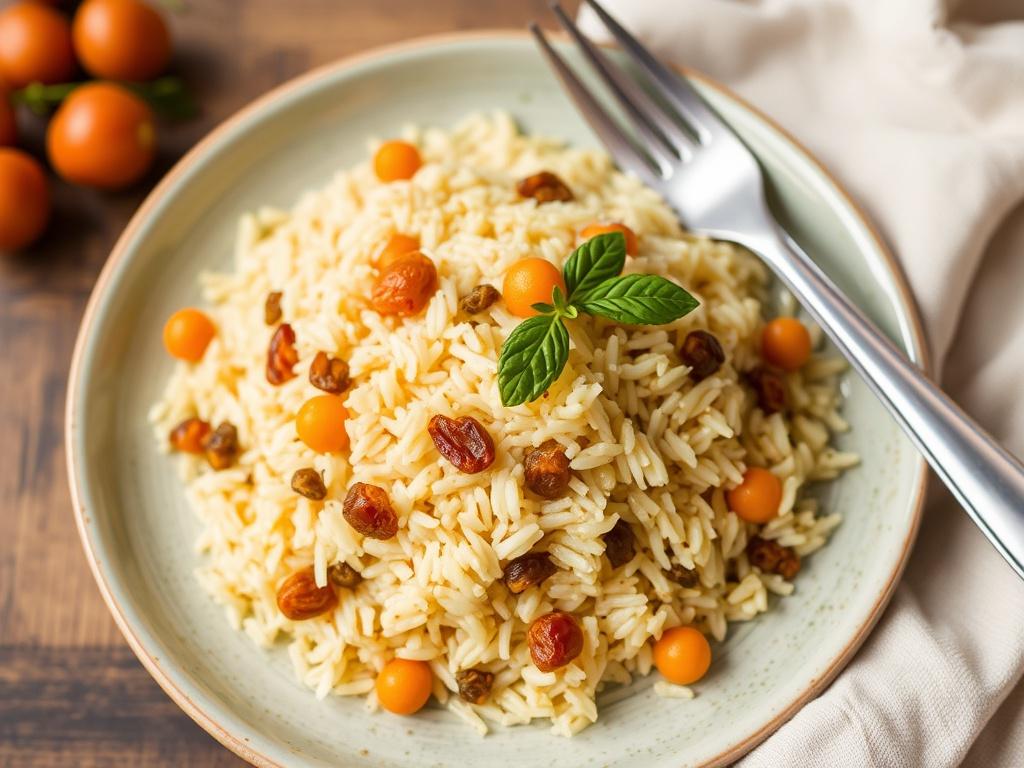
You’ll find versions of pilaf with dried apricots and raisins across Central Asia, Iran, the Caucasus, Turkey, and Eastern Mediterranean countries. In Uzbekistan, plov is often made with carrots and sometimes raisins. In Iran, jeweled rice—“javaher polow”—uses fruits and nuts and is served at weddings. In Turkey and Greece, pilav with currants or raisins appears as a side to grilled meats. Each country tweaks spices, cooking fat, and the role of fruit: a celebratory main in one place, a comforting side in another.
The best step-by-step cooking recipe for Pilaf with dried apricots and raisins
Ingredients
- 2 cups long-grain rice (basmati recommended)
- 3 tablespoons vegetable oil or butter
- 1 medium onion, finely sliced
- 2 garlic cloves, minced
- 300–400 g chicken thighs or lamb (optional), cut into bite-sized pieces
- 1 teaspoon ground cumin
- 1/2 teaspoon ground coriander
- 1/4 teaspoon cinnamon
- Salt and black pepper to taste
- 4 cups stock or water
- 60 g dried apricots, halved
- 40 g raisins
- 2 tablespoons toasted slivered almonds or pistachios (optional)
- Fresh parsley or cilantro to finish
Method
- Rinse the rice under cold water until the water runs clear. Soak for 20–30 minutes, then drain.
- Heat oil in a heavy pot over medium heat. Brown the meat if using, then remove and set aside.
- Sauté the onion until soft and starting to caramelize. Add garlic and spices, cook 30 seconds until aromatic.
- Stir in the rice to coat each grain in oil and spices; this helps keep it separate later.
- Return the meat to the pot, add stock or water, and bring to a gentle boil. Season with salt and pepper.
- Scatter the dried apricots and raisins over the rice. Do not stir. Cover, reduce to the lowest heat, and cook for 15–20 minutes until liquid is absorbed and rice is tender.
- Turn off the heat and let the pilaf steam for 10 minutes with the lid on. Fluff gently with a fork, fold in nuts and herbs, and serve warm.
Tips and variations
- For saffron aroma, steep a pinch of saffron in 2 tablespoons hot water and add it with the stock.
- If you prefer a sweeter pilaf, increase dried apricots to 100 g. For a tangy note, add a handful of barberries or a splash of pomegranate molasses before serving.
- Vegetarian? Skip the meat and use vegetable stock; toss in roasted chickpeas for protein.
- Crispy bottom: if you like a slight crust, cook on low for a few extra minutes or place the pot in a very low oven for 10 minutes at the end.
Storing and reheating
Cool the pilaf quickly and store in an airtight container for up to 3 days in the fridge. Reheat gently on the stovetop with a splash of water or stock, covered, so the rice re-steams and doesn’t dry out.
Pilaf with dried apricots and raisins is forgiving, aromatic, and surprisingly homey. Make it for a weeknight when you want something more than plain rice, or turn it into a centerpiece for guests. Either way, it’s a dish that invites sharing and conversation, exactly the kind of meal I always come back to.


