

Imagine a warm skillet filling the kitchen with a scent that makes you want to tuck your sleeve over the handle and stand there forever. Nutty rice, glossy mushrooms browned in butter, a hint of garlic and herbs, and the kind of comfort that arrives in a single spoonful. Pilaf with butter mushrooms is one of those dishes that feels both festive and utterly homey, the sort you bring out when friends drop by or when you just want to treat yourself without fuss. Read on and you’ll find where this pairing comes from, how it changed over time, clever facts, what’s actually inside a serving, and a clear, fail-safe recipe that leaves nothing to guesswork.
- Where Pilaf with butter mushrooms Came From and Why It Feels So Right
- A Short History of Pilaf with butter mushrooms
- Interesting facts about Pilaf with butter mushrooms
- Nutritional value Pilaf with butter mushrooms
- How popular Pilaf with butter mushrooms is around the world
- The best step-by-step cooking recipe for Pilaf with butter mushrooms
- Ingredients (serves 4)
- Equipment
- Method — step by step
- Tips and variations
Where Pilaf with butter mushrooms Came From and Why It Feels So Right
Pilaf itself traces back centuries to Persian kitchens, where rice was cooked with stock, spices and sometimes meat. As people and recipes moved along trade routes, the technique traveled into Central Asia, the Caucasus, Turkey and the Balkans. The idea of pairing rice with mushrooms and butter is a later, local twist that makes perfect sense in regions where forests supply seasonal mushrooms and dairy is a pantry staple. In Eastern Europe and Russia, for example, foraging is part of food culture; people learned to sauté fresh or dried mushrooms in butter and fold them into staples such as buckwheat or rice. So Pilaf with butter mushrooms is a meeting of two traditions: the elegant rice-cooking method of pilaf and the rustic, umami-rich mushroom dishes of forested countries.
A Short History of Pilaf with butter mushrooms
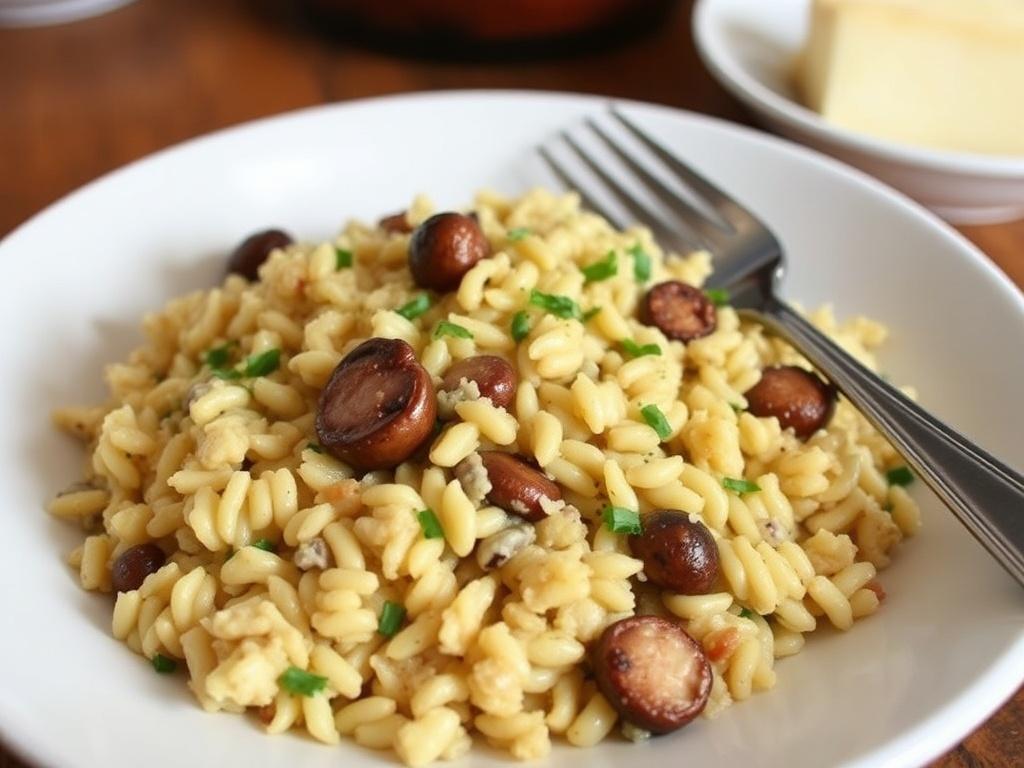
The exact moment someone stirred mushrooms into pilaf is lost to time, but you can follow the shape of the change. Pilaf started as a technique: sauté rice grains briefly, then simmer slowly in broth so each grain cooks separately. In areas where mushrooms were abundant, cooks added them for flavor and texture, often replacing or stretching more expensive meat. Through the 19th and 20th centuries home cooks adapted the dish to what was available: butter and cream in dairy-heavy regions, olive oil and different herbs elsewhere. After World War II, with urbanization and better trade in dried mushrooms, mushroom pilafs appeared in many family cookbooks and restaurant menus. Today the version with butter-sautéed mushrooms reads as both retro and modern, loved for its simplicity and deep flavor.
Interesting facts about Pilaf with butter mushrooms
- Pilaf is all about technique. Unlike risotto, which relies on constant stirring to release starch, pilaf keeps grains distinct. That matters when you want clean, light rice studded with mushroom pieces.
- Mushrooms boost umami. Even a small amount amplifies savory taste, so you can sometimes use less salt or meat while keeping satisfaction high.
- This dish adapts across diets. Use vegetable stock and butter alternative to make it vegan without losing character.
- Foraged mushrooms give the dish seasonal personality. Chanterelles, porcini and boletus are prized, but common button or cremini work beautifully when handled right.
- Leftovers reheat well. The flavors meld overnight, so it often tastes better the next day.
Nutritional value Pilaf with butter mushrooms
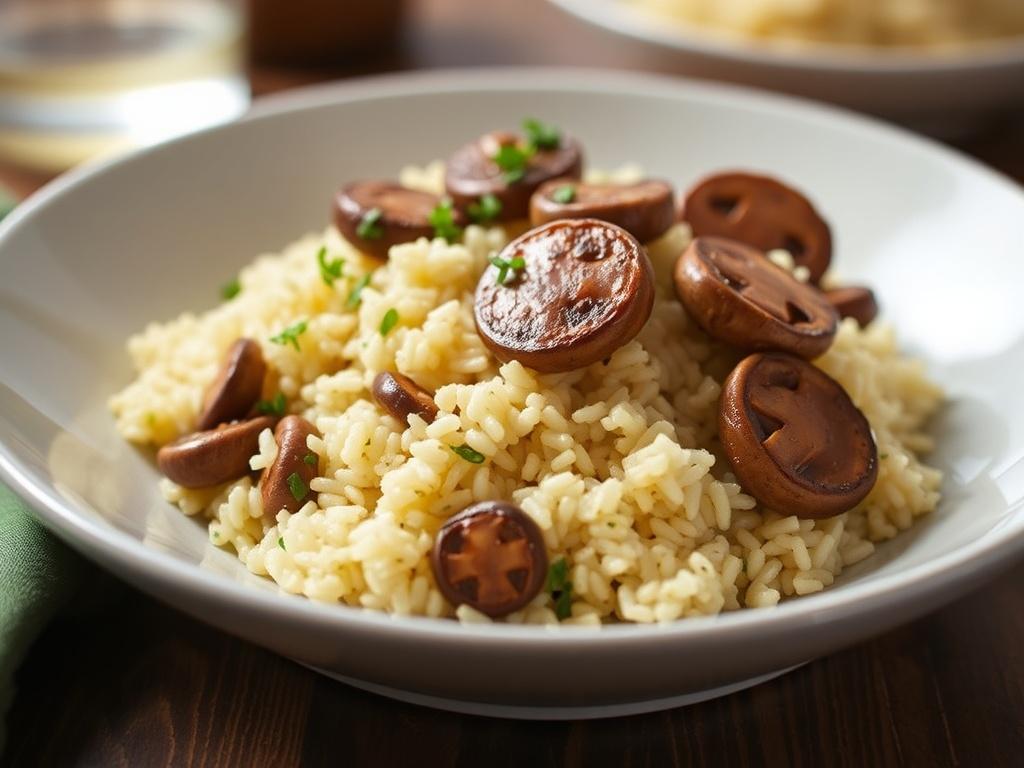
Below is a modest estimate for one serving of Pilaf with butter mushrooms made with white long-grain rice, butter, mushrooms and onion. Values vary by ingredient types and portion sizes, so consider this a guideline.
| Component | Approximate per serving |
|---|---|
| Calories | 350–450 kcal |
| Protein | 7–10 g |
| Fat | 12–18 g |
| Carbohydrates | 50–60 g |
| Fiber | 2–4 g |
| Notable micronutrients | B vitamins, potassium, selenium, small amounts of vitamin D if mushrooms were sun-exposed |
Swap brown rice for a fiber boost, trim butter or use ghee for a different flavor; each choice shifts the numbers. Mushrooms are low-calorie while punching up minerals and antioxidants.
How popular Pilaf with butter mushrooms is around the world
Wherever rice and mushrooms coexist on the table, versions of this dish appear. In Russia, Ukraine and Poland, mushroom pilafs are common in home cooking and during mushroom season. In Central Asia and Turkey the classic rice pilaf is more often paired with meat, but vegetarian mushroom variants can be found in home kitchens and modern restaurants. In the West, mushroom pilaf shows up as a side or main at farmers market bistros and vegetarian eateries. It’s a global comfort dish; each place gives it a local accent through spices, herbs and choice of mushroom.
The best step-by-step cooking recipe for Pilaf with butter mushrooms
Ingredients (serves 4)
- 1 1/2 cups long-grain white rice, rinsed until water runs clear
- 400 g (about 14 oz) mushrooms, sliced — cremini, button or mixed
- 3 tablespoons unsalted butter, divided
- 1 medium onion, finely chopped
- 2 garlic cloves, minced
- 3 cups vegetable or light chicken stock, hot
- 1 teaspoon salt, plus more to taste
- 1/2 teaspoon black pepper
- 1 bay leaf (optional)
- 2 tablespoons chopped fresh parsley or dill for garnish
- Optional: splash of white wine or 1 teaspoon soy sauce for depth
Equipment
- Heavy-bottomed pot with lid or deep skillet
- Frying pan for mushrooms
Method — step by step
- Prep rice: rinse the rice under cold water until the rinse runs clear. Drain well. This removes surface starch and helps keep grains separate.
- Brown mushrooms: heat a frying pan over medium-high heat, add 1 tablespoon of butter. When it foams, add mushrooms in a single layer. Let them sit without stirring for 2 minutes so they brown, then toss and cook until golden. Season lightly with salt. Remove and set aside.
- Sauté aromatics: in the pot you will cook the rice, melt the remaining 2 tablespoons of butter over medium heat. Add chopped onion and sauté until translucent and slightly golden, about 5–7 minutes. Add garlic and cook 30 seconds to 1 minute.
- Toast rice: add the drained rice to the onion and stir to coat each grain in butter. Toast gently for 2–3 minutes until it smells nutty.
- Deglaze and simmer: if using, pour a splash of white wine and let it reduce. Add hot stock, bay leaf, salt and pepper. Bring to a simmer, then reduce heat to low, cover tightly and cook without lifting the lid for 15–18 minutes, depending on rice.
- Rest and finish: turn off heat and let the pot sit, covered, for 10 minutes. Remove lid, fluff with a fork, fold in the browned mushrooms and chopped herbs. Taste and adjust salt and pepper.
- Serve: transfer to a warm dish and garnish with extra herbs, a little butter or a squeeze of lemon if you like brightness.
Tips and variations
- For more nuttiness use basmati rice and slightly less stock. For chewy, earthy texture choose brown rice but increase cooking time and liquid.
- If mushrooms are very wet, salt them and let them drain briefly, or cook them longer to release and evaporate moisture so the pilaf doesn’t get soggy.
- Add toasted pine nuts or slivered almonds for crunch and a Mediterranean twist.
- Make it a main by stirring in cooked white beans or shredded chicken at the end.
Pilaf with butter mushrooms is generous and forgiving. Once you master the balance of rice, stock and nicely browned mushrooms, it becomes a dish you can riff on every week. Try it with different mushrooms, herbs and a finishing acid to find your favorite version.


