
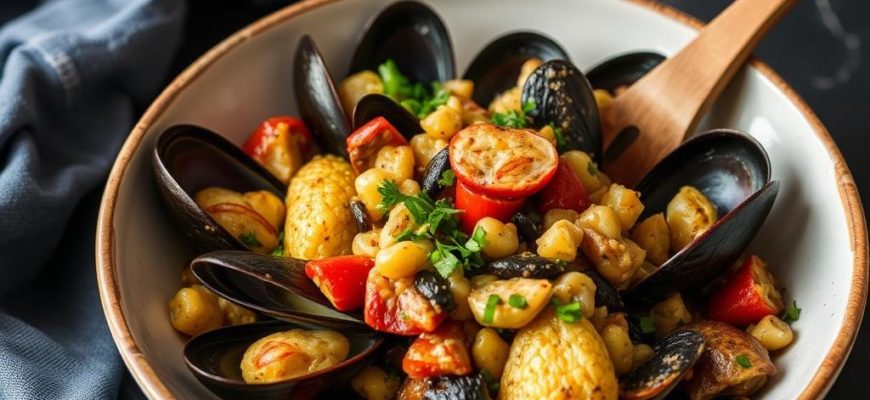
Imagine rice perfectly steamed with the briny kiss of the ocean, black-shelled mussels opening like tiny treasures, garlic and saffron threads weaving warmth through every spoonful. That’s mussel pilaf — simple ingredients elevated by timing and respect for the shellfish. If you like food that feels both cozy and a little elegant, and you want a one-pan dish that impresses without drama, keep reading. I’ll walk you through where this dish comes from, why it works so well, some neat facts, the nutrition you should know, how different countries have embraced it, and a clear step-by-step recipe that anyone can follow.
Country of origin Mussel pilaf
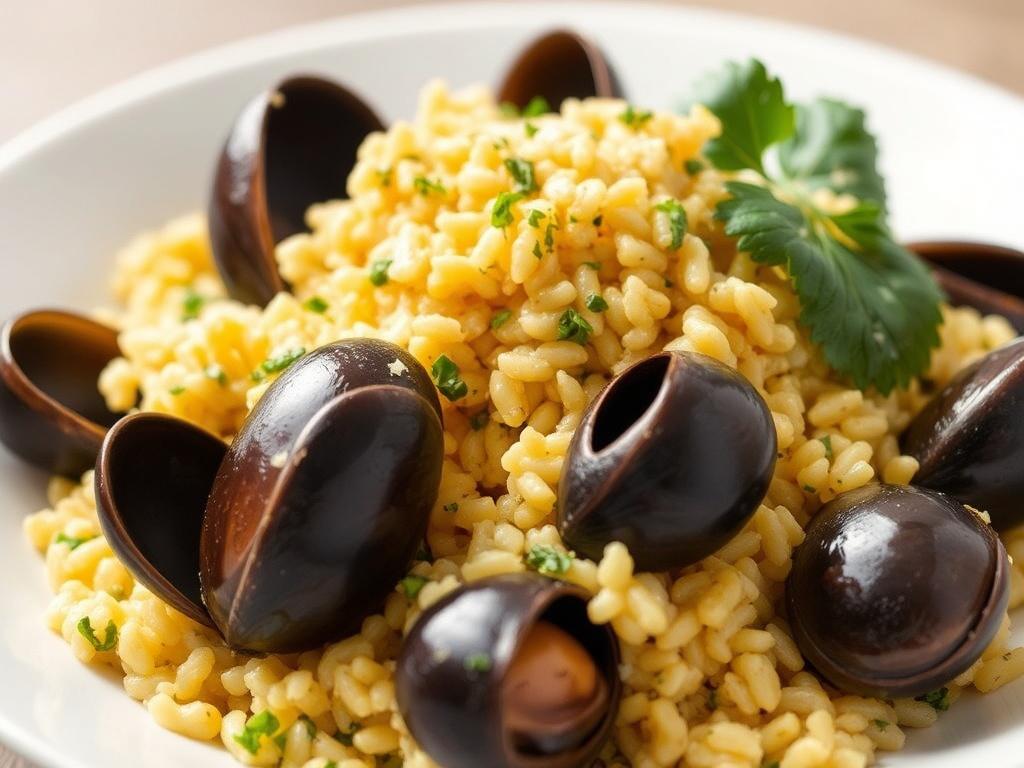
Mussel pilaf does not belong to a single nation the way some signature dishes do. It grew naturally wherever rice and mussels shared coastal kitchens: the eastern Mediterranean, parts of Spain and Portugal, stretches of coastal France, and across the Black Sea region. Pilaf itself — rice cooked in seasoned broth until each grain is separate — traces back to Persian cooking and spread widely. Local cooks adapted it with the seafood they had on hand. So mussel pilaf is a coastal cousin of classic pilafs, born where fishermen brought home mussels and home cooks turned them into a fast, flavorful meal.
History Mussel pilaf
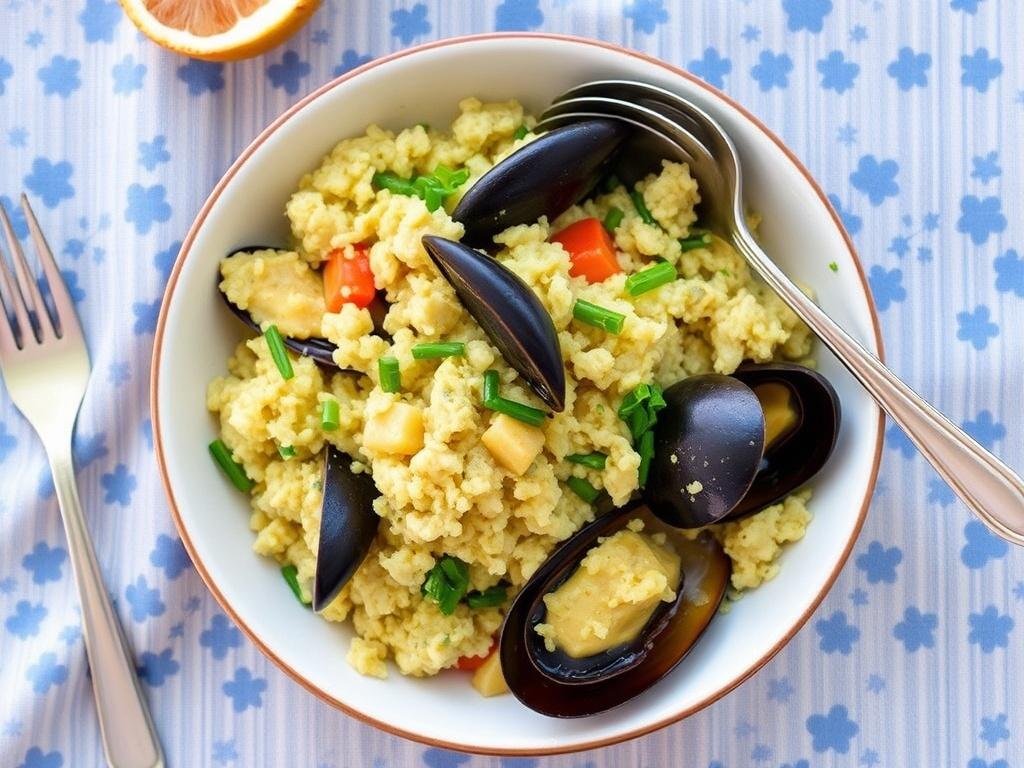
The word pilaf comes from Persian roots, but the idea of cooking grains in a flavored liquid is ancient and global. Once rice cultivation and trade reached Mediterranean shores, cooks experimented. Mussels have been a cheap, abundant protein for centuries, often eaten fresh or tossed into stews and rice dishes. In port towns, combining rice with mussels made practical sense: a filling grain plus readily available shellfish. Over generations the recipe shifted depending on spices, stock, and herbs, resulting in variations that range from saffron-tinted risottos to tomato-soupier stews.
Interesting facts about Mussel pilaf
Mussels are both sustainable and affordable compared with many other seafoods. They filter water as they grow, which benefits marine ecosystems. That makes mussel pilaf not only tasty but also an eco-friendly choice. Another neat point: mussels open only when cooked and alive; a properly cooked mussel will pop open and show glossy meat. If one stays closed after cooking, discard it. Finally, small variations in stock — fish, chicken, or a simple vegetable broth — change the whole profile of the dish, so this recipe is a great canvas for experimentation.
Nutritional value Mussel pilaf
Mussel pilaf offers a solid balance of protein, carbohydrates, and micronutrients. Mussels are rich in lean protein, omega-3 fatty acids, B12, iron, and selenium. Rice provides energy through complex carbs and, if you use brown rice, extra fiber. Below is a typical breakdown per serving, approximate and dependent on ingredients used.
| Component | Approximate amount per serving |
|---|---|
| Calories | 400–550 kcal |
| Protein | 25–35 g |
| Fat | 8–15 g (mostly healthy fats) |
| Carbohydrates | 50–70 g |
| Key vitamins and minerals | B12, iron, zinc, selenium, omega-3s |
Note: sodium can rise if you use salty stock or add a lot of salt; taste as you go.
Popularity in different countries Mussel pilaf
In Spain and Portugal, mussels often appear in rice dishes alongside chorizo or paprika. In France, mussels feature in simple broths with white wine and herbs; pair that with rice and you get a pilaf-like plate. In Turkey and around the Black Sea, mussels are stuffed or mixed with bulgur and rice. Each region layers its flavors: saffron in Mediterranean versions, paprika on the Iberian coast, and dill or parsley in northern Black Sea recipes. That adaptability is why mussel pilaf remains popular in seaside towns and keeps turning up on modern restaurant menus as a rustic but refined choice.
The best step-by-step cooking recipe for Mussel pilaf
Ingredients (serves 4)
- 500 g fresh mussels, scrubbed and debearded
- 1 cup long-grain rice (or parboiled rice), rinsed
- 2 tbsp olive oil
- 1 medium onion, finely chopped
- 2 garlic cloves, minced
- 1 small tomato, diced (or 1/2 cup canned diced tomatoes)
- 1/2 tsp smoked paprika or 1 pinch saffron threads
- 2 1/4 cups fish stock or low-sodium chicken broth
- Fresh parsley or dill, chopped
- Salt and black pepper to taste
- Lemon wedges to serve
Equipment and prep
- Large heavy-bottomed pan with lid
- Colander and bowl for rinsing mussels
- Measure and kitchen towel
Step-by-step method
- Rinse mussels under cold water. Discard any with cracked shells or those that remain tightly closed after a gentle tap.
- Heat oil in the pan over medium heat. Add onion and cook until soft, about 5 minutes. Add garlic and stir for 30 seconds until fragrant.
- Add diced tomato and paprika or saffron. Cook 2–3 minutes until tomato softens.
- Stir in rice, coating each grain in the aromatic mixture for 1–2 minutes.
- Pour in stock, bring to a simmer, then reduce heat to keep a gentle bubble. Season lightly with salt and pepper. Cover and cook according to your rice type: about 15 minutes for long-grain white rice, 35–40 minutes for brown rice.
- Five minutes before rice is done, nestle mussels in a single layer on top, cover, and let them steam until they open, about 4–6 minutes. Discard any mussels that do not open.
- Remove from heat, let rest for 3 minutes, then fluff rice with a fork and gently mix mussels through. Sprinkle with parsley or dill and serve with lemon wedges.
Tips and variations
- For richer flavor, replace half the stock with a splash of white wine added when you add the rice.
- Try adding peas or chopped bell pepper in step 3 for color and texture.
- Leftovers keep for 1 day in the fridge; reheat gently with a splash of water or stock.
Mussel pilaf is one of those recipes that rewards small adjustments. Once you know the basic rhythm — sweat aromatics, toast rice, simmer gently, steam mussels — you can make it your own. It’s coastal, comforting, and quick enough for a weeknight while pretty enough for company. Try it and let the mussels do the talking.


