
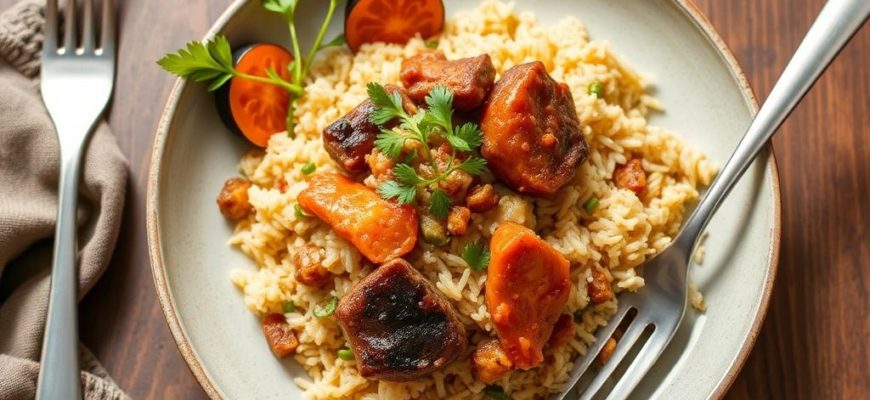
Imagine a pot that smells like a Sunday kitchen—smoky meat, caramelized onions, warm spices, and rice that has soaked up every drop of flavor. That’s pilaf with ribs: simple at first glance, but generous and comforting in every mouthful. Whether you’re feeding a family, impressing guests, or just want a one-pot dinner that feels like a hug, this dish delivers. Read on — you’ll learn where it came from, why ribs make it special, and how to cook it so the rice and meat come together perfectly.
Country of origin Pilaf with ribs
Pilaf has no single birthplace; it evolved across the Middle East, Central Asia, and parts of Eastern Europe. When you talk about pilaf with ribs, you’re often standing at the crossroads of cultures. In Central Asia, plov is a national dish, typically made with lamb or beef. In Iran, variations of pilaf (known as polow) often pair rice with mutton. Each region adds its own touch: local fats, preferred spices, and the choice of ribs versus other cuts. The ribs version likely grew from peasant kitchens where tougher, bony cuts were prized for the deep flavor they give to rice when simmered slowly.
History Pilaf with ribs
The word pilaf itself traces back through Turkish and Persian words describing cooked rice. As trade routes spread rice and spices, cooks adapted techniques to local ingredients. Ribs entered the picture because they were economical and flavorful: bones, marrow, and connective tissue release gelatin and umami during long cooking, enriching the rice in ways lean cuts do not. Over generations, families perfected the timing and layering—searing ribs first, frying vegetables in the rendered fat, then letting rice steam gently with the meat. The result became a celebratory staple at weddings, feasts, and everyday tables alike.
Interesting facts about Pilaf with ribs
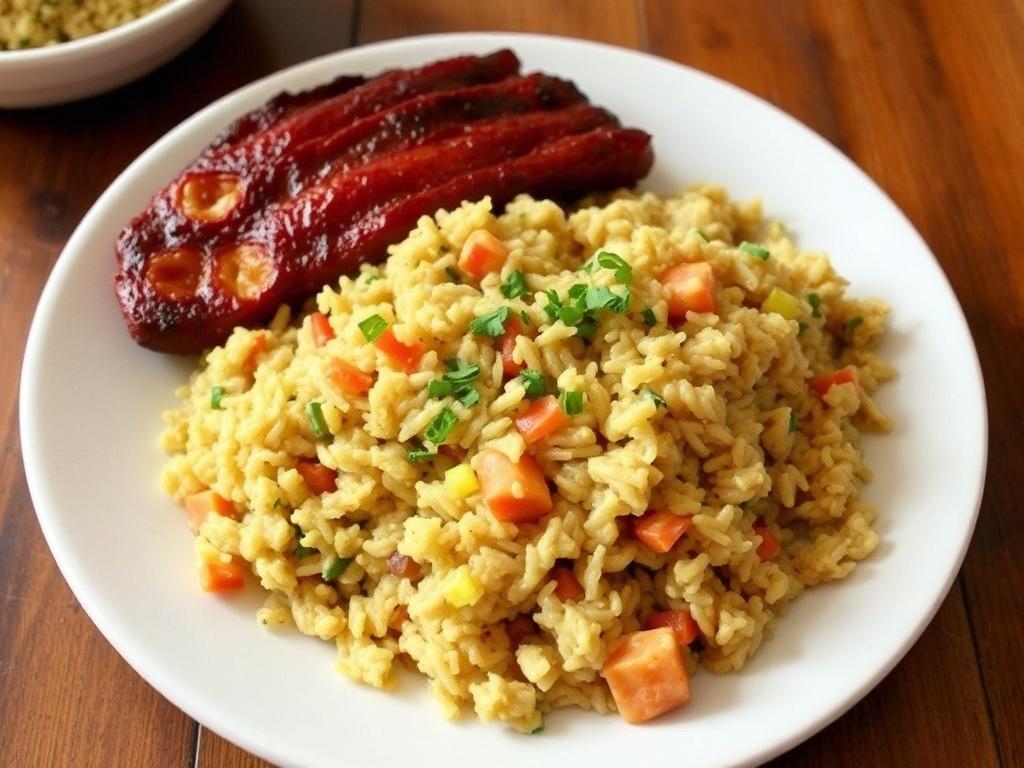
- Using ribs gives the dish a richer mouthfeel: simmered ribs infuse the rice with collagen and marrow, creating a silky texture.
- Regional names and techniques vary wildly. In Uzbekistan, carrots are cut into matchsticks and fried with onions, while some Persian versions rely on dried fruits and saffron.
- Pilaf is often cooked in a heavy-bottomed pot with a tight-fitting lid so steam circulates, producing distinct layers: a flavorful top and a crusty bottom appreciated by many cultures.
- Leftover pilaf with ribs reheats well; flavors deepen overnight, making it a favorite for meal prep.
Nutritional value Pilaf with ribs
Nutritional values depend on the cut of ribs, type of rice, and amount of oil. Below is an approximate estimate for one generous serving made with beef ribs, white long-grain rice, and moderate oil—use it as a guide rather than a precise measurement.
| Nutrient | Approximate per serving |
|---|---|
| Calories | 600–900 kcal |
| Protein | 25–40 g |
| Fat | 25–50 g (higher if fatty ribs used) |
| Carbohydrates | 60–90 g (mostly from rice) |
| Fiber | 1–3 g |
If you want to lighten the dish, choose leaner ribs or trim visible fat, use less oil, and substitute part of the white rice with brown rice or bulgur—keeping in mind cooking times and liquid ratios change with different grains.
Popularity in different countries Pilaf with ribs
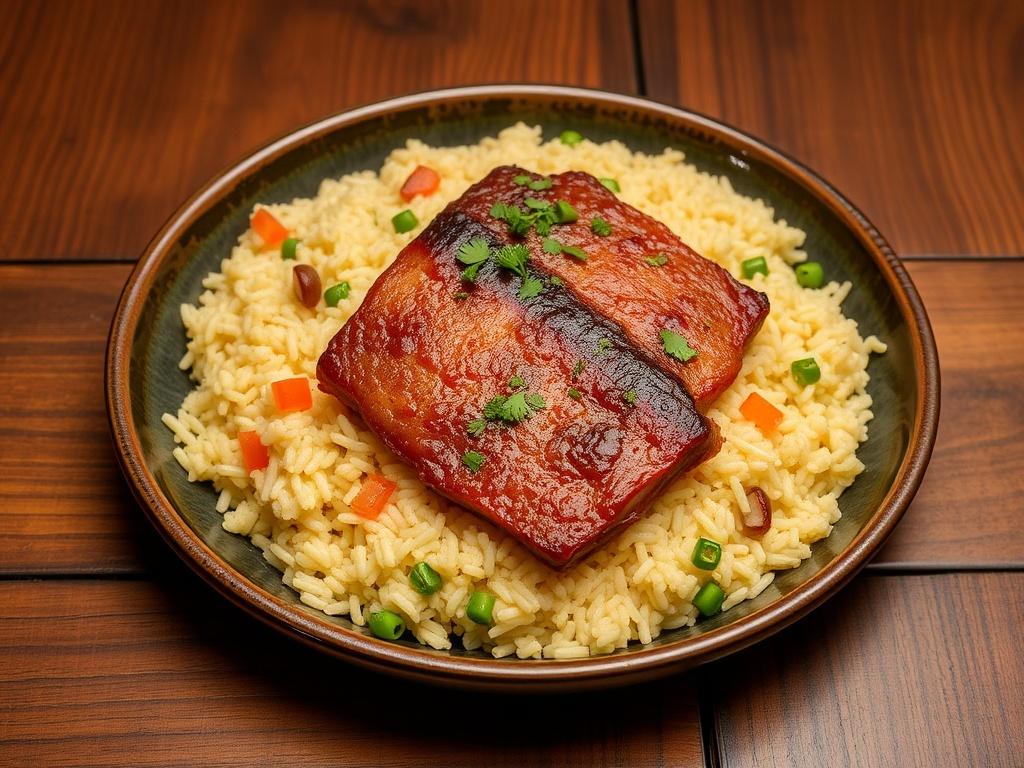
Pilaf with ribs enjoys popularity in many places, though names and accompaniments differ. In Uzbekistan and Kazakhstan, it’s a central festive dish. In the Caucasus and parts of Turkey, ribs appear in hearty rice dishes at family gatherings. In Iran, while lamb shanks and chicken are common, ribs show up in rustic home cooking. The appeal is universal: meat plus seasoned rice equals a satisfying, shareable meal.
The best step-by-step cooking recipe for Pilaf with ribs
This recipe is built for clarity: straightforward steps, reliable timing, and flavors that won’t overwhelm. It serves 4–6 people.
Ingredients
- 1.2–1.5 kg (2.5–3 lb) beef or lamb ribs, cut into individual pieces
- 400 g (2 cups) long-grain rice, rinsed until water runs clear
- 2 large onions, thinly sliced
- 2 large carrots, julienned or grated
- 3–4 tbsp vegetable oil or rendered fat
- 1–1.2 liters hot broth or water (adjust as needed)
- 1 tsp ground cumin, 1 tsp coriander, 1/2 tsp black pepper, salt to taste
- Optional: a pinch of saffron or turmeric, garlic, barberries or raisins
- Fresh herbs for garnish (parsley, cilantro, or dill)
Equipment
- Heavy-bottomed pot with tight lid or Dutch oven
- Colander for rinsing rice
Method
- Pat the ribs dry and season lightly with salt and pepper. Heat the oil in the pot over medium-high heat.
- Sear the ribs in batches until browned on all sides. Remove and set aside. Browning builds flavor—don’t rush this step.
- Reduce heat to medium, add onions to the same pot, and cook until golden, scraping up browned bits. Add carrots and cook until softened.
- Return ribs to the pot. Sprinkle spices over the mixture; stir briefly to toast them lightly. If using garlic, add it now without burning.
- Pour in hot broth just to cover the ribs by an inch. Bring to a simmer, then cover and cook gently for 30–45 minutes, depending on rib size, until meat is tender but not falling apart.
- Remove the ribs and set aside. Measure the remaining liquid in the pot. Add enough hot water so that the depth is about 1.5–2 times the height of the rice when spread out. Adjust seasoning of the liquid.
- Spread the rinsed rice evenly over the meat and vegetables. Nestle the ribs back on top or tuck them around the rice.
- Bring to a gentle boil uncovered for 5–7 minutes until rice has absorbed some liquid. Reduce heat to low, cover tightly, and steam for 20–25 minutes. Do not stir.
- Turn off the heat and let the pot rest, covered, for 10 minutes. Fluff the rice gently, lift the ribs onto a serving dish, and mix rice and vegetables lightly. Garnish and serve.
Tips for success
- Rice type matters: use long-grain rice for separate grains, basmati for aroma, and adjust water for different varieties.
- Don’t stir rice during steaming; it breaks grains and makes the texture gluey.
- If you like a crispy bottom, increase heat briefly at the end but watch closely to avoid burning.
Final thought
Pilaf with ribs is honest cooking: minimal fuss, maximum flavor. It rewards patience and a few smart choices—good browning, proper rice washing, and gentle steaming. Make it once, tweak to your taste, and it will become one of those dishes you call on whenever you want something satisfying that feeds more than one need: hunger, warmth, and the pleasure of sharing.


