

Imagine steaming rice scented with warm spices, tender ribbons of squid that melt in your mouth, and a little splash of briny sea in every bite. That’s pilaf with squid for you: humble ingredients turned into something elegant and comforting. Whether you’re craving a weeknight dinner with personality or planning a dinner that quietly impresses guests, this dish sits perfectly between rustic comfort and coastal finesse. Read on and you’ll learn where it comes from, why it works so well, and exactly how to make a reliable, restaurant-worthy pilaf with squid at home.
- Where pilaf with squid comes from and how it became a coastal favorite
- The history of pilaf with squid and its culinary evolution
- Interesting facts about pilaf with squid that make it worth trying
- Nutritional value pilaf with squid: what a plate delivers
- Why pilaf with squid appears in different countries and how its popularity varies
- The best step-by-step cooking recipe for pilaf with squid
- Ingredients (serves 4)
- Method
- Tips and variations
Where pilaf with squid comes from and how it became a coastal favorite
Pilaf itself is an ancient rice technique that traveled across trade routes, adapting to local tastes and ingredients. The idea of combining rice with seafood naturally appeared in coastal areas where rice was available and the sea supplied fresh catch. Pilaf with squid is therefore less a single-country specialty and more a category of regional adaptations. Think of fishermen’s kitchens in the Mediterranean, small Aegean villages, and seaside towns where cooks swapped lamb or chicken for what the nets brought in that day. In other words, pilaf with squid is a culinary meeting point: rice traditions meeting the sea.
The history of pilaf with squid and its culinary evolution
The broader history of pilaf spans centuries and geographies, starting in the Persian world and spreading through Central Asia, the Middle East, and into South Asia and the Mediterranean. As rice dishes traveled, locals layered in familiar proteins and flavors. Where squid and cuttlefish were plentiful, cooks experimented, producing versions that kept the pilaf technique but introduced a lightly briny, oceanic profile. Over time those recipes branched out: some use whole baby squid, others prefer rings, and some even include squid ink for color and umami. The result is a family of dishes that share technique but differ by local spice palettes and seafood habits.
Interesting facts about pilaf with squid that make it worth trying
- Pilaf with squid often cooks faster than meat-based pilafs because squid needs only brief handling to stay tender.
- Squid ink, sometimes used in versions of this dish, adds a dramatic black color and a salty, umami-rich depth without overwhelming the rice.
- In many coastal areas, pilaf was a practical way to stretch a small amount of seafood across several people, which helped make it popular at family gatherings and festivals.
Nutritional value pilaf with squid: what a plate delivers
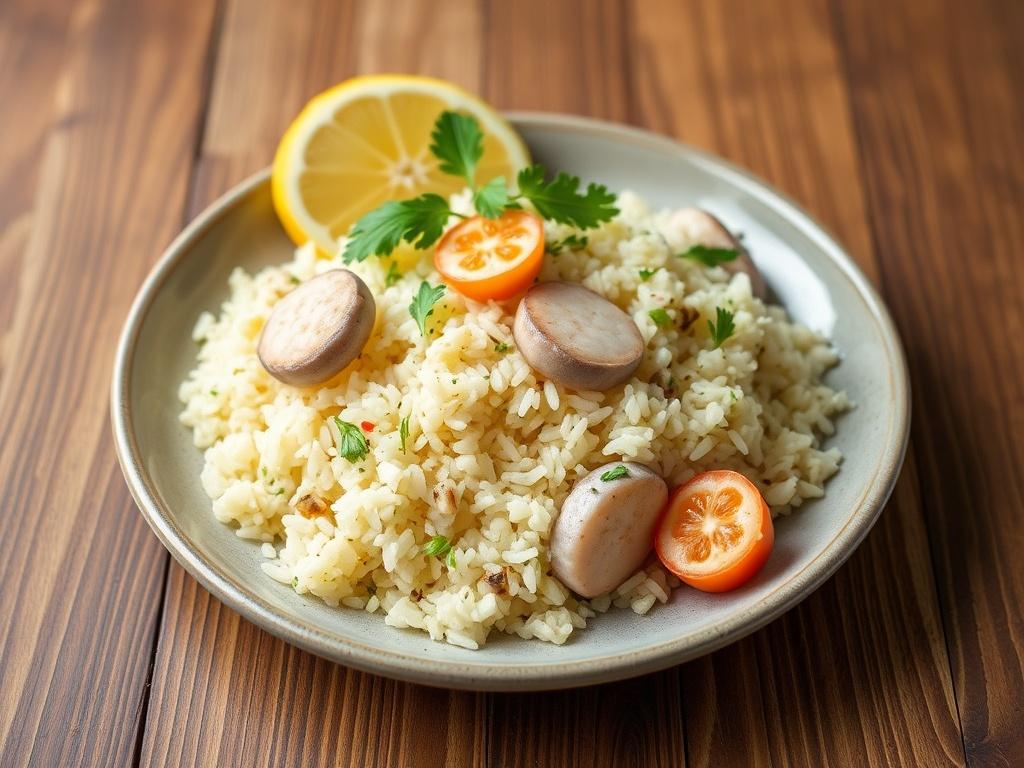
Pilaf with squid is generally balanced: carbohydrates from rice, lean protein from squid, and healthy fats when olive oil is used. Squid is low in calories and rich in protein, B vitamins, and minerals like selenium. The exact nutritional profile depends on rice type, oil, and extras such as nuts or butter. Below is an approximate outline for one moderate serving.
| Nutrient (approx.) | Per serving |
|---|---|
| Calories | 400–550 kcal |
| Protein | 20–30 g |
| Fat | 8–18 g (depends on oil/butter) |
| Carbohydrates | 50–70 g |
| Key vitamins and minerals | B12, B6, selenium, phosphorus |
Why pilaf with squid appears in different countries and how its popularity varies
Seafood pilafs show up wherever rice and the sea meet. In Mediterranean countries cooks often treat the dish simply, highlighting olive oil, lemon, and fresh herbs. In parts of Asia the seasoning may tilt toward soy, ginger, or chili. In some places people choose short-grain rice, elsewhere basmati or long-grain for a fluffier texture. Pilaf with squid may be central to a seaside community’s cuisine or an occasional special dish for gatherings. Its popularity comes from its flexibility: it can be a quick weeknight meal or dressed up for guests.
The best step-by-step cooking recipe for pilaf with squid
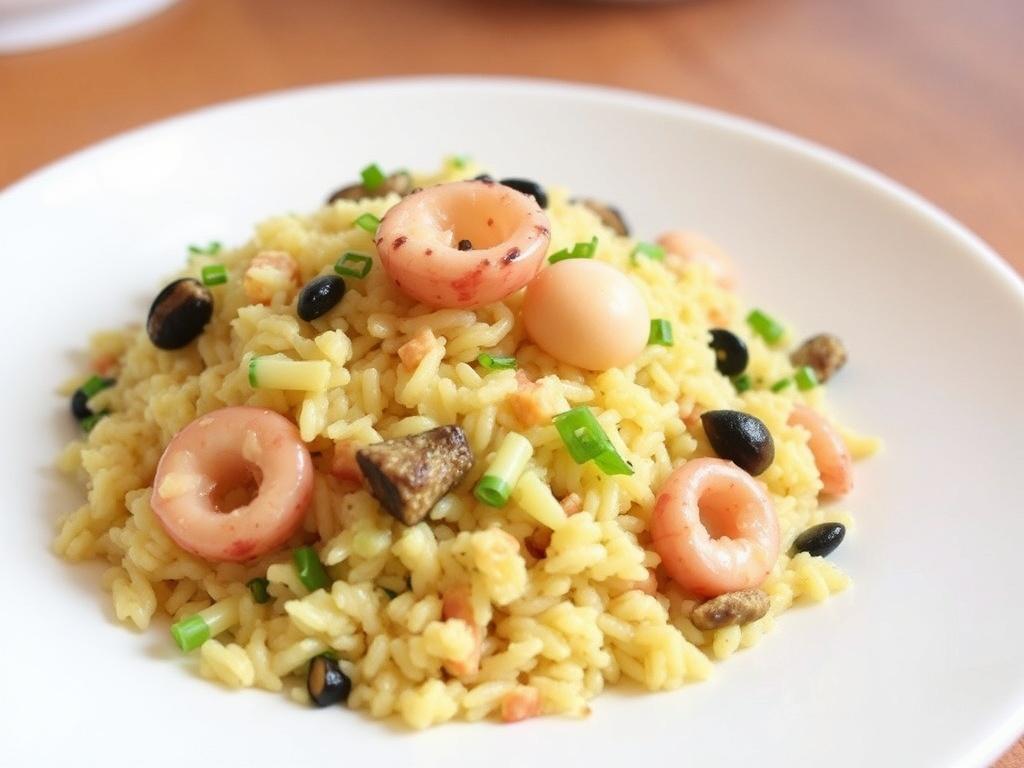
Below is a reliable recipe that balances texture and flavor. It keeps squid tender by adding it late and builds flavor in layers so the rice tastes as good as the seafood.
Ingredients (serves 4)
- 300–400 g squid (tubes and tentacles), cleaned and sliced into rings
- 1 1/2 cups long-grain rice (rinsed until water runs clear)
- 3 tbsp olive oil
- 1 medium onion, finely chopped
- 1 carrot, diced
- 2 cloves garlic, minced
- 1 tbsp tomato paste (optional)
- 3 cups fish or vegetable stock, warm
- 1 bay leaf, 1 tsp ground cumin, salt and pepper to taste
- Fresh parsley or cilantro and lemon wedges to serve
Method
- Pat the squid dry; season lightly with salt. Quick-sear in 1 tablespoon of olive oil over high heat for 30–60 seconds per side until just opaque. Remove and set aside. This prevents rubberiness.
- In a heavy pot, heat remaining oil. Sauté onion and carrot until soft and translucent, about 6–8 minutes. Add garlic and tomato paste and fry briefly to deepen flavor.
- Add rice and spices, stirring to coat the grains for 2–3 minutes. This helps each grain stay separate.
- Pour in warm stock, bring to a gentle boil, then reduce heat to low. Cover and simmer undisturbed until rice is nearly done (about 12–15 minutes depending on rice).
- Gently fold the seared squid into the rice, cover for 2–3 minutes to warm through and finish cooking. Turn off heat and let rest covered for 5 minutes.
- Fluff with a fork, adjust seasoning, and finish with lemon and herbs. Serve immediately.
Tips and variations
- For a richer finish, stir in 1 tablespoon of butter off the heat.
- Add squid ink with the stock for a dramatic black pilaf; reduce salt as ink can be briny.
- Mix in toasted pine nuts or chopped olives for texture and contrast.
Pilaf with squid is deceptively simple and endlessly adaptable. Once you master the timing — cook rice thoroughly but keep squid brief — you’ll find this recipe a dependable go-to that’s both fast enough for weeknights and elegant enough for guests. Try it with a crisp salad and a glass of white wine, and you’ll see why coastal cooks keep reinventing this timeless idea.


