
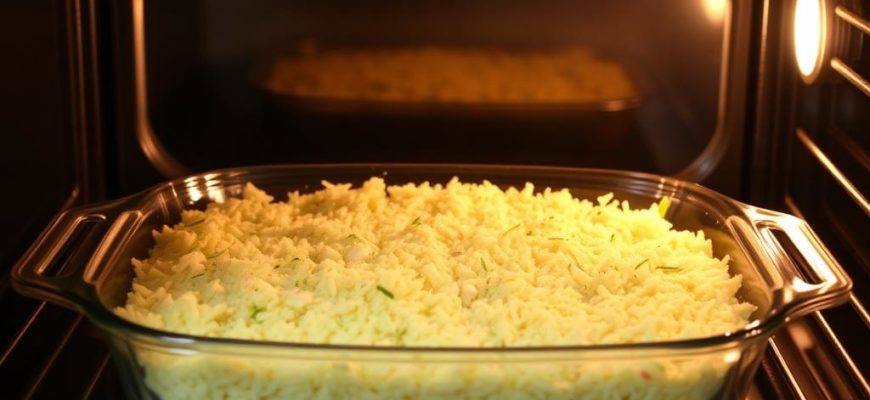
There are few things as quietly satisfying as a tray of rice coming out of the oven with a golden crust, steam lifting in little ribbons and the kitchen filled with warm, savory smells. Pilaf in the oven gives you that exact comfort: rice cooked through with stock, spices and whatever meat or vegetables you love, but without standing over a pot. If you want a simple showstopper that feeds a crowd and tastes like it took hours of care, keep reading — this method is forgiving, flexible and surprisingly elegant.
- Where the oven-baked pilaf tradition comes from
- A short, clear history of oven-cooked pilaf
- Interesting facts about oven-baked pilaf
- Nutritional value of a typical oven pilaf
- How Pilaf in the oven spread and became popular worldwide
- The best step-by-step cooking recipe for Pilaf in the oven
- Ingredients
- Method
- Variations and tips
- Final thoughts
Where the oven-baked pilaf tradition comes from
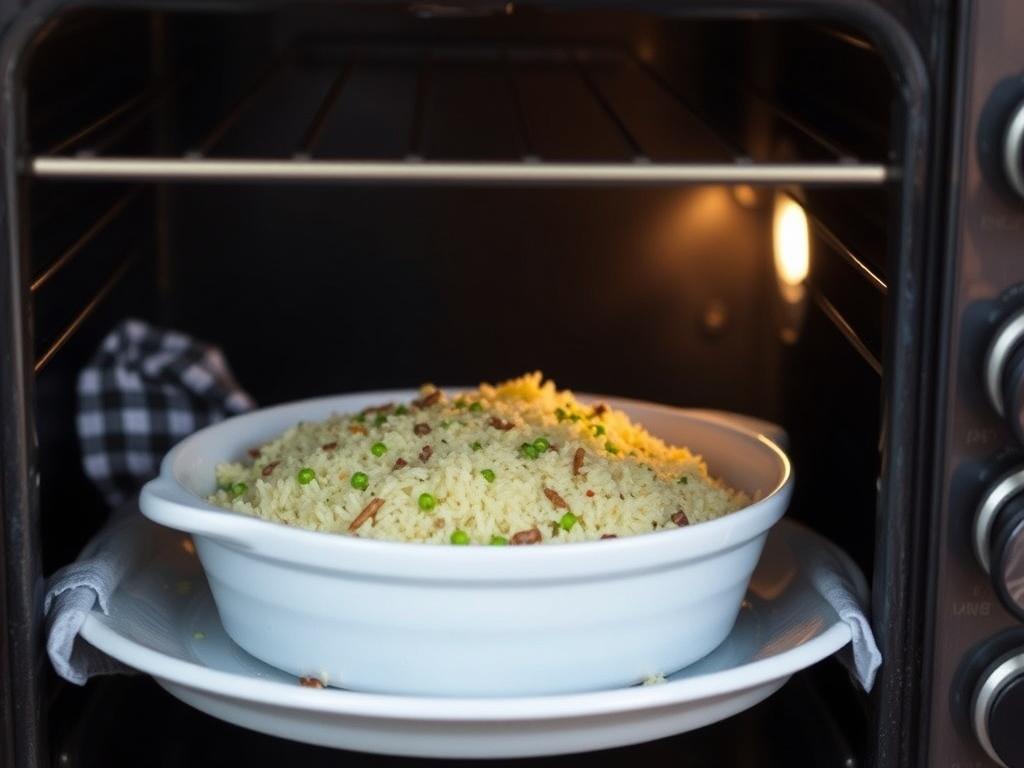
Pilaf in the oven has roots woven through several culinary traditions. The basic idea — rice cooked with fat, aromatics and liquid so each grain stays separate — traces back to Persian and Central Asian kitchens. As recipes traveled along trade routes, cooks adapted the technique to local ovens and household routines. In Iran and parts of the Levant, rice dishes like polow or tahdig are often finished in an oven to create a crisp bottom layer. In short: oven use isn’t a single-origin gimmick, but a practical adaptation that appears wherever people wanted even heat or to feed many mouths at once.
A short, clear history of oven-cooked pilaf
Pilaf began as a stovetop preparation where rice is briefly toasted in fat, then simmered in stock. Over centuries, cooks discovered advantages to finishing rice in an oven: steadier, gentler heat and less risk of burning or uneven doneness. In royal and communal cooking — think large feasts or village celebrations — huge pots or trays went into ovens or earth ovens, producing consistent results. The oven technique also helped create prized textures, from fluffy separate grains to a crunchy crust under the rice. So when you make pilaf in the oven today, you’re using a method that evolved out of practical needs and a bit of culinary curiosity.
Interesting facts about oven-baked pilaf
- Pilaf has many names: pilau, pulao, plov, polow — depending on language and region — but the oven adaptation keeps the core technique intact.
- Creating a crust is often a sought-after feature. In Iran it’s called tahdig; in other places it’s simply the golden prize under the rice.
- Unlike risotto, pilaf aims for separate, distinct grains. Toasting the rice and using measured liquid are the keys.
- Pilaf in the oven is highly scalable: the same basic math applies whether you cook for two or twenty, which is why it became popular for gatherings.
- Layering is common — rice over spiced meat — which lets flavors mingle without turning into a stew.
Nutritional value of a typical oven pilaf
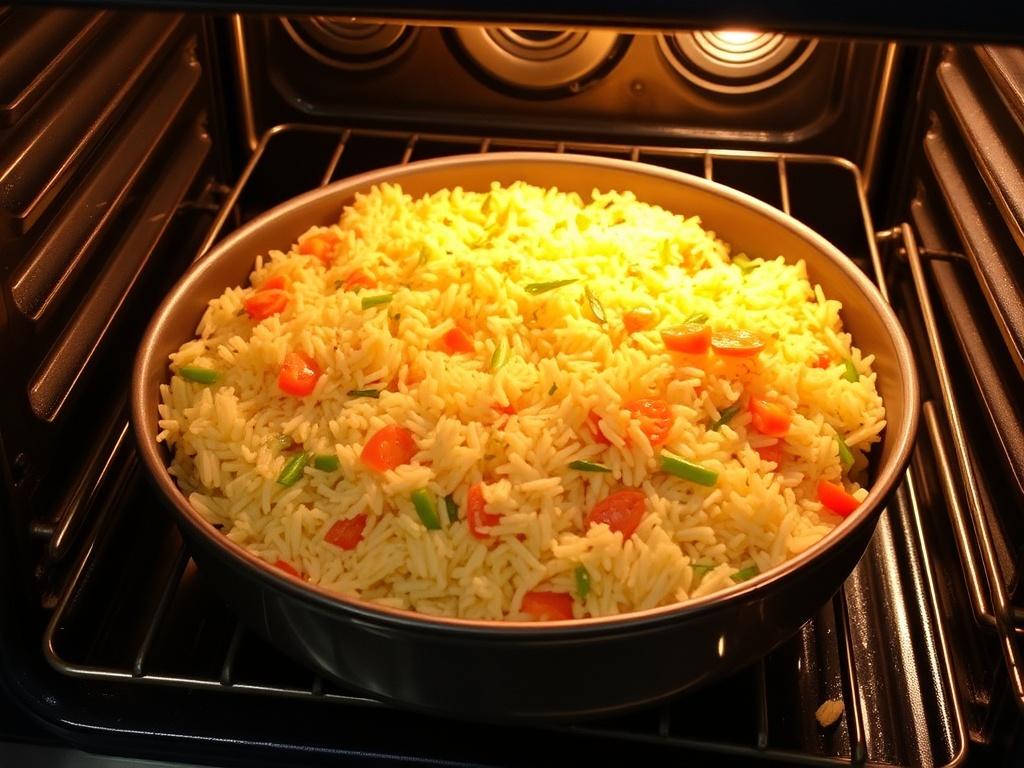
Calories and nutrients vary a lot with ingredients, but here is an approximate breakdown for one serving (about 300–350 g) of a chicken-and-rice oven pilaf made with basmati, olive oil and vegetables.
| Nutrient | Per serving (approx.) |
|---|---|
| Calories | 450–550 kcal |
| Protein | 25–30 g |
| Fat | 12–18 g |
| Carbohydrates | 60–75 g |
| Fiber | 2–5 g |
Tips: use brown rice for more fiber (adjust liquid and time), reduce oil to cut calories, or add more vegetables to boost vitamins.
How Pilaf in the oven spread and became popular worldwide
Pilaf adapts effortlessly. In Central Asia, plov headlines celebrations. In Iran, polow appears in weddings and holidays. In South Asia, pulao takes many local twists. In the Middle East and Mediterranean, oven finishes or layered versions add texture and elegance. European kitchens picked up versions too, often simplifying them for family meals. The oven method won fans because it frees cooks from constant stirring and yields reliable results — a major advantage in busy households and restaurants alike.
The best step-by-step cooking recipe for Pilaf in the oven
This approachable recipe serves 4–6 and uses familiar ingredients. It aims for fluffy rice, seasoned meat and a touch of crisp at the bottom. Read through once, then cook.
Ingredients
- 2 cups basmati rice, rinsed until water runs clear
- 1.2 kg (about 2.5 lb) bone-in chicken pieces or 600 g boneless thighs
- 1 large onion, thinly sliced
- 3 cloves garlic, minced
- 2 medium carrots, julienned or grated
- 3 tbsp olive oil or butter
- 1.5 tsp salt (adjust to taste)
- 1 tsp ground cumin
- 1/2 tsp ground coriander or paprika
- 4 cups chicken stock (hot)
- Fresh herbs for garnish: parsley or cilantro
Method
- Preheat oven to 180°C (350°F).
- Soak rinsed rice in cold water while you prepare other ingredients, 20–30 minutes. Drain well before using.
- In a heavy, ovenproof pot or Dutch oven, heat oil over medium heat. Brown chicken on both sides in batches; set aside.
- Sauté onions in the same pot until soft and golden. Add garlic, carrots, cumin and coriander; cook a minute until fragrant.
- Return chicken to the pot, nestling pieces into the onion mixture. Sprinkle salt over meat and vegetables.
- Spread drained rice evenly over the chicken and vegetables. Pour hot stock gently over the rice; do not stir. The liquid should cover the rice by about 1 cm. If not, add a little more hot stock or water.
- Bring to a gentle simmer on the stove for 3–4 minutes, then cover the pot with a tight lid and move it to the oven.
- Bake for 30–40 minutes until rice is tender and liquid absorbed. For a crisp bottom, remove lid and bake 5–10 minutes more at 200°C (400°F).
- Let the pilaf rest 10 minutes after removing from oven. Gently fluff and serve, garnished with herbs and toasted nuts if you like.
Variations and tips
- For vegetarian pilaf in the oven, replace stock with vegetable stock and add eggplant, mushrooms and chickpeas.
- Use lamb or beef for a heartier dish; brown longer and increase cooking time slightly.
- To avoid soggy rice: measure liquid carefully and keep oven lid or foil tight during baking.
- Toast almonds or pistachios and sprinkle on top for texture and color.
Final thoughts
Pilaf in the oven is comfort that scales — elegant enough for guests, simple enough for a weeknight. It rewards patience more than fuss: a little browning, a careful liquid measure and time in a steady oven give you separate grains, deep flavor and, if you wish, a lovely crust. Try the base recipe once, then make it your own by switching spices, proteins or vegetables. Cooking this way saves time at the stove and gives you one-pot satisfaction that always looks like more work than it is.


