

Imagine a warm, cheering bowl of grains and savory turkey that smells like home even if you’ve never cooked it before. Bulgur pilaf with turkey is that kind of dish: simple, honest, and full of texture — the nutty bite of bulgur, the gentle sweetness of sautéed onions, and turkey that soaks up spices without stealing the show. It’s practical enough for a weeknight, polite enough for guests, and flexible enough to match whatever vegetables and herbs you have on hand. If you’ve ever wondered how to make a pilaf that’s both comforting and bright, keep reading — I’ll walk you through history, nutrition, surprising facts, and a clear step-by-step recipe that won’t leave you guessing.
- Country of origin Bulgur pilaf with turkey
- History Bulgur pilaf with turkey
- Interesting facts about Bulgur pilaf with turkey
- Nutritional value Bulgur pilaf with turkey
- Popularity in different countries Bulgur pilaf with turkey
- The best step-by-step cooking recipe for Bulgur pilaf with turkey
- Ingredients (serves 4)
- Step-by-step method
- Tips and variations
- Final note
Country of origin Bulgur pilaf with turkey
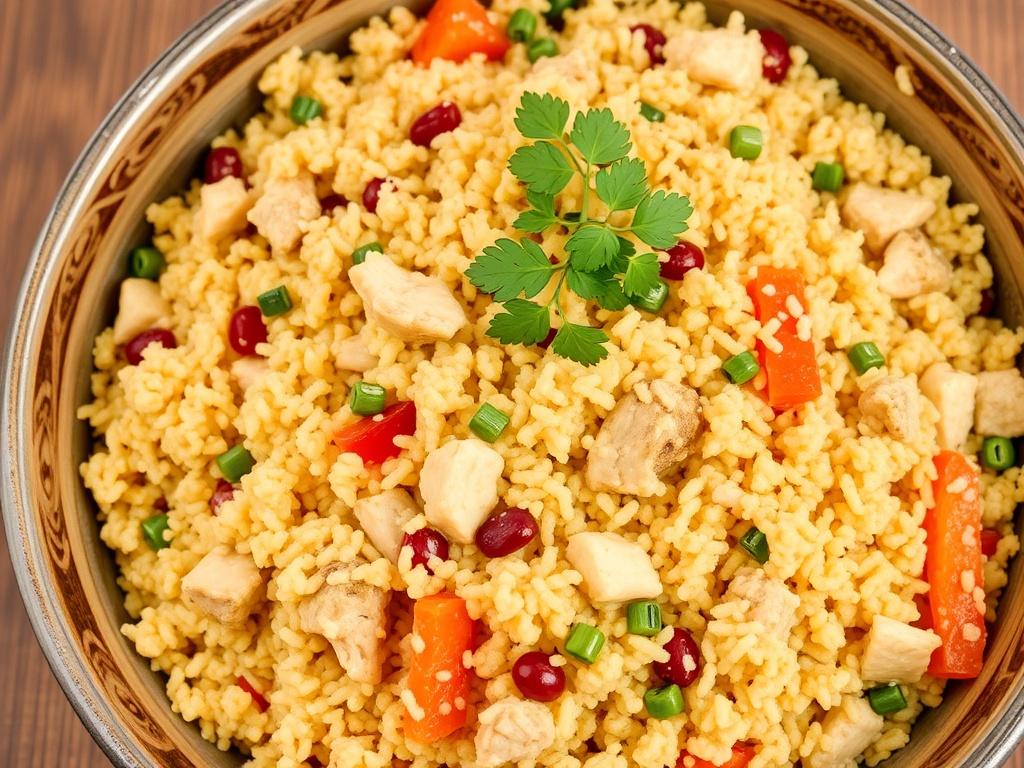
Bulgur itself traces its roots to the Eastern Mediterranean and Anatolia. Pilaf — a method of cooking grains by toasting them briefly then simmering in a measured amount of liquid — appears across Persia, Turkey, and the Levant. Combining bulgur with poultry like turkey is a more modern, practical twist: turkey is widely available and lean, so cooks in Turkey and neighboring regions adapted traditional bulgur pilaf recipes to include whatever protein was on hand. Today, you’ll find versions of bulgur pilaf with turkey in households that cherish the original technique but want a lighter, protein-rich meal.
History Bulgur pilaf with turkey
Bulgur has been eaten for millennia. It’s simply cracked, parboiled wheat — a preservation-friendly form of grain that kept well and cooked quickly, which mattered before the luxury of fast-cooking modern grains. The pilaf technique developed as a way to get evenly cooked, separate grains; it spread through trade routes and royal kitchens. Using turkey with bulgur is not ancient lore, but rather a sensible adaptation: as turkey farming spread and lean meat became preferable for health or cost reasons, cooks began substituting lamb or chicken with turkey. So the dish you make today links a very old grain-preparation method to contemporary tastes.
Interesting facts about Bulgur pilaf with turkey
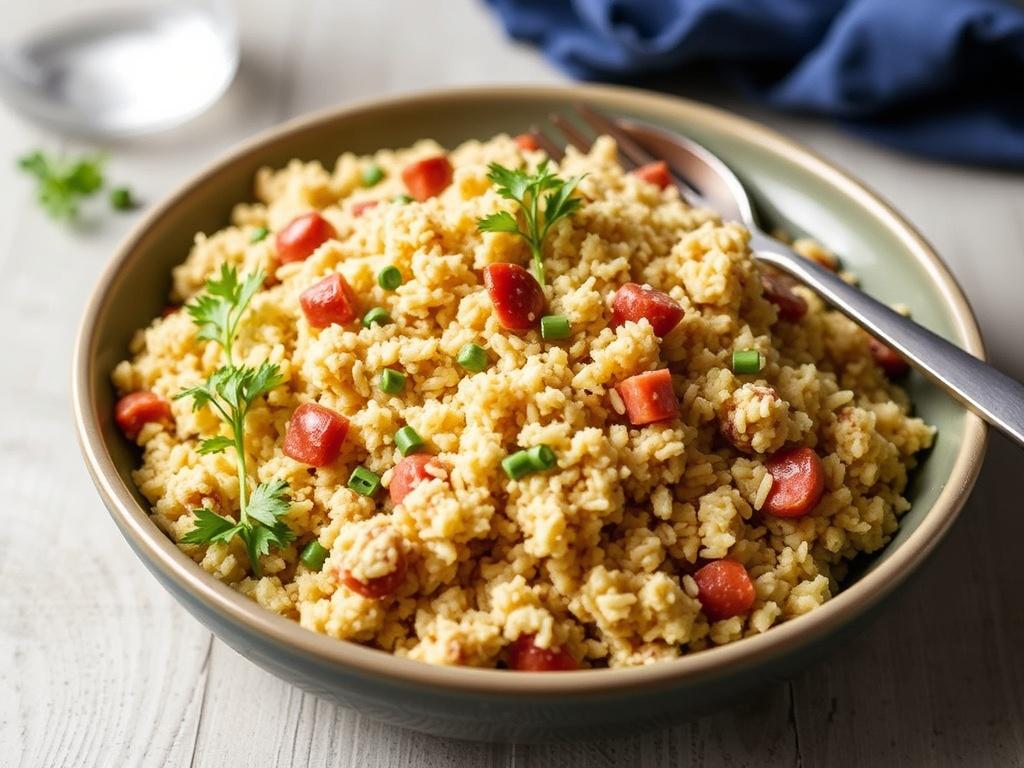
- Bulgur is precooked during milling, so it absorbs flavors quickly and holds texture well — it won’t turn mushy like some rices can.
- Because bulgur is whole wheat, it retains bran and germ, making it more nutritious than refined grains.
- Turkey’s mild flavor makes it a chameleon: it carries spices and herbs without overpowering the bulgur, which is why the pairing works so naturally.
- The pilaf method rewards small technique choices: toasting the bulgur briefly deepens flavor; letting it rest after cooking keeps the grains separate and light.
- Leftovers reheat beautifully and can be pressed into patties or used as a filling for peppers or leaves.
Nutritional value Bulgur pilaf with turkey
This dish strikes a good balance of macronutrients. Bulgur provides complex carbohydrates and dietary fiber, while turkey supplies lean protein and essential B vitamins. Fat content depends mainly on how much oil or butter you use and whether you choose lean turkey breast or fattier turkey pieces.
| Nutrient (approx. per serving) | Amount |
|---|---|
| Calories | ~420 kcal |
| Protein | 30–35 g |
| Carbohydrates | 45–50 g (including 6–8 g fiber) |
| Total fat | 10–14 g (depending on oil/butter) |
| Sodium | variable — controlled by stock and added salt |
Adjust portions and cooking fat to fit calorie or macronutrient goals. Substituting homemade low-sodium stock and using olive oil keeps the dish heart-friendly.
Popularity in different countries Bulgur pilaf with turkey
In Turkey and neighboring countries, bulgur pilaf is a staple — served alongside kebabs, stews, or as a main with legumes or meat. In the Levant, bulgur often appears in salads (like tabbouleh) and cooked dishes. The turkey variation is especially popular in places where turkey is widely consumed or when cooks prefer a lighter alternative to lamb or beef. In Europe and North America, bulgur pilaf with turkey has gained traction among home cooks who appreciate whole grains and lean proteins; it fits vegetarian-friendly kitchens too if you swap turkey for mushrooms or legumes.
The best step-by-step cooking recipe for Bulgur pilaf with turkey
Ingredients (serves 4)
- 1 cup coarse bulgur
- 400 g (about 14 oz) ground turkey or diced turkey breast
- 1 medium onion, finely chopped
- 1 medium tomato, diced, or 1 tbsp tomato paste
- 1 red bell pepper, diced (optional)
- 2 tbsp olive oil or 1 tbsp butter + 1 tbsp oil
- 2 cups low-sodium chicken or vegetable stock (hot)
- 1 tsp ground cumin
- 1/2 tsp smoked paprika (or regular paprika)
- Salt and black pepper to taste
- 2 tbsp chopped parsley, lemon wedges to serve
- Optional: a handful of toasted pine nuts or chopped toasted almonds
Step-by-step method
- Heat the oil in a wide skillet or medium pot over medium heat. Add the chopped onion and a pinch of salt; sauté until translucent, about 6–8 minutes. If using bell pepper, add it in the last 3–4 minutes.
- Add the ground or diced turkey. Break it up and cook until no longer pink and starting to brown at the edges, about 6–8 minutes. Season with salt, pepper, cumin, and paprika. Stir in tomato paste or diced tomato and cook 1–2 minutes to deepen flavors.
- Stir in the bulgur so each grain is coated with oil and juices from the meat. Toast the bulgur for 1–2 minutes while stirring — this step adds nuttiness.
- Pour in the hot stock, scrape any browned bits from the bottom, and bring to a gentle simmer. Reduce heat to low, cover tightly, and cook for 12–15 minutes, or until bulgur has absorbed the liquid and is tender.
- Turn off heat and let the pilaf rest covered for 5–10 minutes. Fluff with a fork, fold in chopped parsley and toasted nuts if using, and adjust seasoning. Serve with lemon wedges.
Tips and variations
- For more depth, sauté a small cinnamon stick or a couple of whole cloves with the onions and remove before serving.
- Substitute part of the stock with a splash of white wine for brightness.
- Make it vegetarian by swapping turkey for cooked lentils or sautéed mushrooms; increase olive oil for mouthfeel.
- If your bulgur is fine rather than coarse, reduce cooking time and stock slightly — fine bulgur hydrates faster.
- Leftovers can be refrigerated up to 3 days. Reheat gently with a splash of water or stock to revive texture.
Final note
Bulgur pilaf with turkey is a practical bridge between tradition and everyday cooking. It honors an ancient grain and a time-tested technique while staying flexible for modern tastes. Try it once as written, then make it your own — add herbs, switch spices, sneak in vegetables. The result will be a dependable, flavorful meal that feels both grounded and freshly made.


