

I still remember the first time the kitchen filled with that rich, golden steam—rice soaking up duck fat, spices waking up, little bursts of citrus and caramelized onions. Duck pilaf is the kind of dish that announces itself before you sit down: generous, a little theatrical, and deeply satisfying. If you like food that tells a story on the plate—history, comfort, a touch of celebration—then this piece will take you through everything worth knowing, from where it began to how to make a perfect pot at home and the tiny tricks pro cooks keep to themselves. Read on and you’ll have a clear path to cooking an impressive, soulful duck pilaf that feeds both appetite and curiosity.
- Where duck pilaf comes from and how it reflects place
- A concise journey through the history of duck pilaf
- Little-known and delightful tidbits about duck pilaf
- What’s in duck pilaf and why it matters for your body
- How duck pilaf travels the world and wins hearts
- The clearest, most reliable recipe to make duck pilaf at home
- Ingredients
- Equipment
- Step-by-step method
- Tips and variations
Where duck pilaf comes from and how it reflects place

Country of origin Duck pilaf shows up in multiple culinary traditions, but its strongest roots trace to Central Asia and the Caucasus, where pilaf—rice cooked in seasoned broth with meat—has been a daily and festive staple for centuries. In those regions, duck is a natural fit: rich, fatty, and suited to slow cooking. The dish evolved as local cooks substituted whatever protein was available—mutton, chicken, goose or duck—while keeping the basic method that gives pilaf its signature loose, separate grains and infused flavor.
A concise journey through the history of duck pilaf
History Duck pilaf maps onto the broader story of pilaf and plov, dishes that spread along trade routes and through empires. As Persian, Turkic, and later Russian culinary influences met, cooks adapted spices, cooking fats, and grains according to climate and trade. Duck, once a common domestic bird in wetlands and river valleys, found its place in regional variations where its skin and fat could be rendered to flavor rice. Over time, family recipes and festival versions solidified, and the technique—browning meat, toasting rice, adding aromatics and simmering gently—remained central.
Little-known and delightful tidbits about duck pilaf
Interesting facts about Duck pilaf make it more than a weekend dinner. For example, in some traditions, the rice is briefly rinsed then dry-toasted for extra nutty flavor before liquid is added. In ceremonial versions, saffron or turmeric is used to color the rice, making the dish visually celebratory. Duck fat acts almost like a flavor passport: a small amount permeates the grains, so a little duck goes a long way toward richness. Also, leftovers reheat exceptionally well—contrary to many rice dishes, pilaf keeps its texture if reheated gently with a splash of broth.
What’s in duck pilaf and why it matters for your body
Nutritional value Duck pilaf is a calorie-dense, nutrient-rich meal. Duck provides significant protein and monounsaturated fats; rice offers carbohydrates and some B vitamins; additions like carrots, onions and spices add fiber, vitamin A, antioxidants and minerals. The balance depends on portion sizes and how much fat is used. For a lighter version, trim excess skin and use less rendered fat while keeping the cooking sequence that builds flavor.
| Component | Typical Amount per Serving | Notes |
|---|---|---|
| Calories | 500–750 kcal | Depends on duck portion and oil/fat used |
| Protein | 25–40 g | Duck and additions like legumes boost protein |
| Fat | 25–45 g | High if skin and rendered fat are included |
| Carbohydrates | 45–70 g | Mainly from rice |
How duck pilaf travels the world and wins hearts
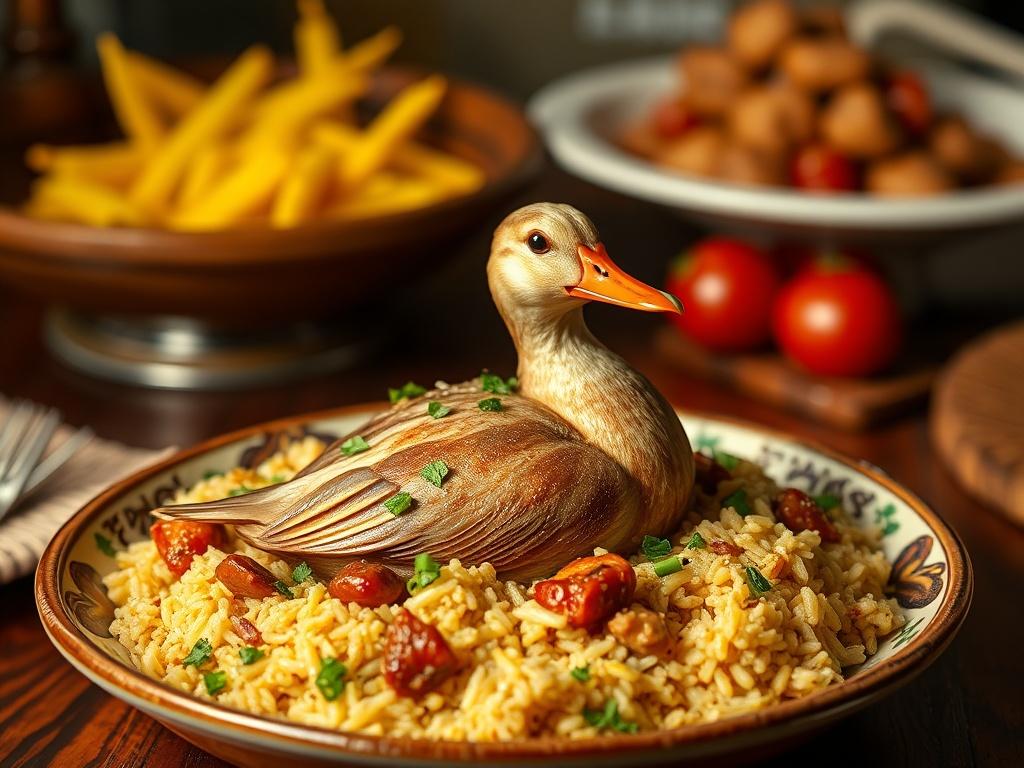
Popularity in different countries Duck pilaf enjoys varied reputations: in Central Asia it’s part of daily and celebratory tables, in the Caucasus it can be a festive centerpiece, and in parts of Europe chefs have revived it as a heritage dish. Each country tweaks spices and accompaniments—dried fruits and nuts in some places, plain yogurt or fresh herbs in others—so the dish feels local everywhere it lands.
The clearest, most reliable recipe to make duck pilaf at home
The best step-by-step cooking recipe for Duck pilaf is straightforward if you respect two rules: build flavor in stages, and give the rice gentle, even heat to finish. Below is a practical recipe for four people, with timing and tips that prevent common pitfalls.
Ingredients
- Duck (leg/thigh pieces), about 1.2–1.5 kg total
- Long-grain rice, 2 cups (about 400 g), rinsed
- Onions, 2 large, thinly sliced
- Carrots, 2 medium, julienned or grated
- Garlic, 4 cloves
- Vegetable oil or butter, 2–3 tbsp (plus duck fat from browning)
- Chicken or duck stock, about 4 cups (adjust to rice)
- Salt, to taste; black pepper; 1 tsp cumin; 1 tsp coriander; pinch of saffron or turmeric (optional)
- Dried apricots or raisins, 1/2 cup (optional)
- Fresh herbs (parsley, cilantro) for serving
Equipment
- Heavy-bottomed pot or Dutch oven with lid
- Skillet for browning if needed
Step-by-step method
- Pat the duck dry and season with salt and pepper. Brown the pieces in the pot skin side down until golden, rendering fat. Remove and set aside. Pour off excess fat, leaving about 2 tbsp in the pot if desired.
- Sauté onions in the pot until soft and beginning to caramelize. Add carrots and cook until they soften and start to sweeten.
- Add cumin and coriander, stirring until fragrant. Return duck to the pot, nestling pieces among the vegetables.
- Spread the rinsed rice evenly over the duck and vegetables. Scatter garlic, dried fruit if using, and saffron or turmeric.
- Carefully pour hot stock so it just covers the rice by about 1 cm. Gently push duck pieces so rice is evenly distributed; do not stir from now on.
- Bring to a simmer, then reduce heat to low, cover tightly and cook 20–25 minutes until rice is tender and liquid absorbed.
- Turn off heat and let stand, covered, for 10 minutes. Fluff rice gently with a fork, lift duck pieces onto plates, and garnish with herbs.
Tips and variations
- For crispier skin, finish duck under a broiler before adding to rice.
- Use basmati for fragrant, separate grains; medium-grain if you want slightly creamier texture.
- Add nuts like toasted almonds or walnuts for bite and contrast.
- To reduce fat, remove skin after browning and before simmering; use stock instead of extra fat.
Cook duck pilaf once and you’ll understand why it endures: it’s comforting yet celebratory, straightforward but open to personal touches. Follow the method, respect the rice, and you’ll have a dish that fills the kitchen with warmth and delivers a satisfying, layered taste that keeps people coming back for seconds.


