

Imagine a steaming mound of rice studded with glistening raisins, apricots, and pistachios, perfume of warm spices drifting into the room. Dried fruit pilaf is one of those dishes that balances comfort and celebration: simple enough for a weeknight yet bright enough for guests. In this article I’ll walk you through where it came from, how it evolved, why people love it, and give a reliable step-by-step recipe so you can make a version that suits your pantry and taste. Whether you want a fragrant side dish or a centerpiece, you’ll leave with practical tips, storage advice, and a few twists to try next time.
- Country of origin Dried fruit pilaf
- History Dried fruit pilaf
- Interesting facts about Dried fruit pilaf
- Nutritional value Dried fruit pilaf
- Popularity in different countries Dried fruit pilaf
- The best step-by-step cooking recipe for Dried fruit pilaf
- Ingredients
- Method
- Tips and variations
- Storage and reheating
- Wrap-up
Country of origin Dried fruit pilaf
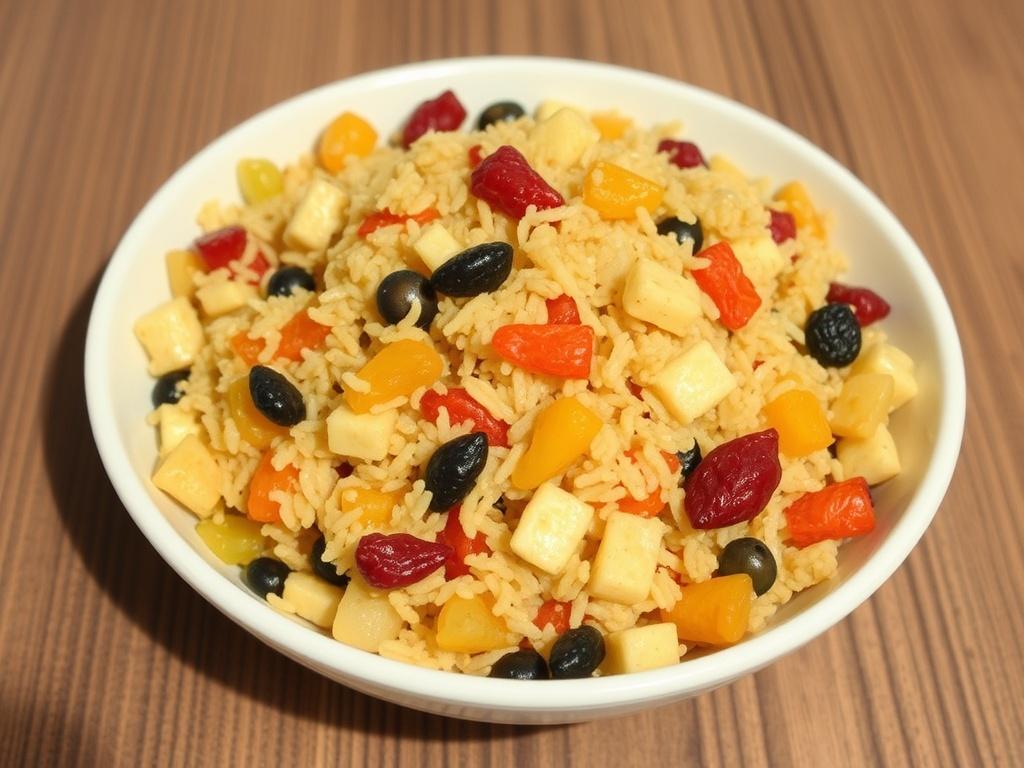
Dried fruit pilaf doesn’t belong to one single country. It’s a cousin to many rice-and-fruit dishes found across the Middle East, Central Asia, and parts of the Caucasus. Think of Persian chelow with raisins, Uzbek plov with prunes or apricots, and Turkish pilav enriched with currants and pine nuts. Each culinary tradition shapes the dish to local ingredients and customs: in Iran, a sweet-sour balance often comes from barberries and orange peel, while in Uzbekistan the pilaf tends to be richer and meatier. The common thread is plain rice elevated with nuts, dried fruit, aromatic spices, and often a touch of fat to carry flavor.
History Dried fruit pilaf
The history traces back to trade routes and the practical need to preserve fruit. Drying fruit made long-distance travel possible and added a concentrated sweetness perfect for festive dishes. As rice cultivation spread and spice routes connected regions, cooks combined the two. In royal kitchens, dried fruit pilaf became a way to show abundance: rice was a canvas and dried fruits, nuts, and spices were the colors. Over centuries the recipe traveled with merchants and migrants, each region adapting it and passing it down through family tables.
Interesting facts about Dried fruit pilaf
- Spice carriers: A small amount of warming spices—cinnamon, cardamom, or cloves—transforms the overall perception of a pilaf. The spices don’t dominate; they frame the sweetness.
- Versatility: The same formula—rice + fat + aromatics + dried fruit/nuts—can become vegetarian side, a meat accompaniment, or even a breakfast dish with yogurt.
- Ceremonial role: In many cultures, sweet pilaf variants appear at weddings, New Year celebrations, and harvest festivals as symbols of prosperity.
- Texture balance: Good pilaf aims for distinct grains, chewy fruit, and crunchy nuts. Overcooking collapses those contrasts.
Nutritional value Dried fruit pilaf
Nutritionally, dried fruit pilaf provides a mix of carbohydrates, fiber, and healthy fats if nuts are included. It’s calorie-dense compared to plain rice because of the concentrated sugars in dried fruit and the energy in nuts and oil or butter. That makes it a satisfying side that pairs well with lean proteins or a crisp salad to balance the meal.
| Nutrient (per serving, approx.) | Estimated amount |
|---|---|
| Calories | 300–420 kcal |
| Carbohydrates | 55–70 g |
| Protein | 5–8 g |
| Fat | 8–14 g |
| Fiber | 3–6 g |
Adjust portions and ingredients to control calories and sugar: reduce dried fruit, increase nuts and seeds, or serve smaller portions alongside protein.
Popularity in different countries Dried fruit pilaf
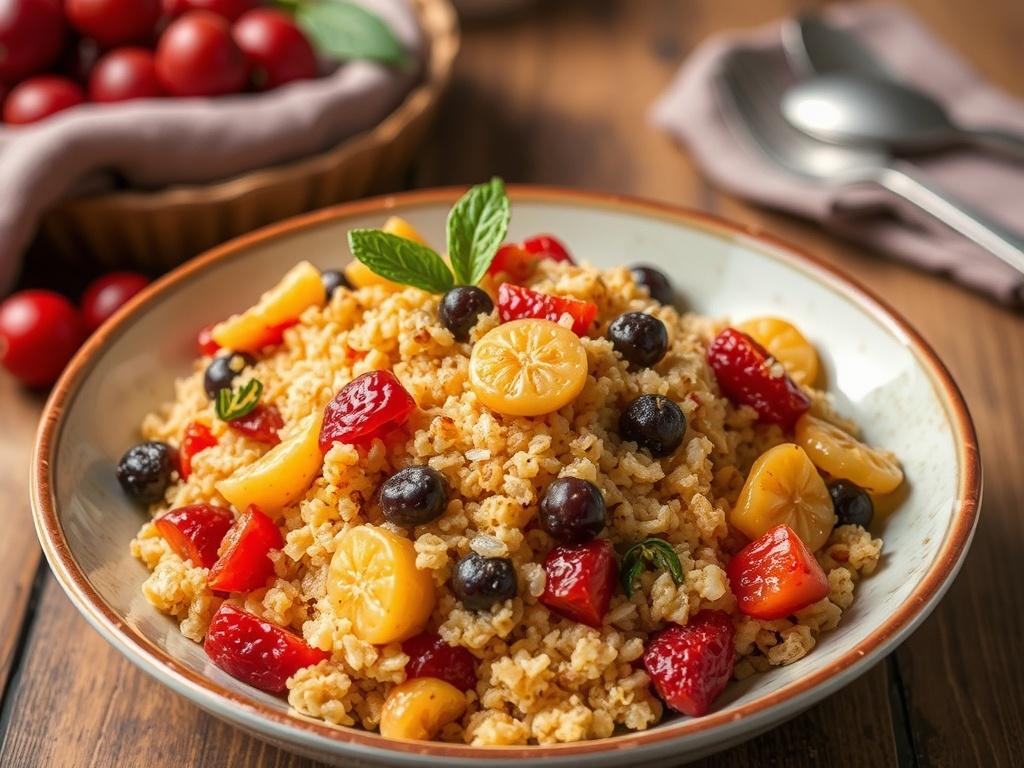
Across countries, dried fruit pilaf wears different faces. In Iran it appears as jeweled rice on festive tables; in Uzbekistan and Kazakhstan it’s tied to plov traditions served at celebrations; in Turkey and Greece, variants turn up with currants and almonds; in India, pulao recipes feature raisins and cashews as standard. In Western kitchens the dish has been embraced for its impressive look and easy make-ahead nature. Wherever it goes, people appreciate its ability to feel special without complicated technique.
The best step-by-step cooking recipe for Dried fruit pilaf
This recipe aims to be reliable and adaptable. It serves four as a side.
Ingredients
- 1 3/4 cups (350 g) basmati rice, rinsed until water runs clear
- 3 tablespoons neutral oil or ghee
- 1 small onion, finely chopped
- 1 teaspoon ground cinnamon or 2 whole cinnamon sticks
- 1/2 teaspoon ground cardamom or 5 crushed green pods
- 1 cup mixed dried fruit (raisins, chopped dried apricots, chopped dates)
- 1/2 cup toasted nuts (almonds, pistachios, or walnuts)
- 3 cups low-sodium chicken or vegetable stock (or water plus a pinch of salt)
- Salt to taste
- Optional: zest of 1 orange, a tablespoon of honey or pomegranate molasses for brightness
Method
- Soak the rice in cold water for 20–30 minutes, then drain. This helps separate the grains.
- Heat oil or ghee in a heavy-bottomed pot over medium heat. Add onion and sauté until translucent and lightly golden.
- Add spices and toast briefly until fragrant, about 30 seconds. Stir in dried fruit and nuts, sauté 2 minutes so they plump and pick up flavor.
- Add rice, stirring to coat grains with oil and spices for another minute.
- Pour in stock, add salt, and bring to a gentle boil. Reduce heat to low, cover tightly, and simmer 12–15 minutes for basmati until liquid is absorbed.
- Turn off heat and let the pilaf rest, covered, for 10 minutes to steam. Fluff with a fork, stir in orange zest or a drizzle of honey if using, and adjust seasoning.
Tips and variations
- For a deeper flavor, brown the rice lightly before adding liquid. Keep a close eye; browned rice can burn.
- Add protein: fold in shredded chicken, cubes of roasted lamb, or chickpeas for a one-pan meal.
- Make it vegan by using oil and vegetable stock, and swap honey for a touch of maple syrup if you want sweetness.
- For extra texture, sprinkle pomegranate seeds and fresh herbs before serving.
Storage and reheating
Cool leftovers quickly and store in an airtight container in the fridge for up to 3 days. Reheat gently with a splash of water and cover to steam, or warm in the oven at 160°C (325°F) until heated through. Freeze in portions for up to one month; thaw overnight in the fridge before reheating.
Wrap-up
Dried fruit pilaf is forgiving and expressive: change the mix of fruits and nuts, tweak spices, and make it lean or indulgent. The technique stays the same—separate, aromatic rice with textural contrast—and once you master that, the dish becomes a canvas. Try the recipe, make a note of what you change, and soon you’ll have a personal favorite to bring out for simple dinners or special gatherings.


