

Imagine the warm, fragrant steam of pilaf rising from a pan, spices weaving their way through tender rice, and in the place of classic lamb or chicken — hearty, savory soy meat that soaks up every flavor. This is not a strict vegetarian substitute that pretends to be something else; it’s a confident, tasty version of pilaf that stands on its own. If you’re curious how to make it deeply flavored, nutritious, and reliably satisfying, keep reading — you’ll find history, practical tips, and a step-by-step recipe that anyone can follow.
- Country of origin and the roots of this dish
- History of pilaf with soy meat
- Interesting facts about pilaf with soy meat
- Nutritional value of pilaf with soy meat
- Popularity in different countries and culinary twists
- The best step-by-step cooking recipe for Pilaf with soy meat
- Ingredients for 4 servings
- Preparation steps
- Practical tips for reliable results
Country of origin and the roots of this dish
Pilaf itself has a long, well-traveled history across Central Asia, the Middle East, and parts of Eastern Europe. The basic idea — cooking rice with fat, aromatics and meat or vegetables so the grains absorb the flavors — is ancient and flexible. The particular combination of rice, onion, carrot and meat is most commonly associated with Uzbek plov, which many people think of as a flagship Central Asian dish. Using soy meat is a modern twist; textured soy protein and other soy-based meat analogues became widely available in the 20th century and have been adapted into traditional recipes ever since.
History of pilaf with soy meat
The classic pilaf recipes grew out of nomadic and agricultural practices where one-pot meals made sense: grain, some fat, and whatever protein was on hand. As diets and food availability changed, cooks experimented. The idea of swapping in soy meat is recent and practical: it allows the same layered flavors and satisfying texture without relying on animal products. Home cooks and restaurants began using soy meat not to imitate perfectly but to create a version of pilaf that suits vegetarian, vegan, or budget-conscious diets while keeping the soul of the dish intact.
Interesting facts about pilaf with soy meat

- Pilaf is a method, not a single recipe: you’ll find thousands of regional variations, and soy meat simply joins that tradition of improvisation.
- Soy meat absorbs spices and stock in a way similar to chunks of cooked meat, so it often intensifies the dish’s flavor rather than muting it.
- Because soy meat is lighter than animal meat, you can play with texture by briefly pan-searing it before adding rice, creating crisp edges that contrast with fluffy grains.
- The dish fits easily into meal prep: pilaf keeps well and often tastes better the next day after flavors meld.
Nutritional value of pilaf with soy meat
The exact nutrition depends on the rice type, oil amount and the soy product used, but here are general estimates per serving (about 1.5 cups):
| Nutrient | Approximate amount |
|---|---|
| Calories | 400–520 kcal |
| Protein | 18–28 g (soy meat is a strong contributor) |
| Carbohydrates | 50–65 g |
| Fat | 8–18 g (depending on oil and added fats) |
| Fiber | 3–6 g |
| Sodium | Varies greatly with stock and soy product |
Overall, pilaf with soy meat makes a balanced meal: complex carbs from rice, plant-based protein from soy, and healthy fats if you choose olive or sunflower oil. Add vegetables for extra micronutrients.
Popularity in different countries and culinary twists
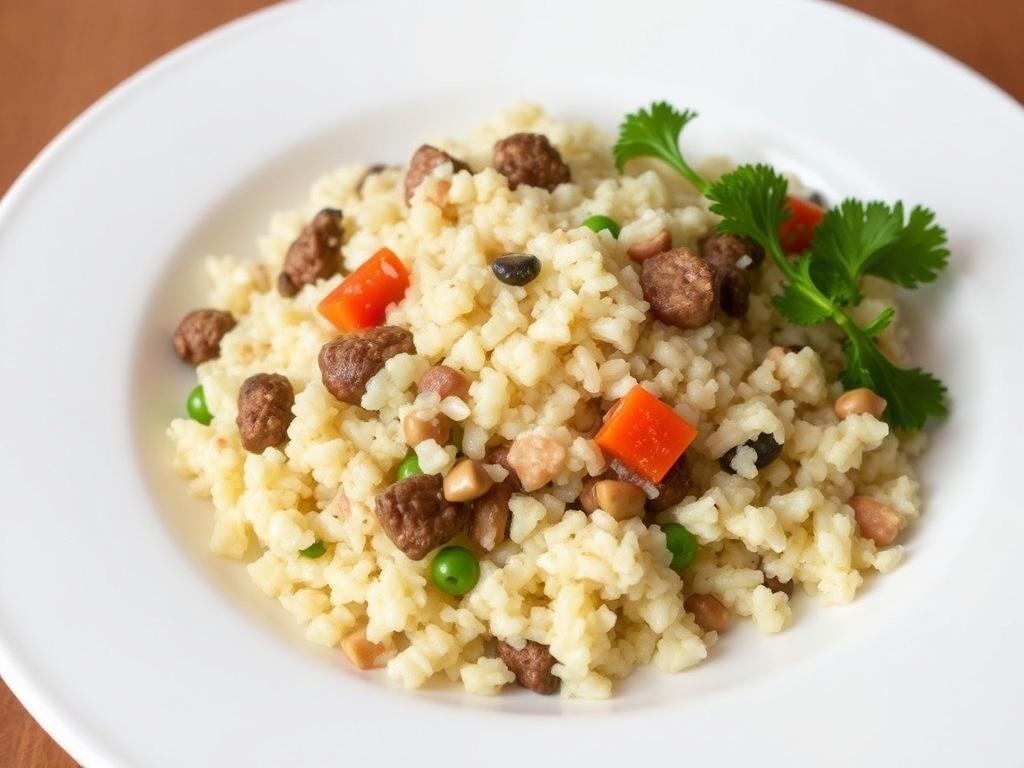
Pilaf remains popular wherever rice is a staple. In Central Asia, traditional meat versions dominate, but urban restaurants often offer meatless variants to meet demand. In the Middle East and the Caucasus, cooks sometimes swap in legumes or soy meat. In Europe and North America, pilaf with soy meat appears in vegetarian menus and home kitchens, appreciated for its comfort-food appeal and flexibility. Each region brings its own spices — cumin and coriander in Central Asia, cinnamon or turmeric in some Middle Eastern versions, and garam masala-like blends in fusion recipes.
The best step-by-step cooking recipe for Pilaf with soy meat
Ingredients for 4 servings
- 2 cups long-grain rice (basmati or similar), rinsed
- 1.5 cups textured soy meat (reconstituted) or ready-to-use soy chunks
- 3 tablespoons vegetable oil or sunflower oil
- 2 large onions, thinly sliced
- 2 large carrots, julienned or grated
- 3 cloves garlic, minced
- 1.5 teaspoons ground cumin
- 1 teaspoon coriander powder
- 1 teaspoon paprika
- Salt and black pepper to taste
- 3 to 3.5 cups hot vegetable stock or water (adjust based on rice)
- Optional: bay leaf, handful of chickpeas, chopped fresh parsley
Preparation steps
- Prepare the soy meat: If using dehydrated textured soy, pour boiling water over it and let it soak for 10 minutes, then drain and squeeze excess water. Season lightly with salt and a pinch of pepper.
- Sear aromatics: Heat oil in a heavy pot over medium-high heat. Add onions and cook until golden-brown, stirring so they caramelize gently. This adds depth to the whole dish.
- Add carrots and spices: Stir in the carrots and cook for 4–6 minutes until softened. Add garlic, cumin, coriander and paprika; toast spices briefly until fragrant.
- Brown the soy meat: Add rehydrated soy meat and spread it across the pan. Let it sit for a minute to brown slightly, then stir. This step helps texture and flavor.
- Add rice and stock: Evenly spread the rinsed rice over the soy mixture without stirring much. Pour hot stock gently so it covers the rice by about 1 to 1.25 cm (roughly 3 to 3.5 cups total for 2 cups rice). Add salt, and tuck in a bay leaf if using.
- Simmer and steam: Bring to a boil, then reduce heat to low, cover tightly and cook for 15–18 minutes until liquid is absorbed. Turn off heat and let rest, covered, for 10 minutes to steam.
- Fluff and serve: Use a fork to gently fluff the rice and mix the soy meat through. Garnish with chopped parsley or fried onions. Serve hot.
Practical tips for reliable results
- Rinse rice until water runs clear to avoid sticky grains.
- Adjust stock amount to the rice you use: short-grain needs more, long-grain less.
- Toast spices in oil before adding liquids to unlock their aroma.
- For extra depth, replace half the stock with a splash of tomato paste diluted in water.
Pilaf with soy meat is forgiving and invites experimentation. Try adding raisins and nuts for a sweet-salty contrast, or swap spices toward a smokier profile. It’s comfort food with conscience — simple, flavorful, and adaptable to what’s in your pantry.


