
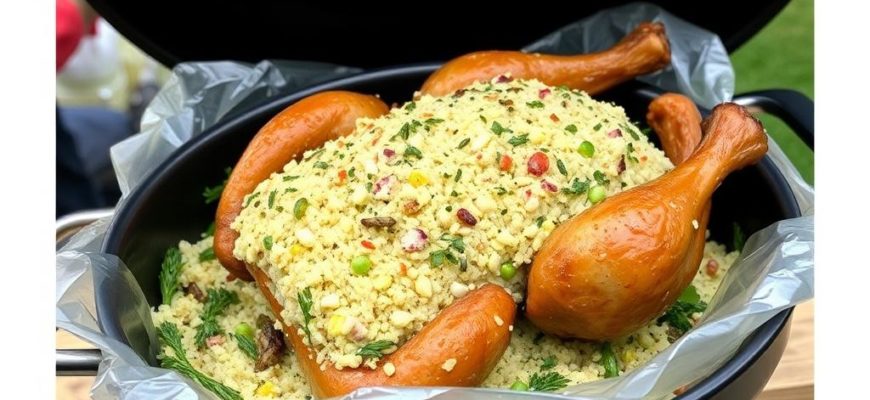
Imagine steam carrying the scent of browned meat, sweet carrots and toasted rice from a shallow, heavy roasting pan—an ordinary piece of cookware turned into a stage for something warm and generous. Pilaf in a duck roaster brings that comfort to life: an easy, slightly theatrical way to make large, fragrant pilaf without a specialized kazan. If you like food that feeds a crowd, collects happy faces and relies more on technique than fancy tools, keep reading—this approach will change how you think about weekend cooking.
- Where this version comes from and why it works
- How the dish evolved over time
- Little-known and fun facts about Pilaf in a duck roaster
- Nutritional snapshot of a typical serving
- Where people love pilaf and how they serve it
- The best step-by-step cooking recipe for Pilaf in a duck roaster
- Ingredients
- Equipment
- Method
- Tips for success
- Final thoughts
Where this version comes from and why it works
Pilaf’s roots spread wide across Persia, Central Asia, the Caucasus and the Indian subcontinent. Traditionally, plov or pilaf cooks in a deep, round kazan to allow even browning and gentle steaming. A duck roaster, being broad, heavy and slightly shallow, mimics some of those benefits while offering easy access for stirring and layering. The result is the same balance everyone loves: toasted rice grains, tender meat and a glossy, well-seasoned finish. Using a duck roaster isn’t a claim to authenticity so much as a practical home-cook adaptation.
How the dish evolved over time
Pilaf developed as a technique for cooking rice with sautéed aromatics and meat so the grains remain separate and richly flavored. As it travelled, local staples and preferences shaped it—carrots in Central Asian plov, saffron in Persian versions, dried fruit in Kashmiri pulao. The shift from heavy cauldrons to household pans mirrors kitchens becoming smaller and more diverse; people kept the essence and adapted the cookware. Cooking pilaf in a duck roaster is one such modern turn: it keeps the layering and steam-finish but simplifies the execution.
Little-known and fun facts about Pilaf in a duck roaster
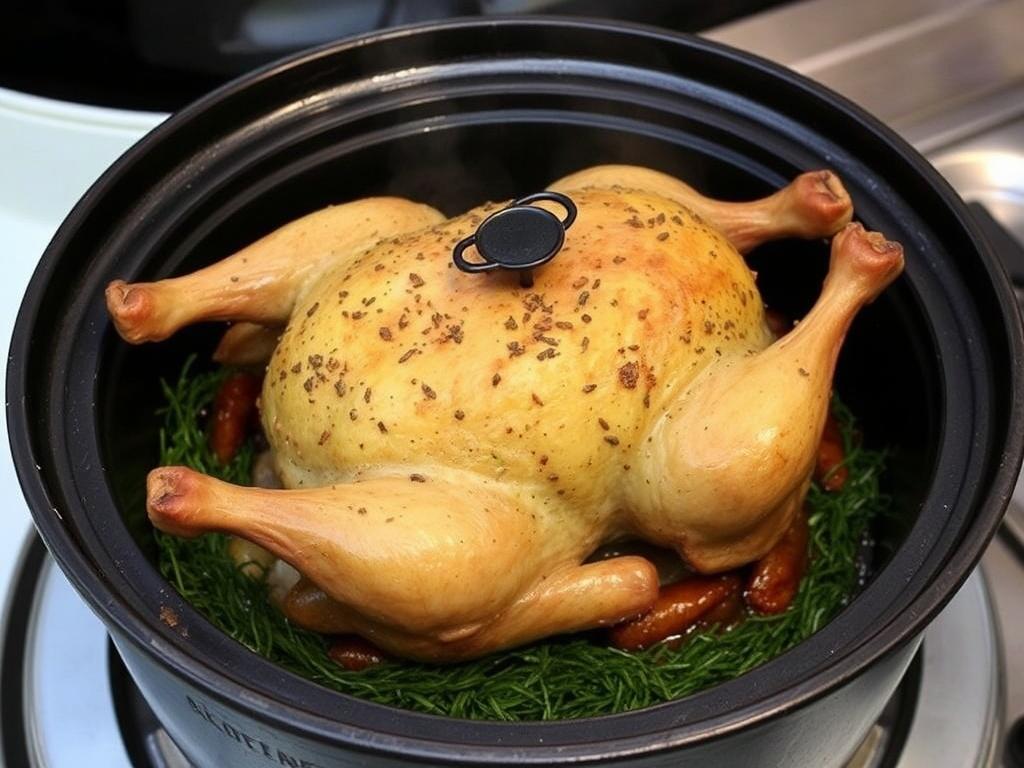
Pilaf carries social meaning: it’s often a celebratory dish made for gatherings. Cooking it in a duck roaster suits that purpose—you can easily transport it from stove to table and serve straight from the pan. Another neat point: the wide surface lets more rice toast, which adds a nutty depth people sometimes confuse with age-old secrets. Finally, while many associate pilaf only with lamb or beef, this method adapts quickly to chicken, duck (of course), or a vegetarian version with mushrooms and dried fruits.
Nutritional snapshot of a typical serving
Nutritional values vary by ingredients and portion size, so treat these as approximations for a meat-and-rice pilaf, one generous serving.
| Nutrient | Approximate amount per serving |
|---|---|
| Calories | 550–700 kcal |
| Protein | 25–35 g |
| Carbohydrates | 60–80 g |
| Fat | 20–35 g (depends on meat and oil) |
| Fiber | 2–5 g |
To lighten the dish, reduce oil, choose leaner cuts or increase vegetables and use brown rice—expect changes in texture and cooking time.
Where people love pilaf and how they serve it
Pilaf appears from Tashkent and Tehran to Istanbul and Delhi, each place shaping the recipe. In Central Asia, it’s a centerpiece for weddings. In Iran, saffron and subtle spices are prized. Turkey plates pilav as a side or main, often with yogurt. In the West, pilaf shows up as a convenient party dish. Cooking pilaf in a duck roaster suits any of these contexts because it scales well and looks inviting when brought to the table.
The best step-by-step cooking recipe for Pilaf in a duck roaster
This recipe serves about 6–8 people. It uses ingredients and timings that work well in a duck roaster and gives clear stage-by-stage instructions so your rice comes out loose and flavorful.
Ingredients
- 1.5 kg (3.3 lb) bone-in lamb shoulder or beef chuck, cut into large chunks (or use 1.5 kg chicken pieces)
- 600 g (3 cups) long-grain rice, rinsed until water runs clear
- 500 g (2 large) carrots, cut into matchsticks
- 3 large onions, thinly sliced
- 150–200 ml vegetable oil or lamb fat
- 2–3 tsp salt (adjust to taste)
- 1 tsp ground cumin, 1 tsp ground coriander, 1/2 tsp black pepper
- 4–5 garlic cloves, peeled
- 1.2–1.5 liters boiling water or stock (enough to cover rice by about 1 cm)
- Optional: raisins, barberries, or whole spices like cumin seeds or a cinnamon stick
Equipment
- Large duck roaster with lid
- Stove and oven (optional)
Method
- Heat the duck roaster over medium-high heat. Add oil, then brown meat in batches so pieces get color. Remove and set aside.
- In the same pan, sauté onions until deep golden. Add carrots and fry until they soften and take on some color.
- Return the meat to the pan, sprinkle in spices and salt, and mix. Add a little water to loosen browned bits and simmer five minutes.
- Evenly distribute the rice over the meat and vegetables—do not stir. Press whole garlic cloves into the rice.
- Carefully pour boiling water or stock so it just covers the rice by about 1 cm. Increase heat until liquid begins to simmer, then reduce to a gentle boil for about 10 minutes uncovered.
- Once the rice has absorbed most liquid but still looks slightly wet on top, cover tightly with lid. Reduce heat to very low and steam for 25–35 minutes. Alternatively, transfer to a 180°C (350°F) oven and bake 25–30 minutes.
- Turn off heat, let sit 10 minutes. Gently fluff rice from the edges toward center, mixing layers if desired. Serve straight from the duck roaster.
Tips for success
- Rinse rice thoroughly to remove surface starch—this keeps grains separate.
- Toasting rice briefly in the pan before adding water deepens flavor.
- Adjust water depending on rice variety; basmati uses a little less than regular long-grain.
- Letting the dish rest after cooking firms the grains and concentrates flavor.
Final thoughts
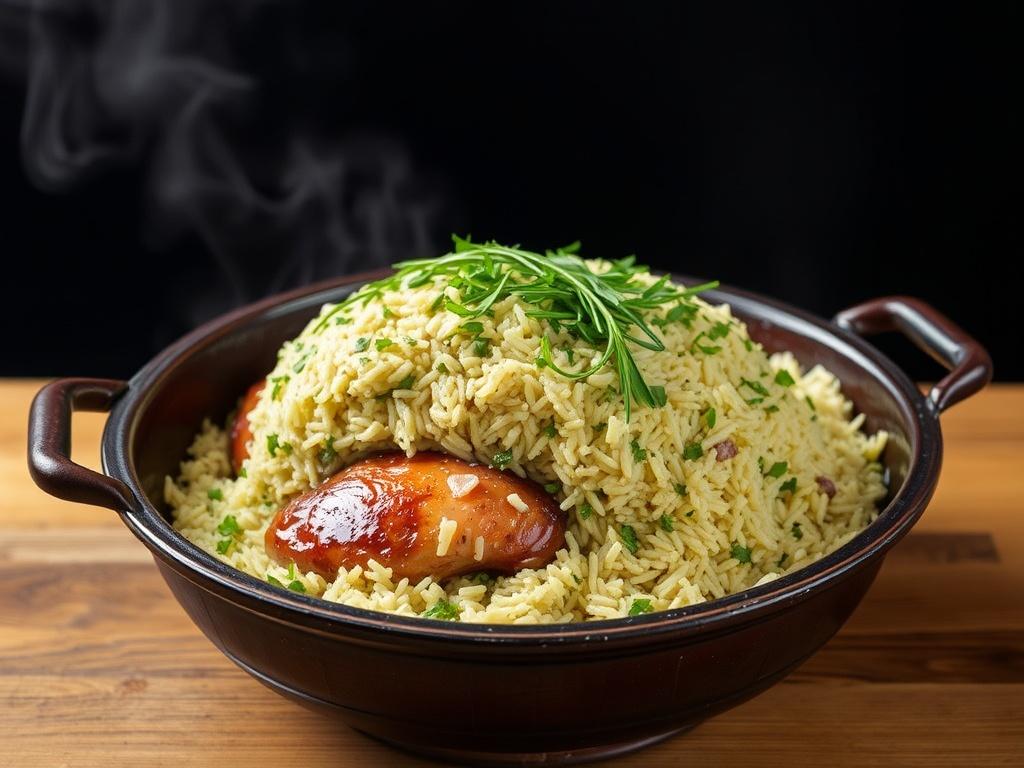
Pilaf in a duck roaster is a small act of kitchen creativity: you borrow the logic of a traditional method and make it useful for everyday life. It feeds well, looks attractive and rewards a little attention to timing. Try it for a crowd, bring it to the table, and watch how quickly people reach for second helpings.


