

I still remember the first time I smelled simmering rice and caramelized onions mingling with roasting chicken legs — it felt like someone had opened a door to a warm kitchen and invited me inside. Chicken leg pilaf is that kind of food: humble, generous, and rooted in stories. Whether you want a simple weeknight meal or a centerpiece for friends, this dish rewards patience and small attentions. Read on and you’ll learn where it came from, why it tastes so comforting, and how to cook a knockout version step by step.
- Where Chicken Leg Pilaf Comes From
- A Short History of Chicken Leg Pilaf
- Interesting Things You Might Not Know
- What’s Actually in It: Nutritional Value of Chicken Leg Pilaf
- How Popular It Is Around the World
- The Best Step-by-Step Cooking Recipe for Chicken Leg Pilaf
- Ingredients
- Method
- Quick Tips for Success
- Serving Ideas and Leftover Uses
Where Chicken Leg Pilaf Comes From
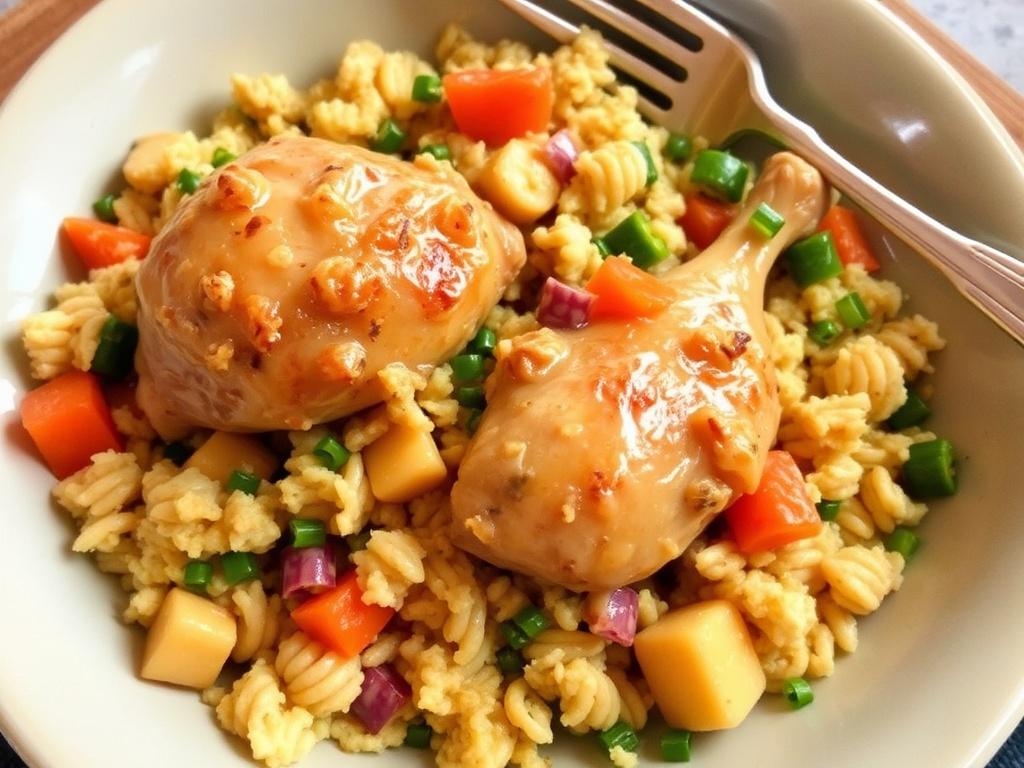
Country of origin Chicken leg pilaf
Pilaf — or plov, pilau, pulao — appears across a huge stretch of the Old World, from the Mediterranean to South Asia and Central Asia. The specific idea of using chicken legs in pilaf is practical: legs are inexpensive, full of flavor, and keep the rice moist during cooking. Many families in Uzbekistan, Azerbaijan, Iran, Turkey and the Levant have versions of rice cooked with meat and vegetables. The technique likely spread along trade routes and adapted to local ingredients; in places where lamb was scarce or expensive, chicken legs became the natural choice.
A Short History of Chicken Leg Pilaf
History Chicken leg pilaf
Pilaf as a method goes back centuries: rice cooked with aromatics in fat, then simmered in broth. In Central Asia, plov became a ritual dish served at celebrations. When poultry was used, cooks often preferred legs for their succulence and texture. Over time simpler, more domestic versions evolved — the kind you’d see bubbling on a weekday in a family home. In colonial and trading port cities, spices and techniques blended, producing regional riffs: fragrant Persian pilafs, spiced Indian pulao, and the charred-on-the-bottom Uzbek osh. Chicken leg pilaf sits at this intersection: a local adaptation that mixes economy and flavor.
Interesting Things You Might Not Know
Interesting facts about Chicken leg pilaf
- Using bone-in chicken legs enriches the broth as the rice cooks, delivering deeper taste without extra stock.
- Many traditional cooks intentionally let a thin crust form at the bottom of the pot; that browned layer adds texture and a toasty aroma.
- Pilaf is often cooked by layering: the rice on top of meat and vegetables, steamed gently so flavors mingle without turning mushy.
- Different fats (sheep fat, butter, vegetable oil) change the dish’s character: sheep fat gives a smoky richness common in Central Asian plov.
- Leftovers transform beautifully: fry chilled pilaf into patties or warm it with a squeeze of lemon and a handful of herbs.
What’s Actually in It: Nutritional Value of Chicken Leg Pilaf
Nutritional value Chicken leg pilaf
Below is a typical nutritional estimate for one serving (about 400–450 g) of chicken leg pilaf made with one chicken leg, rice, onions, carrots, oil, and modest spices. Values vary with portion size and cooking fat.
| Nutrient | Approximate amount per serving |
|---|---|
| Calories | 550–700 kcal |
| Protein | 28–35 g |
| Fat | 20–30 g (depends on skin & cooking oil) |
| Carbohydrates | 60–80 g |
| Fiber | 2–4 g |
| Sodium | Varies widely based on added salt; 600–1000 mg typical |
Tips: remove skin or use less oil to cut calories and fat; add more vegetables or brown rice for fiber; watch the salt if you use store-bought broth.
How Popular It Is Around the World
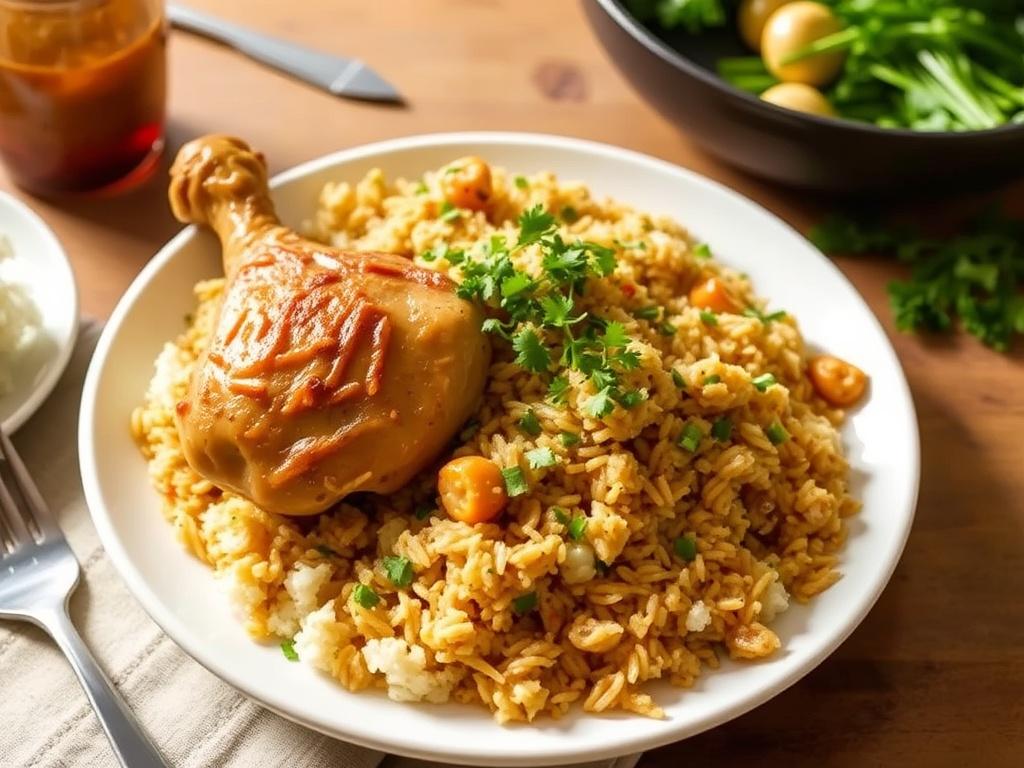
Popularity in different countries Chicken leg pilaf
Pilaf in some form is popular almost everywhere rice and spices meet. In Central Asia, it’s a cultural landmark; in the Middle East and the Caucasus, it’s a go-to family feast. In South Asia, poultry pulao competes with biryani for celebratory status. In Western countries, chicken pilaf shows up as an approachable introduction to “ethnic” rice dishes in restaurants and home kitchens. The chicken leg version is especially common in home cooking where budget and flavor matter most.
The Best Step-by-Step Cooking Recipe for Chicken Leg Pilaf
The best step-by-step cooking recipe for Chicken leg pilaf
This recipe makes 4 servings. It’s designed for stovetop cooking in a heavy-bottomed pot with a tight-fitting lid.
Ingredients
- 4 bone-in chicken legs (about 1.2 kg)
- 2 cups long-grain rice, rinsed until water runs clear
- 2 medium onions, thinly sliced
- 2 large carrots, julienned or grated
- 3–4 tbsp vegetable oil or melted butter
- 1½ tsp salt (adjust)
- Freshly ground black pepper and 1 tsp cumin or coriander (optional)
- 3½ cups hot water or low-sodium chicken broth
- Chopped parsley or cilantro to finish
Method
- Season the chicken legs with salt and pepper. Heat oil in a wide, heavy pot over medium-high heat. Brown the legs on both sides until golden; remove and set aside.
- Add onions to the pot and lower heat slightly. Cook, stirring, until soft and starting to caramelize — about 8–10 minutes. Add carrots and cook 3 more minutes.
- Return chicken legs to the pot, nestling them into the onion-carrot mix. Sprinkle cumin or coriander if using. Pour hot water or broth gently so it covers the meat halfway.
- Bring to a simmer, cover, and cook 15–20 minutes until chicken is nearly cooked through.
- Spread the rinsed rice evenly over the chicken and vegetables, do not stir. Gently press it down. Add a final pinch of salt and pour more hot water so the rice is covered by about 1–1.5 cm of liquid (adjust amount depending on rice type).
- Bring briefly to a boil, then reduce heat to low, cover tightly, and steam 18–22 minutes until rice is tender and liquid absorbed. For a slight crust, increase heat to medium for the last 2–3 minutes, then lower again to finish steaming.
- Turn off heat and let rest 10 minutes. Gently fluff rice, lift out chicken legs, and serve topped with fresh herbs. Offer lemon wedges at the table.
Quick Tips for Success
- Rinse rice to avoid gummy texture. Soaking 20 minutes speeds cooking.
- Bone-in legs are flavor-positive; use skinless to reduce fat without losing broth quality.
- Adjust liquid by the rice you use — basmati needs a touch less than standard long-grain.
- Make it a one-pot meal by adding peas, chickpeas, or chopped bell peppers with the carrots.
Serving Ideas and Leftover Uses
Serve with a simple salad, yogurt, or pickled vegetables to cut richness. Leftover pilaf can be pan-fried into patties, warmed with extra stock into a soupy rice, or transformed into wraps with fresh herbs and sauce.
Chicken leg pilaf is forgiving and rewarding. It tastes like a home that has been cooking slowly all afternoon — warm, full, and ready to share. Try the recipe once, tweak it to your pantry and palate, and you’ll have a dish that feels like family for weeks to come.


